Restaurant Company Catalyzed Revival of Canal Park While Becoming Iconic Duluth Brand
Brian Daugherty remembers the adrenaline rush he and his buddies would feel when the mere prospect emerged that someone may happen upon their upstart Grandma’s Saloon & Deli in Canal Park. The restaurant opened in February 1976, and Daugherty — along with Grandma’s founders Michael “Mick” Paulucci and Andy Borg — spent that first winter remodeling the upstairs. Canal Park was hardly the tourist mecca it is today. It was a wasteland of warehouses, an eyesore, a literal junkyard.
Any traffic in the area was exciting.
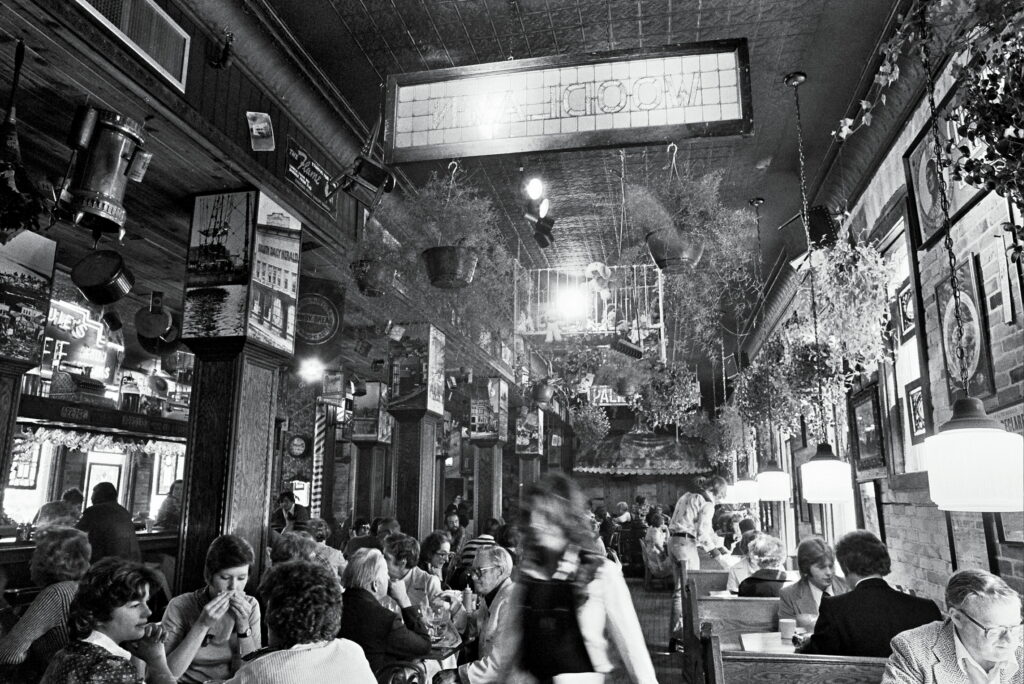
“All of a sudden, you’d see a couple headlights coming down the road, and who knows, maybe it’s a customer coming in,” Daugherty recalls. “Watching a single car on Canal Park Drive, we’re all murmuring to ourselves, ‘Come on, come on, come on.’ And they’d pull in our parking lot —‘Let’s go!’ — and we’d drop our tools and race downstairs to wait on them. We’d be thrilled.”
The Grandma’s Restaurant Company is celebrating 50 years in 2026. Daugherty has been there for every one of them, getting his start as a dishwasher. He’s now the president of an operation with eight locations, and one that has employed more than 8,000 people during its half-century run.
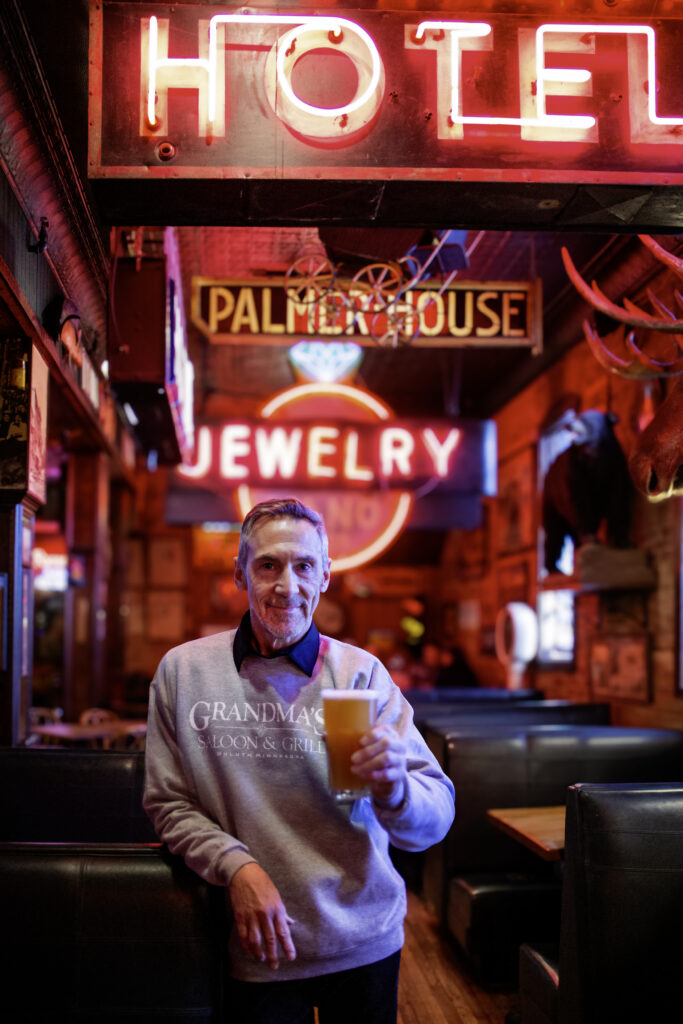
Brian Daugherty in the dining room.
Daugherty recalls the early years. A little restaurant with a big personality. And a young staff that worked hard and had a good time. After a summer shift, they often would go swimming. Except there was no Lakewalk delivering them to the beach. Instead, they’d have to walk over scrapped cars to reach the water. It was a tetanus infection waiting to happen. Daugherty called it “dilapidated.”
So why not open a restaurant there? That’s part of the Grandma’s lore, a little bit of serendipity as people started to notice Canal Park around the same time that Borg and Paulucci started serving delicious food, cold beer and good vibes. They helped alter the trajectory of what would become one of Minnesota’s favorite destinations.
“I think Grandma’s discovered this location at the same time the rest of Duluth did,” Daugherty says. “When everybody turned around and appreciated that big, beautiful lake all of a sudden.”
Grandma’s has always had fun. Back then, it was more apt to take chances. There was live music, comedy nights — notable performers included Tom Arnold, Lizz Winstead, Rob Schneider and Maria Bamford — broomball and volleyball courts plus other sports leagues, ethnic celebrations and, in the summer, the big top tent for concerts. The entertainment became just as much a part of the attraction as the food.
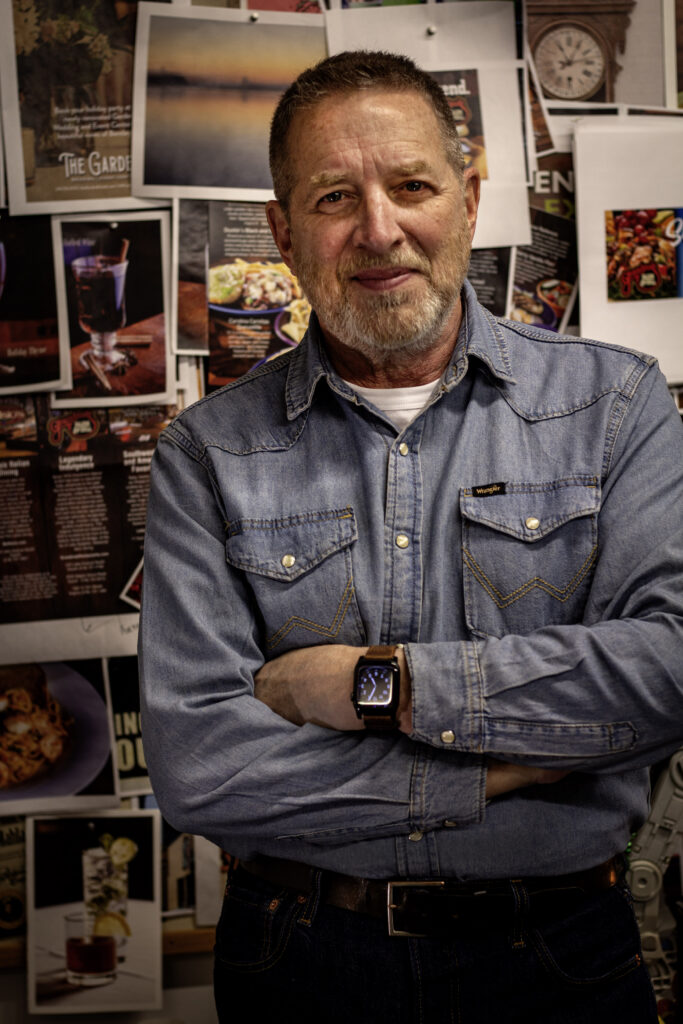
Longtime Director of Marketing Mark Mahla.
“You’d drive down to this dark neighborhood and you’d get by the bridge, and here was this restaurant that was fun and cool, doing fun things,” says Mark Mahla, director of marketing for Grandma’s. “I have a photo on my desk from 1977 of my parents, with an aunt and uncle, seated in old church pews, before there were booths. It was one of the places you brought out-of-towners to experience.”
To this day, Mahla, who’s worked for Grandma’s for more than 30 years, is struck by the transformation of Canal Park.
“It was exciting to see Canal Park develop,” he says. “Boy, it’s a lot different from back then. When we look at old photographs, we remember all that, but it’s still hard to imagine that time.”
In the early days, it was easier for the Grandma’s brain trust to try new things. The margin for error was more forgiving. Competition was hardly a thing — Daugherty says there was a single fast-food joint nearby. Fast-forward 50 years, and Daugherty and Mahla estimate there are about 40 different places to eat in Canal Park. With so many alternatives, a business can’t afford to swing and miss too often.
“The business environment for our industry has changed dramatically in my tenure,” Daugherty says.
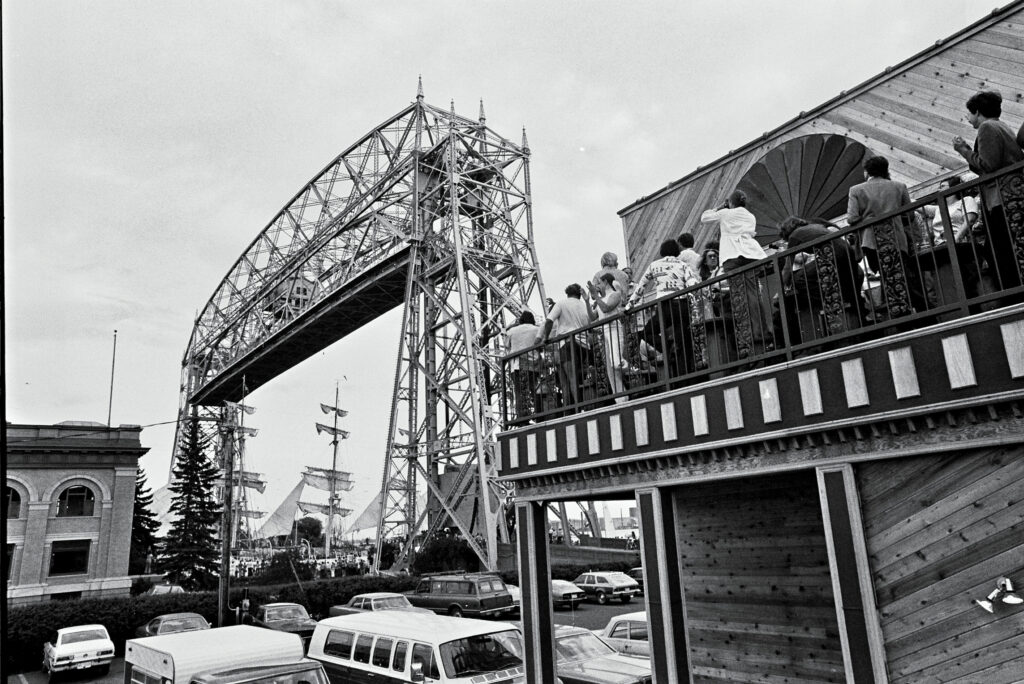
Grandma’s grew up right along with Canal Park. The restaurant has morphed into one of Duluth’s iconic brands, its flagship building in the shadows of the Aerial Lift Bridge a homey respite where life slows down, its walls adorned with artifacts from yesteryear. You come in for a bite to eat, something to quench your thirst and spend some time just looking around, reflecting. The atmosphere, the service, it feels as authentic as the chicken wild rice soup.
“It was kind of like that Cheers experience,” says Kristi Schmidt, who joined the Grandma’s staff in the late ’80s as a server and host while attending the University of Minnesota Duluth. “That’s where everyone wanted to go. It was just that community experience.”
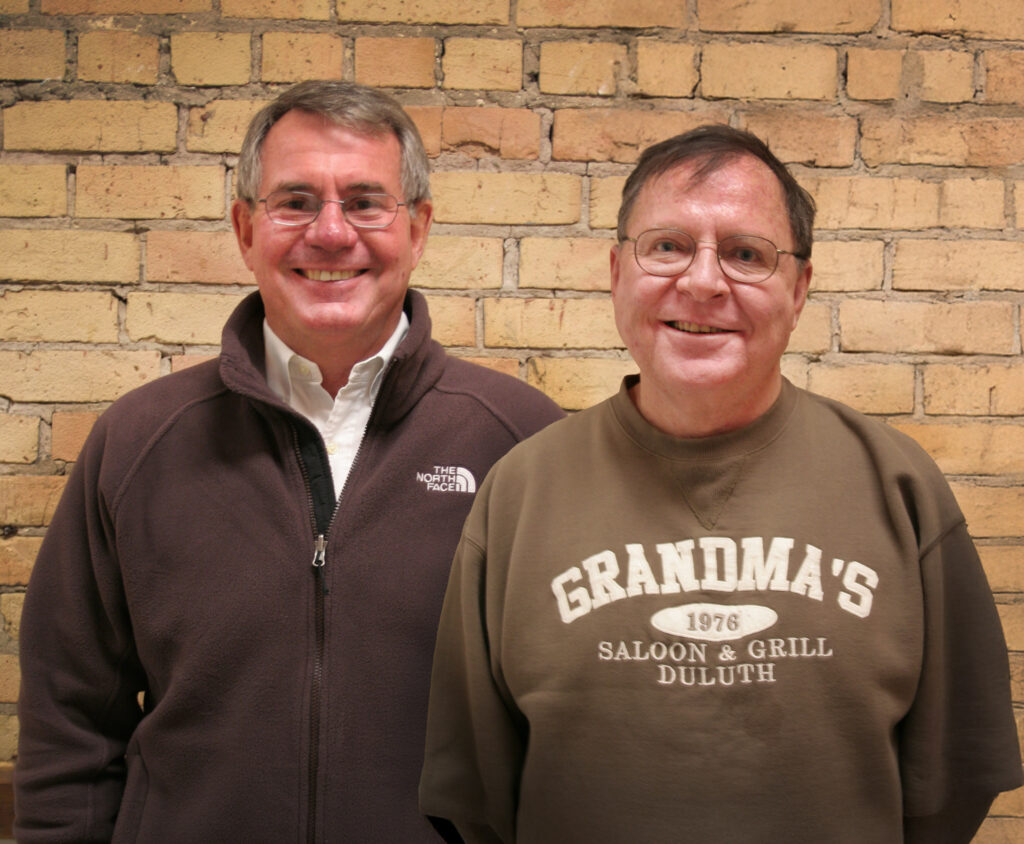
Grandma’s founders Mick Paulucci and Andy Borg in 2017.
Having fun and building a brand
Growing up, Grandma’s never took itself too seriously. In that way, the restaurant was a lot like its owners, particularly Borg.
“Being in advertising my whole career, I’ve been around a lot of creative people, but nobody was more creative than Andy Borg,” says Steve Greenfield, who started at Grandma’s three months after it opened and spent a total of eight years there, the last three as advertising director. “While the rest of us would bounce ideas around in our heads, Andy would bounce things off the moon and Mars to come up with Grandma’s craziness in those formative years.”
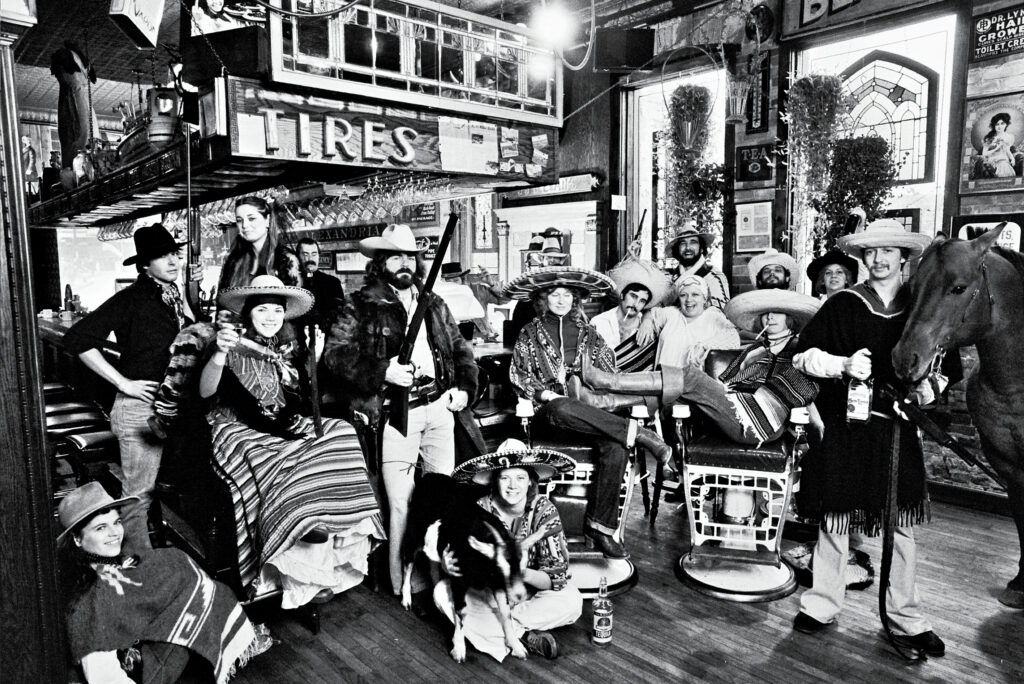
Crazy was part of the niche Grandma’s had carved out for itself. You never knew what you’d encounter. There was the ’50s-themed weekend that included a goldfish-swallowing contest, which was almost as ridiculous as the greased-pig contest.
The volleyball courts, which were just below the saloon’s second-level deck, once played host to a celebrity game, with the money going to charity. As local VIPs played volleyball down on the ground, water balloons were sold to patrons up on the deck who were doing their best to stay hydrated (and not with water). Those water balloons were soon being launched at the volleyballers.
“These celebrities aren’t even watching the ball,” Greenfield, now the president of Greenfield Public Relations, recalls. “They’re trying not to get pelted.”
He remembers a night in the ’70s, when a few Shriners were in town for a convention. They had ridden their Harleys to Grandma’s. Eventually, one was riding his Harley in Grandma’s. Greenfield, who was waiting on tables that night, watched as the Shriners twisted and turned the motorcycle through the front door.
“The driver fired up the bike and took a few spins around the restaurant, weaving in and out of customer tables,” Greenfield says. “There were probably only 20 of us there at that time of night, and unfortunately no one had a camera.”
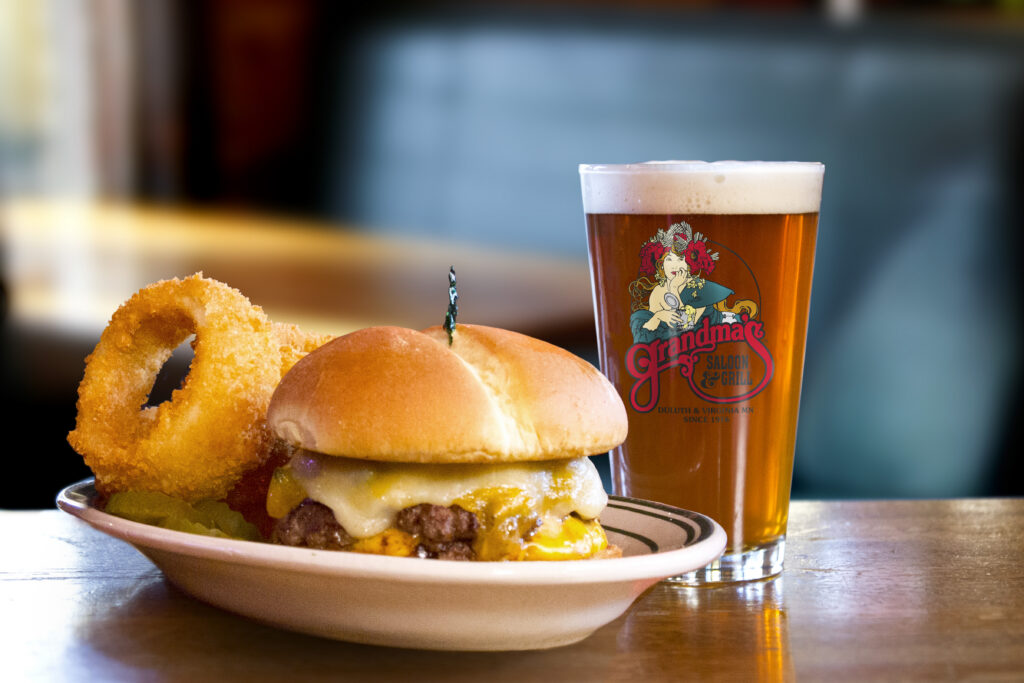
The menu at Grandma’s has long had a made-from-scratch flavor. That was intentional, says former head chef Glenn D’Amour, who was hired in the summer of 1976 to work in the kitchen. D’Amour helped think up some of the classics that remain staples, including the Bicycle Burger.
Good as the food was, sometimes Grandma’s essentially gave it away. There was an all-you-can-eat crab leg promo and a deal aimed at college kids in which a third-pound burger and fries went for 49 cents. Customers thought they were making out like bandits, paying no mind to the fact that they spent a couple hours before and/or after dinner drinking full-price booze.
Word was circulating. Grandma’s — this newbie restaurant bedecked with antiques and flowers everywhere and an immaturity that belied its innocence — was the place to be.
It wasn’t all fun and games. While that was certainly part of the culture, Grandma’s held fast to traditional core values. Schmidt praised its deep commitment to serving others, whether customers or the broader community. Treating customers like family was the expectation.
As a server, Schmidt was encouraged to do more than take orders from the end of the table, focusing instead on engaging guests, connecting and building relationships. It didn’t matter whether she was serving Jeno Paulucci, Duluth’s frozen food tycoon and Mick’s father, longtime state senator Sam Solon or a family passing through on their way up the North Shore. Everyone mattered. It was a different take on customer service — one rooted in genuine connection.
“I think that’s something that can get lost today, and it’s something Grandma’s truly invested in that is still part of the experience,” says Schmidt, now the director of corporate and foundation engagement at UMD. “That job truly shaped who I am today, my love of Duluth, my love of community, my commitment to serving others and to giving back.”
D’Amour noted the restaurant’s unwavering commitment to quality.
“I think in the beginning, it was the stand on quality,” he says. “I would buy the very best quality and nobody would question it. And then we wanted to give people a meal that was a really good value. So they had enough to eat and it was really good, and they didn’t have to take out a loan to pay for it. I think that’s really what kind of grabbed people in the beginning.”
A mutually beneficial relationship
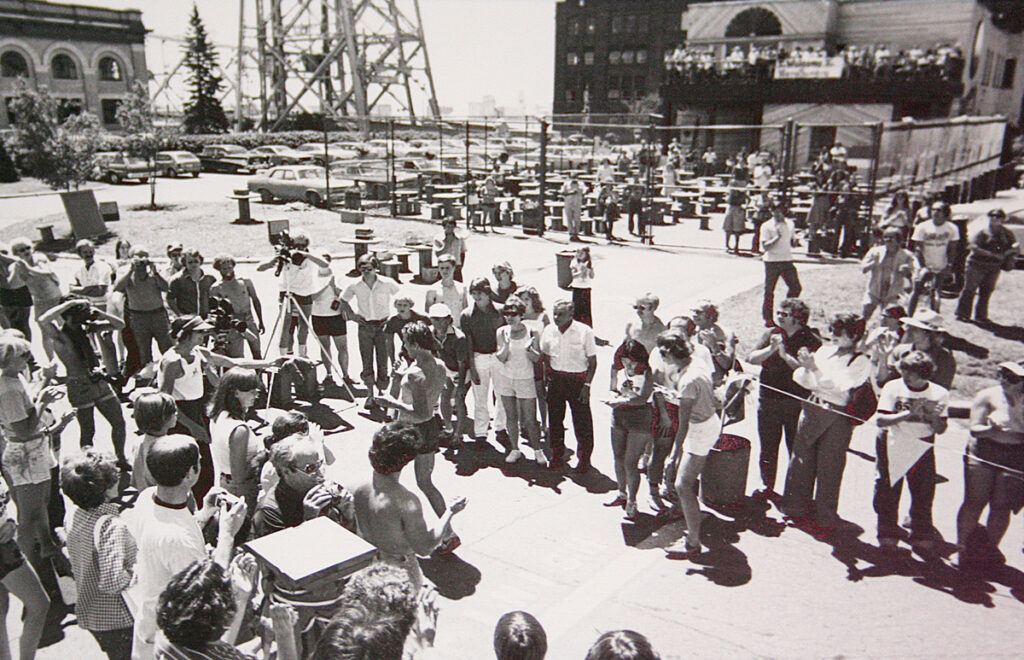
While the revival of Canal Park jolted Grandma’s, a sponsorship in the restaurant’s first year proved equally pivotal. Borg and Paulucci decided to throw $600 at a local running club, the North Shore Striders, that wanted to host a foot race from Two Harbors to Duluth.
Grandma’s Marathon debuted in June 1977, when 116 finished the event. A fruitful relationship was born, and Duluth, still reeling from the departure of U.S. Steel and the subsequent loss of thousands of good-paying jobs, had a reason to hope again. The times were changing, and Grandma’s (the restaurant and the race) along with a rejuvenated Canal Park were leading the way.
The inaugural Grandma’s Marathon had an overall budget of $649.51, meaning Scott Keenan and the Striders had raised exactly $49.51 separate from the restaurant sponsorship. Keenan was the president of the Striders. He would end up serving as the race’s executive director for 37 years as it transformed into one of the largest marathons in the country.
The race and restaurant were inseparable. Keenan often tells the story of struggling to drum up financial support for his quirky new competition.
“Here I was, a 23-year-old kid trying to get people to give me money,” he told the Duluth News Tribune in 2016. “I got kicked out of every place. ‘We’ll get back to ya.’ ”
Paulucci and Borg finally relented. The Grandma’s Restaurant Company owned the marathon until disaster nearly struck. When a massive storm ripped through Canal Park in 1986, leaving a torrent of damage in its wake, Borg and Paulucci decided the liability risk was too great. Two entertainment tents were destroyed and Daugherty remembers seeing water spouts on the lake. Glass windows were shattered at the restaurant.
“It was the first time that I ever was scared for my life,” Daugherty says. “I don’t remember ever being more scared that something was gonna happen to someone, witnessing those huge tents blowing apart and going 80 feet in the air. The threat of disaster was so apparent. We had a very loose emergency plan. We just started opening garage doors at the Paulucci building and throwing people in there because everything was just getting ripped to pieces.
“We got up the next morning, after a full night of cleanup, and said, ‘We can’t afford to be in this position anymore.’ ”
The restaurant stayed on as the title sponsor, where it has remained as race weekend now attracts more than 20,000 runners across three races — the marathon plus a half-marathon and 5K. It’s been a perfect match.
“Grandma’s and Grandma’s Marathon have been integral to one another,” Daugherty says. “We are ecstatic about that relationship and the impact it’s had on our brand.”
Schmidt worked briefly for the marathon in the early ’90s and now serves as chair of the race’s board of directors.
“When the North Shore Striders first envisioned a marathon, Grandma’s Restaurant was willing to take a leap of faith and attach its name to the event,” Schmidt says. “There was never an expectation it would grow into what it is today — only a desire, on the part of Andy and Mick, to support the community in whatever way they could.
“That was their place in the community and it’s what was instilled in all of us who worked there — the importance of giving back.”
D’Amour remembers when he was tasked with preparing the marathon’s spaghetti dinner. He made five gallons of spaghetti sauce the first year, in 1977. His last year in charge of the operation, in the mid-80s, it was five 200-gallon vats of sauce.
Getting better with age
It’s easy to wax nostalgic all these years later and remember only the good stuff, the wins, the wacky ideas that turned into something real. There was no such thing as a bad promotion. It was grassroots, back-of-the-napkin, throw ideas at the wall and see what sticks.
“We’d get through the dinner rush and then we’d squirrel away in a corner, and this was where a lot of those crazy ideas sort of came from,” Daugherty says. “We’d collaborate. Even in those early origin, brainstorming days, it was how we shaped all our promotions and directions, the risk-taking.”
The romantic reminiscing aside, Daugherty also acknowledged there were some awfully lean times.
“The highs were high and the lows were low,” Daugherty says. “The days that we were busy were super exciting. Friday, Saturday and Sunday, then the lunch crowd Monday through Friday. In the ’70s and early ’80s, Jeno’s products and production were in full swing across the street. Hundreds of employees right next door, and they’d do power lunches back then, so our lunches were stronger than our dinners because of that.
“But the lows, the offseason? Oh, my gosh. There was a time when our Canal Park Mall, the DeWitt Seitz Marketplace (which opened in 1985), closed November through January, and for good reason.”
Challenges always have existed. When Minnesota got rid of its tip credit allowance, employees became significantly more expensive than surrounding states. The drinking age going from 18 to 21 took a bite out of sales. Jeno’s production moved out of town for more favorable tax advantages, taking 1,000-plus employees with it.
More recently, COVID-19 fundamentally changed the labor market and people’s dining-out habits. Paid family medical leave is testing small businesses across the state. And while the enhancements to Canal Park in the past 50 years have been welcome and a boon for Grandma’s, they also have dramatically changed the restaurant’s tax burden.
Fortunately for the brand, Daugherty believes he has the right people on staff to navigate obstacles and set the restaurant company up for the next half-century.
“The journey’s been a blast, but it’s fun to see this part of it, too,” he says. “I think that probably comes from the realization that there are people who can do this better than I can. I really believe that. I can hand off the baton to a stronger group of runners. Watching these people step up right now is really satisfying.
“It’s nice to see new ideas, people bringing forward new ways to excite and please the customer. Because we have to adapt. Change is constant. It’s extremely gratifying to see that enthusiasm that we once had re-establishing itself in the upcoming leaders.”
Louie St. George is a Duluth-based freelance writer.