A few years ago, three executive directors looked at the rising number of people living on the streets, the long lines at the food shelter, the crowded shelter space and knew they could do better. After many conversations and many versions considered, they announced a new plan to fight chronic homelessness. One that is uniquely Duluth.
In May 2026, Chum, Damiano Center and United Gospel Mission announced a new initiative to help those experiencing homelessness, food insecurity and greater need. Titled “Pathway Forward,” it includes increased collaboration, fewer duplications in service and a focus on improving the dynamics of downtown Duluth in a two-year period.
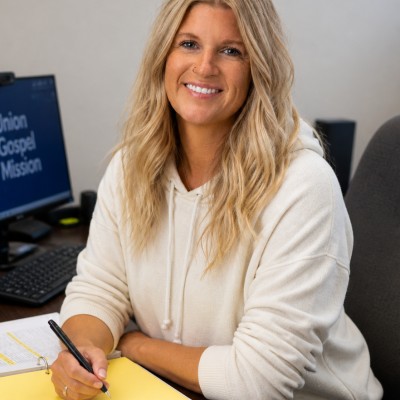
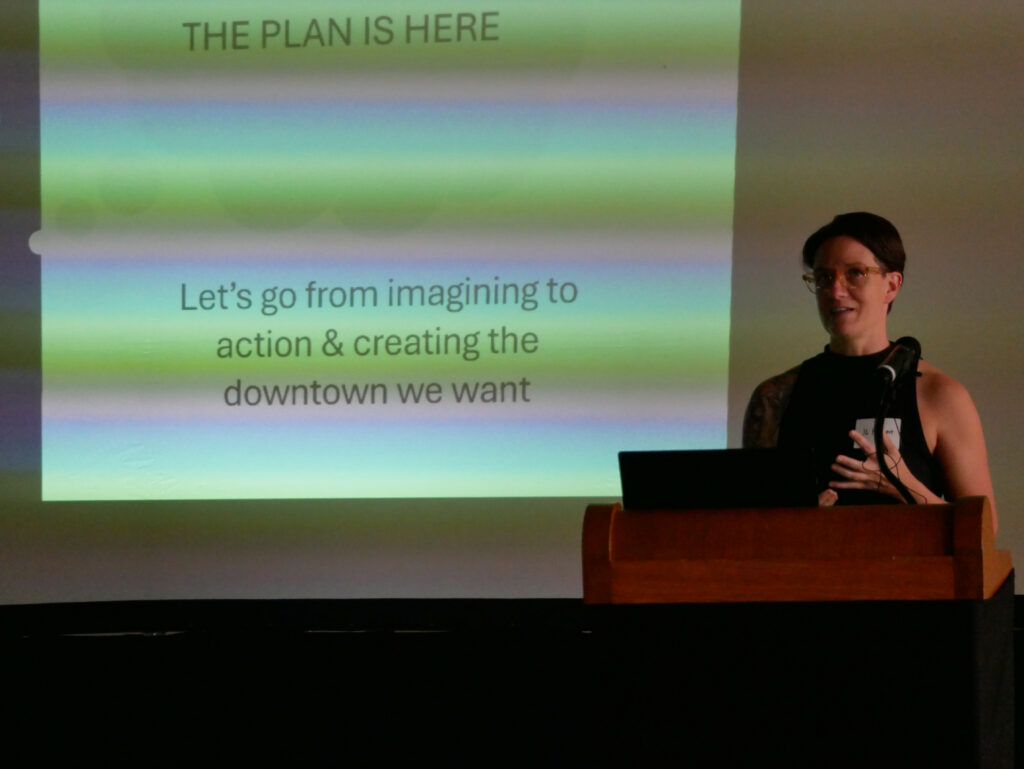
Katie Hagglund, Executive Director of Union Gospel Mission
“We were recognizing all three organizations were going through increased need and all three were expanding their space,” says Katie Hagglund, Executive Director of Union Gospel Mission (UGM). “We knew it was a once-in-a-century opportunity for us to take new spaces and think differently about how we use them.”
“Collaboration is always better,” says Seth Currier, Executive Director of Damiano. “It was about letting go of our egos and saying ‘how can we make this better for the guests?’ We wanted to create a pathway forward for people to exist however they exist.”
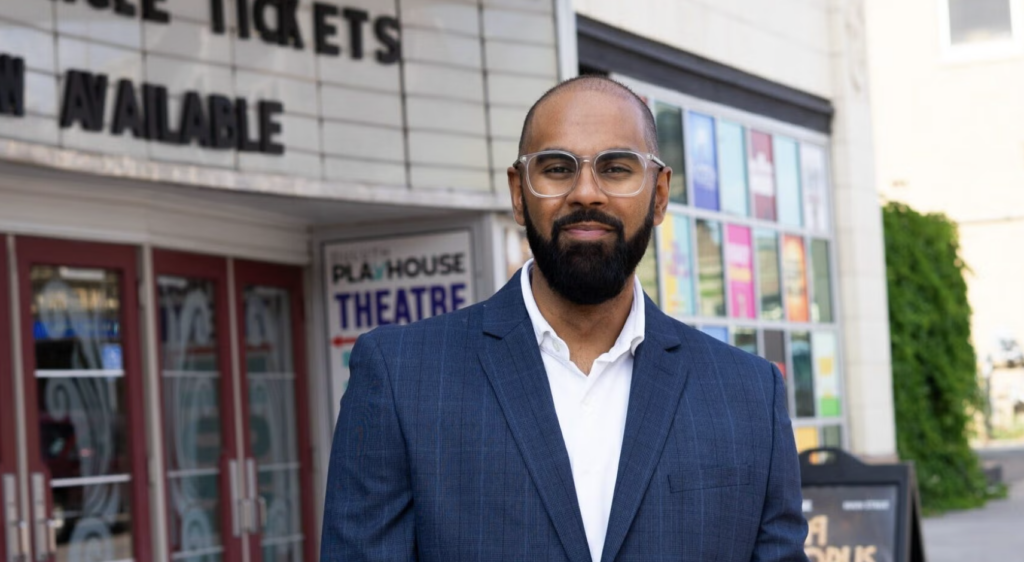
“We have also been paying close attention to what our business neighbors have been saying,” says John Cole, Executive Director of Chum.
Cole sat on the Mayor’s Downtown Task Force in 2022. After 18 months of conversations and polls, he felt he understood better the concerns of the downtown business community.
After years of serious conversations, the Pathway Forward was developed and ready to run by their respective boards of directors.
“That was a hard conversation for some. We are giving up programs that have been embedded for over 100 years,” says Hagglund.
In the end, all three boards voted unanimously in favor of increased collaboration. “There’s a lot of negativity in the world, and this is a positive,” says Currier.
All three agree that this increased collaboration model is the best solution to Duluth’s growing need. “We’re seeing the needs only increase. We’re creating a model that not only meets the current need, but steps into the future in a creative way,” says Currier. “None of us could have done this individually.”
This effort features a three-phrase plan.
Phase One will include realigning staff, structuring operations and unifying downtown business partners.
Beginning next year, Phase Two will feature transition and expansion efforts as new construction is finished.
Phase Three will include incorporating all the services across the three organizations and easing the impact on the downtown area. All three will add community resources like mental health services, employment navigation and others.
Different Accommodations
Each of the shelters will have different types of accommodations. UGM will act as the entry and triage point. Open 24 hours, every day, their services will include a drop-in space, a warming center, showers, laundry, meals and include social workers and medical personnel onsite with 100 beds available.
“We’ll have the professionals there to triage folks so they don’t have to bounce around to find the right space,” says Hagglund.
The Damiano Center will house the temporary congregate shelters, the drop-in and overnight shelters with 120 beds. They will also be responsible for making and delivering the meals to all locations. (All three centers will serve three meals a day, every day.) And they will continue to support the community with their Free Store, Clothes that Work Program and Safe Storage Program for guests to have safe places for their belongings.

John Cole, Executive Director of Chum.
“If you are in a space where you are motivated to get housing, coming out of treatment, can continue to work on your goals, focus on employment and stay stable, Chum is for you,” says Cole.
But he acknowledges the Chum center will not be for everyone.
“For some, their mental health doesn’t allow them to be around crowds. Or their abuser is living at one of the other locations.”
Cole says their goal is to create a safe space for different types of situations in all locations. “We respect where people are at in life and where they want to go.”
Cole feels this model will also create a better environment for the Duluth business community. “If we create the right environment for folks to get the support, they will gravitate to the places of support,” says Cole.
Uniquely Duluth
This collaboration, reducing duplicate services, nonprofits working together to help people out of homelessness is a uniquely Duluth plan. “It’s definitely a reflection of how Duluth operates,” says Hagglund. “We know we work better together.”
“Duluth sits in the sweet spot,” says Currier. “We are big enough to have the financial support and small enough to know each other. There are a lot of leaders in this community who are willing to work together and view collaboration as an asset rather than a hindrance.”
In the end, 46 units of affordable housing will be added. “Duluth has one of the highest homelessness rates per capita,” says Currier. “We also have one of the lowest vacancy rates. And it’s expensive to build here.”
Have You Seen My Loved One?
“Please tell him your little sister says hi.”
“Can you tell my niece her uncle says Happy Birthday?”
“Have you seen my son?”
These are just a few of the messages that Chum receives daily. “We’ve seen people drop off loved ones because they cannot accommodate them at their own homes. Law enforcement brings others. We get people released from institutions or jail. Someone gets kicked out, they come to a shelter,” says Cole.
Without access to proper identification, healthcare or technology, many slip further into chronic homelessness.
“We hired one young person living out of his car, but he didn’t have a cell phone, so he was worried he was going to oversleep,” says Hagglund. He assured Hagglund the people in the next car over would wake him up for work.
Another person, thrilled to earn a paycheck, found they couldn’t cash it because they didn’t have a bank account or current ID.
“When you don’t have a home, it is immensely difficult to get a job,” says Hagglund.
The guests at Chum, Damiano and UGM have different reasons for their situations. “It happens many different ways,” says Cole. “Some are thrown out by family members. Some lose their homes after medical emergencies. Some people fall into addiction. Some medicate to deal with life traumas and then lose their housing.”
Paths to Homelessness
“There has been a 41 percent increase in homelessness in Duluth in the last 10 years,” says Hagglund, “and a 157 percent increase in chronic homelessness.”
Defined as an individual or family living in a space not meant for permanent habitation with a disability like substance abuse, mental illness, developmental disability or chronic physical injury that limits living on their own, chronic homelessness has a serious effect on the brain. They enter a state of mind where they think only about survival: safety, food and sleep.
“You do that year in and year out, compounded by an active addiction or mental health issue and it’s very hard to negotiate your way out,” says Cole.
Cole adds another cause of homelessness is generational poverty. “We have seen grandparents homeless and their kids are homeless. [Some life skills] have never been modeled for them,” says Cole.
He believes having consistent job coaching and teaching those skills will help people to stay employed and in their homes.
Hagglund feels it would be a disservice to ignore the different situations where people are raised. “We would all be very negligent to not recognize that a lot of folks who are in the working community were given a head start in life,” says Hagglund. “Most never had to help your grown ups pay the bills, you were able to go to school. Those are choices not everyone has.”
In addition, Cole mentions Fetal Alcohol Syndrome playing a part in homelessness. Children born to alcoholic mothers can experience intellectual disabilities, learning and memory issues or poor coordination, all of which may lead to difficulties keeping a job.
“The fastest area of homelessness is seniors,” says Cole. After being priced out of apartments, some get into a rent-stabilized home only for the funding to fall away.
“Homelessness is a perpetually traumatizing situation,” says Cole. “You’re dealing with your own self. You’re grieving the loss of agency and all your dreams you had. You’re disappointed in yourself. In this condition where society doesn’t look at you. Society doesn’t see you. That gets internalized. It has an impact on your soul. You forget certain things because you’ve been in this space for so long. You forget how to behave in society.”
The shelters providing stabilization services can make a difference. “I’ve seen it,” says Cole. “A member spoke about her husband using our services. He was grateful for the care and support at that time. We connected him with resources and he was able to become a new person.”
Cole believes it’s the job of the shelter to guide people back to the mindset of living in the community. “We really want to help people become valued community members. It’s more than just a key to an apartment. We want to invest in the holistic development of the individual. We want to provide a model to nurture and encourage those values the community desires,” says Cole. “And that will require a culture shift.”
Chum’s Vocational Program
Part of Chum’s new vision is to include a three-tiered Vocational Program to help their guests get back to earning a living.
At the first level, participants will receive a stipend for completing chores. The second level involves contracting with different entities and taking supervised work groups out to complete tasks like cleaning up trails or setting up and tearing down for events. The third level will involve increased partnering with businesses as job coaches will train them on the skills necessary to do and keep jobs.
Cole has already seen interest from some businesses, but he understands this path is not for everyone. “Some will never work,” he says. “They need to live in supportive housing. Some segments of who we serve need to get the support necessary to maintain their medication and live in unity with others.”
Many, however, want to work. They are only experiencing homelessness due to a job loss, health emergency or have fallen into a difficult time. “We had 20 [residents] help with some of the projects,” says Cole. “They finished the task in one day. We were scrambling to find more for them to do. They felt so proud to be able to help.”
Of the 1,703 people in the Chum shelters, 67 of them (4 percent) are working. “If we can provide better accommodations for people, they can hold jobs,” says Cole. “If we give people the opportunity to work, they will work.”
“People want to work,” says Cole. Some cannot, but some are just in need of support to be able to be reliable in public again. “It’s why we are doing it internally first. Some will need to learn the soft skills again: show up on time, accept direction and how to work with other people.”
The residents will start with a crew working in the community, then move to a site where they will have a job coach and regular check-ins. Cole hopes the community will support these initiatives through funding and the opportunities for jobs.
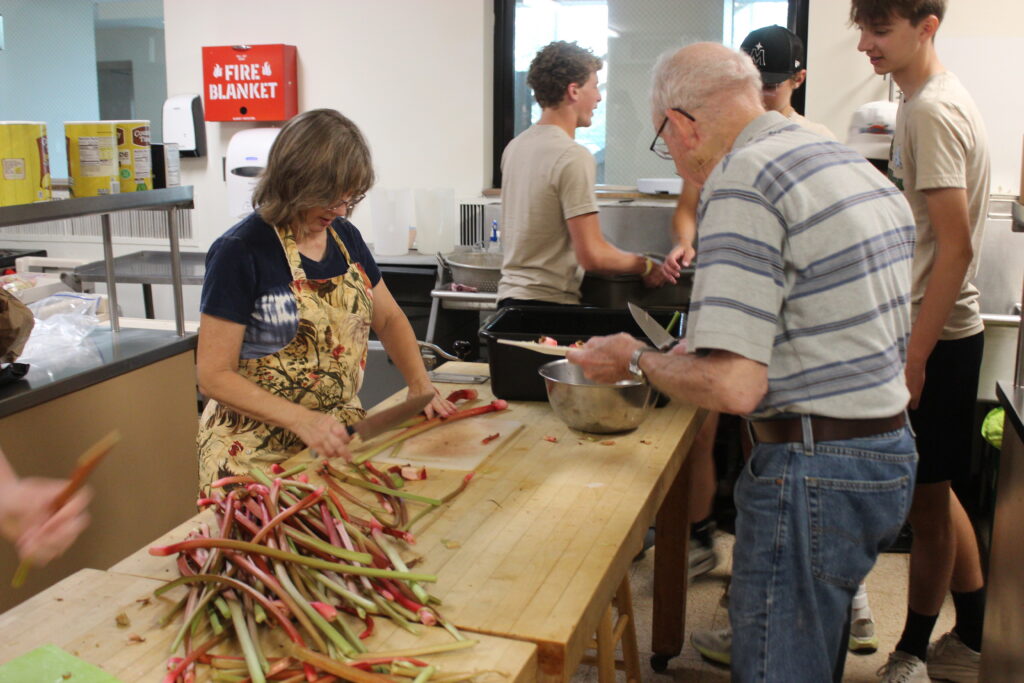
Volunteers prepare the star of the show for Chum’s annual fundraiser, Rhubarb Festival on the third Saturday in June.
How You Can Help
“We need to get the building finished ASAP,” says Hagglund of the UGM’s construction. “We need advocates for housing on all levels. Show up where the housing conversations are happening, hear the developments.”
All three organizations are responsible for their own funding, so monetary donations are helpful at all locations. Donations of clothing and household items are greatly appreciated at the Damiano Center while food donations are appreciated at Chum and UGM.
Finally, all three organizations would love volunteers to support their programs. You can serve meals, accept and sort clothing donations, rescue baked goods from local grocers and deliver them to the centers, participate in building upkeep and sort food donations.
“This is going to affect everyone,” says Currier. “And it’s going to be beneficial for the community.”
Currier asks that the public not only support the initiatives financially, but also with the actions. “Talk with your friends. Be in the spaces that are talking about this issue.”
Hagglund reminds everyone to be kind. “Be less judgmental. That would take some of the weight off all these things. Everyone is doing the best they can. And we can all do better when we come together.”
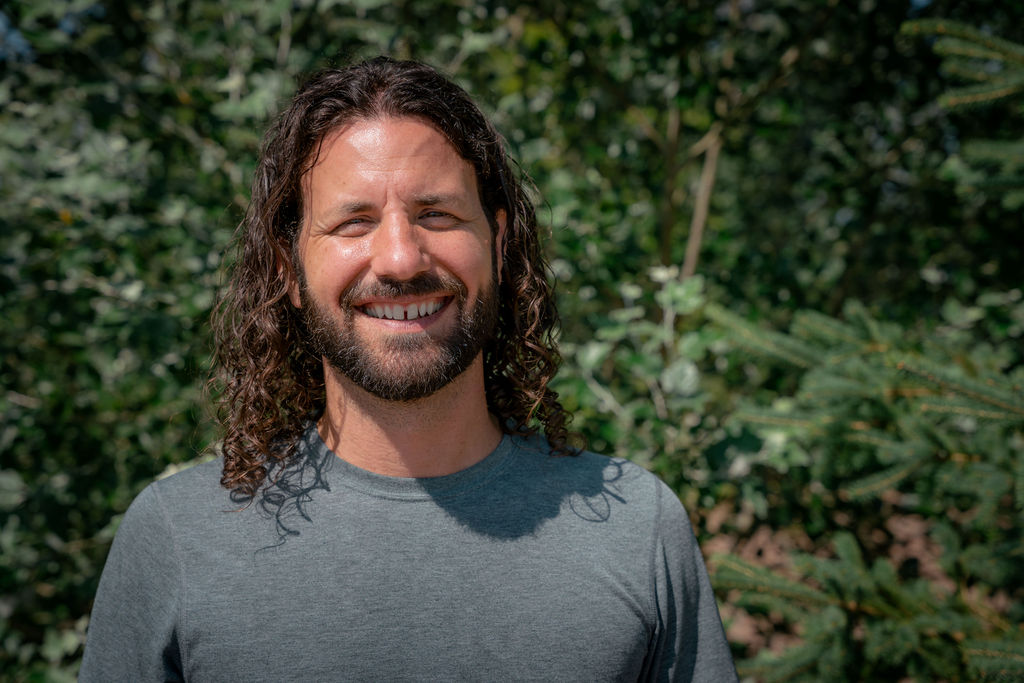
Seth Currier, Executive Director of Damiano
Dedicated Staff
Hagglund, Currier and Cole credit their staff for their concerted efforts. “We are the safety net,” says Cole of his Chum team. “It’s a huge responsibility and we have staff that take that seriously. They are passionate about each individual because even in the midst of the trauma, the worst episode of their lives (being homeless), they see those moments of humanity. If you look long enough, you will see the kindness as people support one another.”
Currier also acknowledges the staff’s many gifts. “The Damiano staff are amazing. They navigate working with people experiencing a lot and continue to show up with dignity and compassion. It takes a great deal of resilience and inner work to do this work in a healthy and empathic way. I think they do a good job of that and inspire each other to do the same. I am continually amazed by their work and presence.”
“There are days when I leave completely drained, wondering how any of this keeps moving forward. And then I look at my team,” says Hagglund of her UGM staff. “They keep showing up. They keep caring. They keep choosing compassion in situations that would harden most people. I think the strongest thing about The Mission isn’t our services or our programs, it’s the people willing to carry this work every day.”
Passion for Their Work
Many frontline workers in homeless shelters burn out quickly. Often fighting a community that sees tent encampments without seeing the humans behind them, or fighting for already small government resources, it can be tiring work. But perhaps due to the collaboration, the community and the support that they have, it is clear the Executive Directors of Chum, UGM and Damiano love their roles.
“I’m lucky to be in this role,” says Hagglund. “I’m in this work because I need to be. These are people’s loved ones. They matter.”
“These are grandparents, moms and dads.,” says Currier. It’s important work and I take it seriously. Everyone deserves a roof, a warm meal, to be warm, regardless of politics.”
“It’s incredible to have the opportunity to journey with someone and see them get those little wins,” says Cole. “I see little acts of kindness in the shelter all the time. These little glimmers of hope is what makes me believe this is possible. It’s like a plant. We just have to nurture it and the plant will respond positively.”
Rose M. fife is a freelance writer and musician. She lives in Duluth with her family and still mostly feral dog.