Nearly half of Americans are entering their later working years without a clear roadmap for retirement, according to new national research, underscoring the importance of planning strategies and updated savings limits for 2026.
A recent study from the Allianz Center for the Future of Retirement found that 47% of Americans do not have a written financial plan. Meanwhile, a 2026 Northwestern Mutual survey reported that 46% of Americans do not expect to be financially prepared for retirement. Additional data suggests more than half of U.S. households risk being unable to maintain their standard of living in retirement, and one in five Gen Xers are already delaying retirement due to financial concerns.
Financial professionals say business owners and high-income professionals have unique opportunities to close that gap, particularly by maximizing high-limit retirement accounts. Options such as Solo 401(k) plans allow contributions up to $70,000 in 2025, or $77,500 for those age 50 and older. SEP IRAs allow contributions of up to 25% of compensation, capped at $70,000, while defined benefit plans can allow six-figure annual contributions for high earners.
Advanced tax strategies can also boost retirement readiness.
Backdoor Roth IRA conversions allow individuals above traditional income limits to access tax-free growth. Some employer plans also permit “mega backdoor Roth” strategies that may shield up to $70,000 annually. Health savings accounts remain another powerful option, offering tax-deductible contributions, tax-free growth and tax-free withdrawals for qualified medical expenses.
Risk management is another key component. Advisors recommend diversifying concentrated stock positions, formalizing business exit plans and automating retirement contributions to ensure consistent savings.
The Internal Revenue Service increased several contribution limits for 2026. The employee deferral limit for 401(k), 403(b) and 457 plans rises to $24,500, while IRA contribution limits increase to $7,500. SIMPLE IRA limits climb to $17,000, and the total defined contribution limit increases to $72,000.
Catch-up contributions are also expanding. Workers age 50 and older may contribute an additional $8,000 to workplace plans, while those ages 60 to 63 can make “super catch-up” contributions of up to $11,250. IRA catch-up contributions increase to $1,100.
Income limits will continue to affect eligibility for IRA deductions and Roth contributions. For single filers, Roth IRA phase-outs begin at $153,000 in modified adjusted gross income, while married couples filing jointly face phase-outs starting at $242,000.
With retirement uncertainty rising, advisors emphasize that maximizing available accounts, using tax-efficient strategies and formalizing long-term plans can help workers close the readiness gap and improve financial security.
We asked local financial advisors what’s the best thing a business professional can do for their future retirement?

Shaun C. Marline, AAMS, Wealth Advisor
Marline & Associates LLC Wealth Management
If I could give one piece of advice to a busy professional thinking about retirement, it would be this: don’t wait for a better time to start, because the best time to start is always sooner than it feels. Life has a way of filling in every little gap — a career move, a family change or even a business decision that needs attention can take up all of your free time. Retirement savings always seem to get deferred because those more urgent moments will always come up, especially when you least expect them.
The best thing you can do is make retirement savings automatic and non-negotiable. Set your contributions, increase them when your income grows, and then actually sit down once a year with someone who can help you understand whether you’re on track. Don’t settle for a quick review of account balances; have a real conversation about what you want retirement to look like and what it’s going to take to get there. Most people are surprised by how much clarity that one conversation can bring. And the earlier you have it, the more options you have.

Tiffany Tomassoni, CFP® Financial Advisor | Partner
Wheeler Associates
The best thing a business professional can do for their future retirement is to stop ignoring their personal finances like that drawer full of old cables everyone pretends they will sort out someday. Running a business, leading teams and hitting career goals often takes center stage, while retirement planning quietly sits on the back burner. At some point, hope stops being a strategy, especially if financial planning is not your area of expertise or you are unsure whether you are actually on track.
Getting started does not have to be complicated. Begin by taking inventory and understanding what you have, what you owe and what you are saving, with no judgment required. Make sure you are contributing to available retirement accounts, increasing contributions when income rises and automating savings so it happens without constant decisions. If spreadsheets make your eyes glaze over, meeting with a CERTIFIED FINANCIAL PLANNER® professional can be one of the smartest steps you take. You would not handle legal, technology, or tax issues without help, and your financial future deserves the same level of attention. A solid plan provides clarity and confidence so you can focus on what you do best today without worrying about tomorrow. As the saying goes, “The best time to plan was years ago. The second-best time is today.”
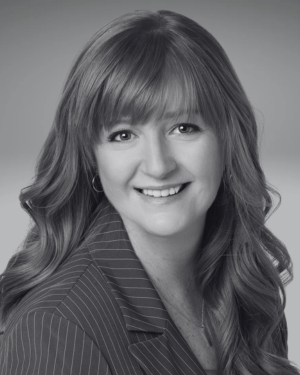
Christa Scheider, VP Retirement Solutions Executive
North Shore Bank
I believe the single best thing a business professional can do for their future retirement is to JUST START!
Start saving and investing now, contributing as much as your current budget allows. A great way to stay consistent is by funding it automatically, through your pay-check or an auto-draft, even if the amounts feel small. Over time, compound growth becomes a powerful benefit of retirement investing, and the longer your money has to grow, the greater the potential impact. I often hear clients say, “I wish I had started sooner” or “I wish I had saved more in my earlier years.” Your future self will thank you for taking action now!
A few more ideas: Take full advantage of any employer-sponsored match programs if they’re available. Talk to your Benefits or HR team to understand your options. You can also leverage the tax benefits offered of retirement accounts such as an IRA or Roth IRA. Your plan doesn’t need to be complex to be effective. However, it’s wise to have a trusted advisor you can turn to when needed. Investment strategies can – and should – evolve over time, so having a knowledgeable partner can help you adjust your strategy as your life and goals change.
Starting early, staying consistent and making informed adjustments along the way can make a meaningful difference in building the retirement you envision.