Innovative Office Designs Promote Wellness and Productivity
Since 2020, workplace expectations have evolved significantly, largely due to the COVID-19 pandemic. The traditional cubicle, once a hallmark of office environments, is becoming a thing of the past. This shift mirrors a broader trend toward more adaptable and dynamic workspaces. In the past decade, research has demonstrated that moving away from conventional, rigid office designs can boost creativity, collaboration and overall employee satisfaction.
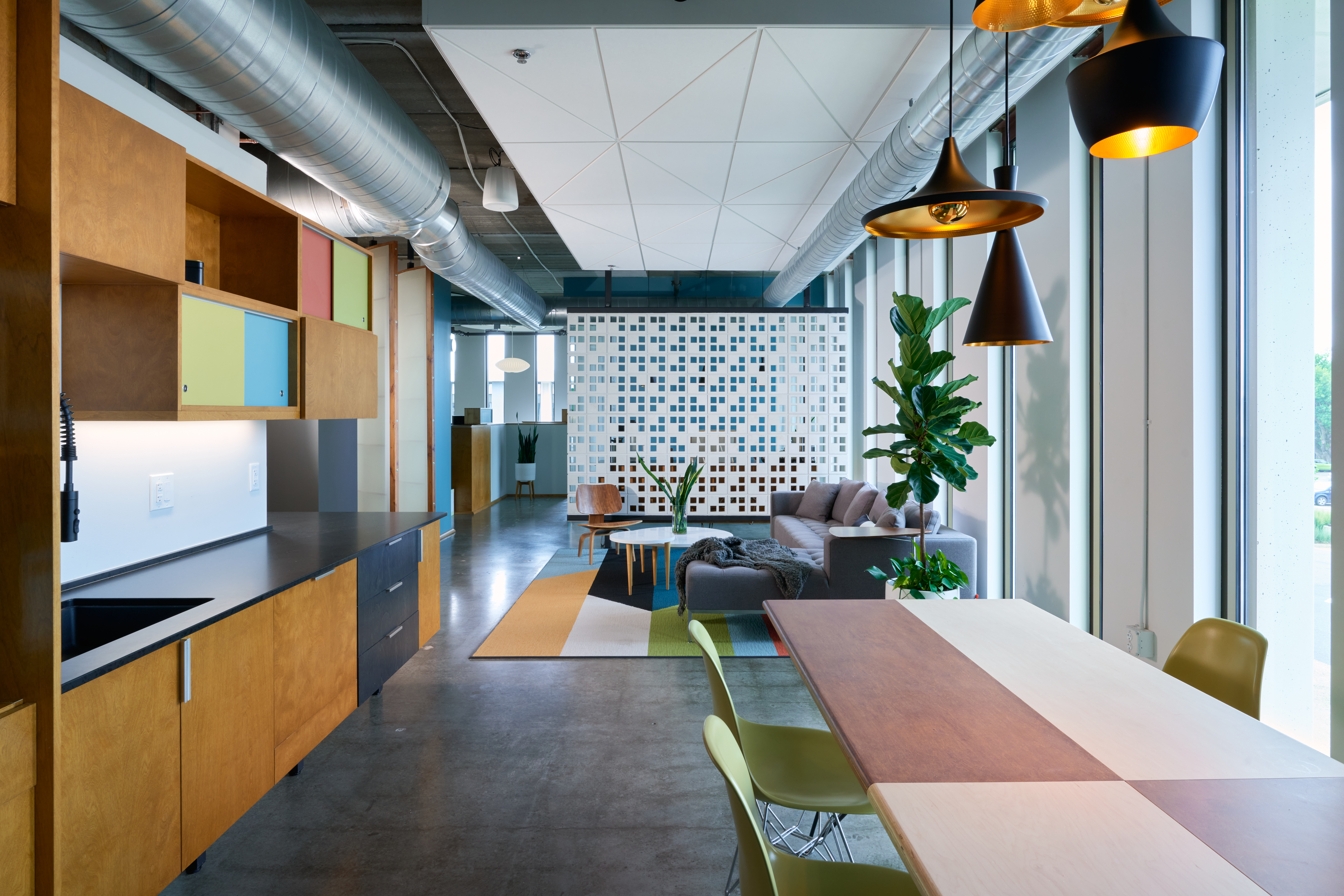
LHB has been at the forefront of innovative workspace design, providing solutions to enterprises — from corporations to nonprofits — for years. Recently, we applied our expertise to our Minneapolis office, creating dynamic and flexible workspaces to enhance the employee experience. Planning and design for similar work areas at our Duluth office will begin soon.
Supporting Wellness, Collaboration and Productivity
Central to our approach is creating team-oriented spaces with quiet work areas that accommodate all work models. This aligns with our goal to foster “connection, collaboration and concentration” at work. As businesses embrace modern design, many explore solutions to improve existing areas, maximize underused spaces, and adapt to evolving work patterns. With many office spaces sitting empty, effective use becomes imperative.
Optimizing a workspace requires thoughtful consideration of choice and flexibility. Today’s creative spaces offer an array of seating options and varying levels of privacy to accommodate various working styles and neurological needs, featuring everything from open lounges to private pods.
Daylighting, indoor air quality, acoustics and outdoor views also contribute to a healthy and comfortable environment. A holistic design approach ensures balanced and productive work locations, recognizing that individual needs vary and can change with daily responsibilities, career objectives and life events.
Design Elements and Material Selection
Effective workplace design will integrate an organization’s vision, values and brand into the creative process. Interior design and material choices can reflect core principles and play a key role in achieving desired design outcomes. LHB’s office renovation incorporated the firm’s commitment to resilience, sustainability and overall well-being. This included using Red List chemical-free materials, a biophilic design with natural patterns and textures, complementary branding colors and improvements to a lactation/wellness room.
LHB used this focused approach when designing Project Enhance for the Saint Paul Port Authority, transforming its 8,400-square-foot interior office suite, which prioritized employee health and wellness.
Visioning with a client informs and guides the work and often involves using sensing images or precedent boards to assess and explore different aesthetics. Another tool, three-dimensional modeling, helps stakeholders visualize spatial designs, including feature walls, branded ceiling designs or elements and wayfinding.
Varying aesthetics from one room to another within an office will create an engaging and adaptable area, boosting productivity and strengthening team collaboration. LHB’s renovation project allowed for the addition of six new workspaces, each with complementary but distinct décor, featuring comfortable furniture and advanced technology.
Each room is named after a tree species native to Minnesota, underscoring support for the environment. Casual focus rooms can be equipped with lounge seating, side tables and guest ottomans, along with wall-mounted monitors for screen sharing and local content display. These rooms offer a quiet space to mitigate sensory overload and allow for a more comfortable working posture.
Today, video conference rooms are often equipped with small conference tables and chairs, wall-mounted monitors, cameras and soundbars. Flex offices typically feature adjustable height desks with docking stations, allowing for focused deep work, private meetings and dual monitors to enhance productivity. Some video conference rooms will include standing-height tables and stools for those who prefer a more active work setting. Also popular in workspace design are alcoves with booths so employees can get away from their desks for impromptu conversations or work on a laptop.
With a workforce aware of — and potentially accustomed to — the comfort and convenience of working from home, employers who design their environment to mirror personalized spaces will not only earn high praise from their employees but will also likely see an increase in productivity, overall employee satisfaction and improved health. Now, that’s a solid return on investment.
Stacee Demmer, AIA, WELL AP, LEED AP, is LHB’s Chief Operating Officer.