Give any downtown area in any city enough time, and it will evolve. Whether those changes are perceived as positive or negative ones depends on who the perceiver is and what their concerns might be, but the simple fact is that nothing stays the same and change is the only real constant when it comes to a city’s center.
Certainly, Duluth’s downtown is no exception to this rule.
Once, before the dawn of malls, it was the bustling hub of just about all the shopping and business in the city. Today, it is still busy and active with foot and vehicle traffic, but the downtown has seen many businesses leave and be replaced with other ones, and the area has seen a continued challenge with its reputation post-pandemic as a place that suffers from an outsized crime problem.
But look around the downtown, and one can see that things are happening, maybe even things that are bigger than the area’s expected evolution rate. With high-profile projects in recent years that included new buildings in the hospital district, the old Central school becoming an apartment complex, Titanium Partners’ remaking of the Ordean building into Force on Fifth, the Lakeview at 333 East Superior and the jail also being renovated into living spaces, it’s clear that there is a shared feeling that the downtown iron is hot, and the time to strike is now.
So, where is downtown Duluth headed?
The answer: depends on who you ask. Different folks with different concerns regarding the area have reached different conclusions that depend on their particular needs for their businesses or investments, but the fact is that there is now a plan in place that is being discussed.
The Imagine Downtown plan, formulated by Downtown Duluth, Boreal Waters and the Knight Foundation, is a framework meant to stimulate conversation about just what direction things should head. It’s still early days, but the simple fact that an official plan is in motion means that imaginations are hard at work on picturing what can transpire during the next five years, and what it all could mean for the city’s future.
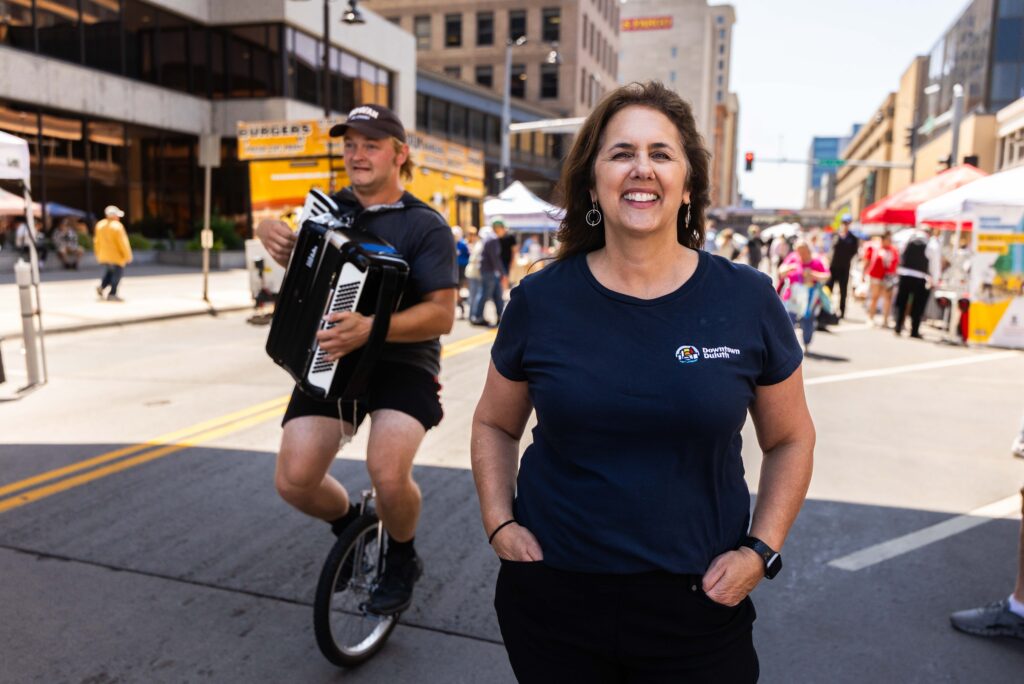
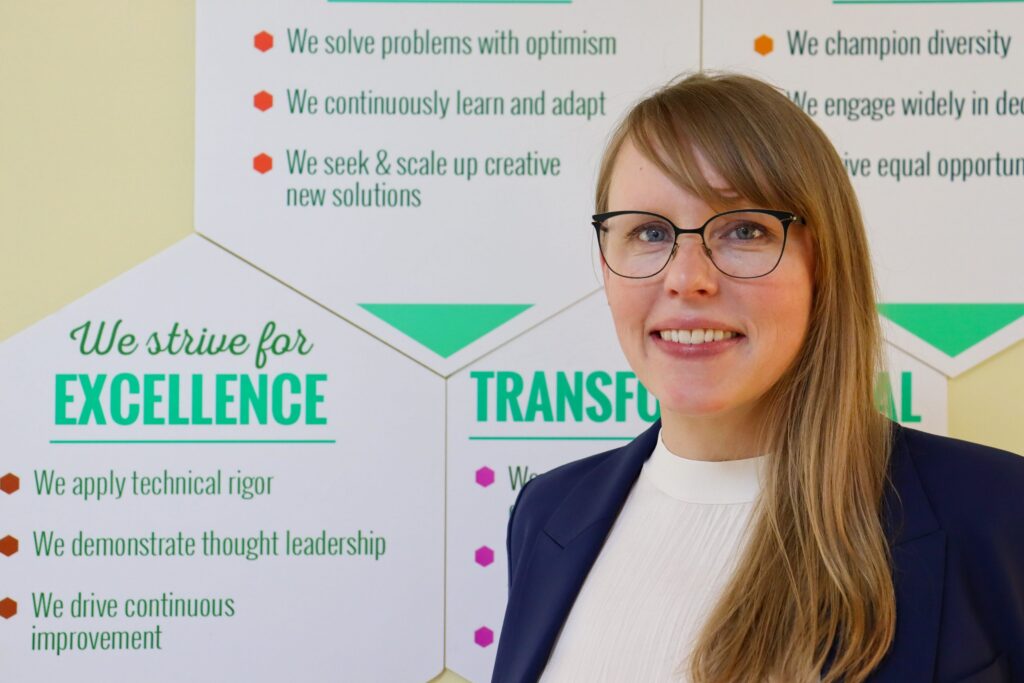
Kristi Stokes, President and COO of Downtown Duluth
“I think we’re seeing some progress and hopefully some optimism that we’re taking proactive steps,” said Kristi Stokes, President and COO of Downtown Duluth and a key figure in the Imagine Downtown plan. “Many times since the pandemic, we’ve had to be reactive to all the issues that have been impacting us, and so creating the Imagine Downtown plan was something that was very proactive, and some of the strategies and actions that will be coming out of that as well are proactive.”
“At this point, I’d like to think that people are seeing some hope and some optimism,” Stokes said. “I know there are still plenty of people out there in our community that are negative about our downtown, but I would challenge those people who are negative about our downtown to dig in and help us make it the best that they think it should be, too.”
It’s true that a big topic of conversation and the driver of many of the negative comments one hears about the downtown area often can refer to people in that part of town who are unhoused or suffer from mental-health issues. It’s a difficult issue to discuss, especially when the people who are most apt to discuss it do so in the course of airing complaints about their businesses or work being affected, and those folks often enjoy privileges that the people they’re complaining about don’t enjoy.
But it is also true that the pandemic led to a lot of people losing jobs, homes and healthcare, and so, as much as people have wanted to leave that time in the rear-view mirror, it’s clear that Duluth still has to address its lingering effects. And this is on the minds of the Imagine Downtown principals.
Stokes points to the new “Pathway Forward” initiative, which is a collaboration between the Union Gospel Mission, Chum and the Damiano Center meant to address in a new way the concerns that so many have.
‘“That to me is a really big move for our downtown, to see the three of them really working even closer together than they have before, not duplicating services and really working with the business community too,” she said. “We’ve been having conversations with them. They’ve been working with us, and we’re all in this for the downtown and to make things better. That’s a real positive.”
“I have a lot of optimism,” Stokes said. “There is reinvestment that we’re seeing by entities that are within our downtown, as well as those that are coming from outside the downtown and investing in the core of our community. I think with the medical district expansions that we’ve seen between Aspirus and with Essentia, I mean, they have shown how committed they are to our downtown area.”
For Stokes, though, there’s a large component of the downtown’s future that will be dictated less by the big companies with the big pocketbooks and more by the small business owners who will need to band together and work as a community to build the downtown they want.
“This is our downtown, and we need to make it happen,” she said. “We have a vision that we can all be working toward. Everybody can play a role.”
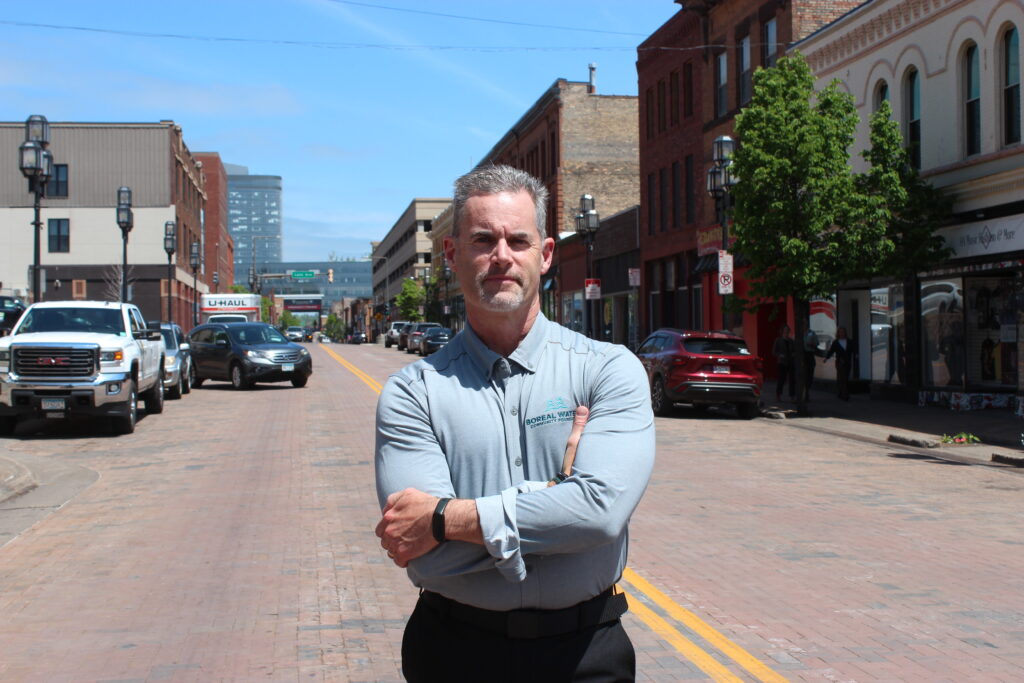
Shaun Floerke, President and CEO at Boreal Waters Community Foundation
Floerke, President and CEO at Boreal Waters Community Foundation, is similarly hopeful.
“Our goal is thriving,” he said. “One of our taglines is ‘thriving is mutual.’ Downtowns are the tax generator for an entire city, so my thought is: how goes the downtown is how goes the city.”
Floerke invokes writer and scholar H.L. Mencken’s famous quote, “For every complex problem there is an answer that is clear, simple and wrong” in talking about the future of the downtown as a way of embracing the fact that there are and will be no catch-all solutions to make the downtown Duluth of everyone’s dreams.
“The solution to complex problems is to embrace the complexity,” he posits.
Boreal Waters funded half of the Imagine Downtown project, which is certainly not a simple plan.
“The way I think about it broadly,” Floerke said, “is that capital follows cohesion. Investments follow planning and coordination and movement. The core elements – you look at quality of life, housing, economic development, infrastructure, neighborhood services – they’re all part of that complexity. Can you do just one at the expense of all others? No. You’ve got to put them together. I think the real proof is whether we can come together and execute on it. And everybody’s going to have a stake. You need people who are committed – people who can move resources and get other people connected and actually move the needle.”
Floerke said he’s particularly focused on creating an investment fund for the downtown. “I’m working on it,” he said. “A housing fund to build actual buildings and apartments and homes in downtown. It’s a difficult environment. The math is really hard to make math, but we need to come together and put some stuff up. That’s the bold move that we’re leaning towards.”
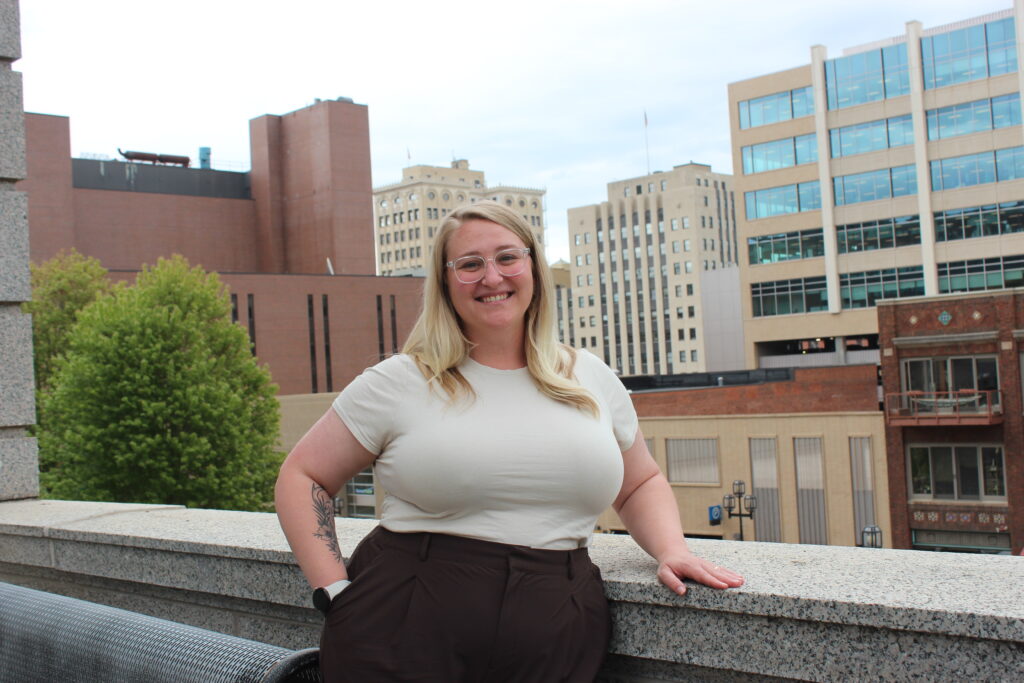
Tricia Hobbs, Executive Director at the Duluth Economic Development Authority
Tricia Hobbs is Executive Director at the Duluth Economic Development Authority. In her role, she focuses daily on the city’s housing needs, so she shares a lot of feelings with Floerke on the importance of new living spaces in the downtown area.
“We like to think of a lot of those challenges more as opportunities,” she said. “There’s a lot of love and attention that’s needed in our downtown and we really view that as an opportunity.”
Hobbs said Duluth suffered an “identity crisis” post-pandemic. “[It was] a spot where people would go to work every day and the businesses in that area saw people coming through – whether that was a coffee shop or restaurant or whatever that might look like, and, obviously, the way in which people work has really changed,” she explained.
For her, the future of the downtown means not trying to recapture an older downtown from whatever era might be one’s favorite: “The big opportunity for downtown is, with the community’s help, to craft and create that new identity for the downtown and then really identify and understand what tools and resources we need to bring to bear to bring that vision to life.”
“We feel like housing is really at the center of that,” Hobbs said, “and the future identity of downtown is really that of a neighborhood. As with all neighborhoods, there is ongoing evolution and there are changes that will naturally happen just due to various trends and habits or the ways in which people choose to live or work, and we’re really in the midst of one of those major transitions right now. We’re at the point of implementation. We know the work that needs to get done.”
As is the case with most people who were closely involved with helping to steer the Imagine Downtown plan, Hobbs also emphasizes that the plan is less about ticking items off a checklist and more about just rolling up the sleeves and setting to work.
“When you do something in a bit of a onesie-twosie fashion, sometimes the outcome really takes itself in an entirely different direction from either what you intended or what the community needs,” she said. “And so when you have that opportunity to wrap your hands around the big picture of the district as a whole, you can help bolster those investments that have already been made and then be very thoughtful about how those other future investments come together.”
Having said that much, Hobbs echoes the thoughts of other principals with Imagine Downtown when she expresses a need for more green space to attract people who might want to have a picnic lunch or walk a dog in the summertime, when Duluth is often most attractive.
“One of the opportunities that we know needs to happen, as we start to scale up housing development on First Street, is very intentionally either incorporating public green space into those housing developments or identifying and setting aside resources, so that there’s some sort of open space that’s publicly accessible and available there for the folks who are calling First Street or downtown their residence,” she said.
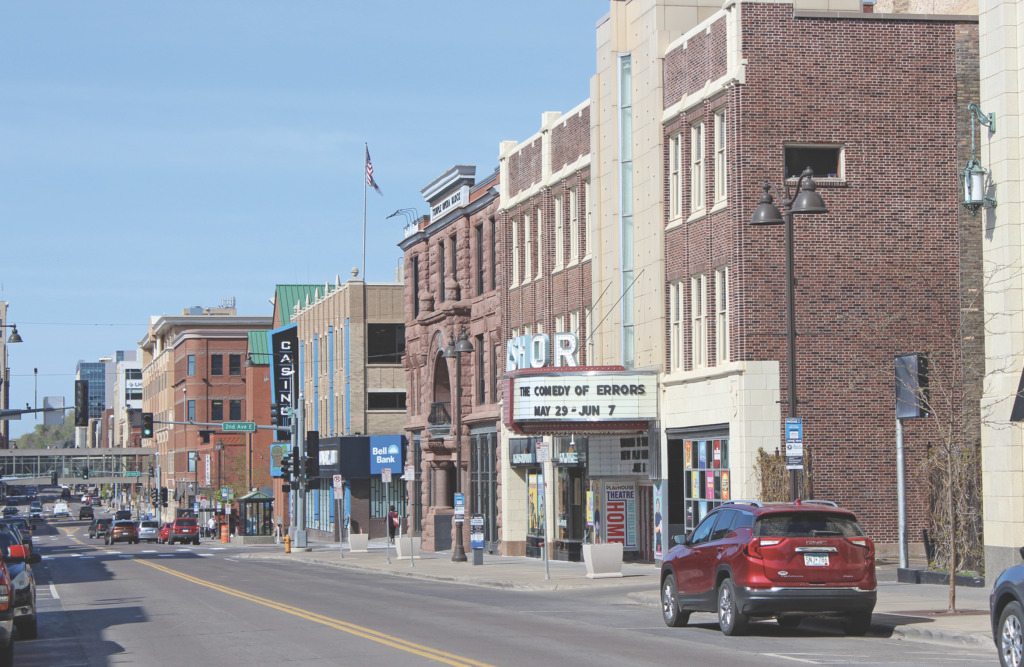
Curtis Martinson is operations lead in Gardner Builders’ downtown Duluth office. He said housing is a key issue for him.
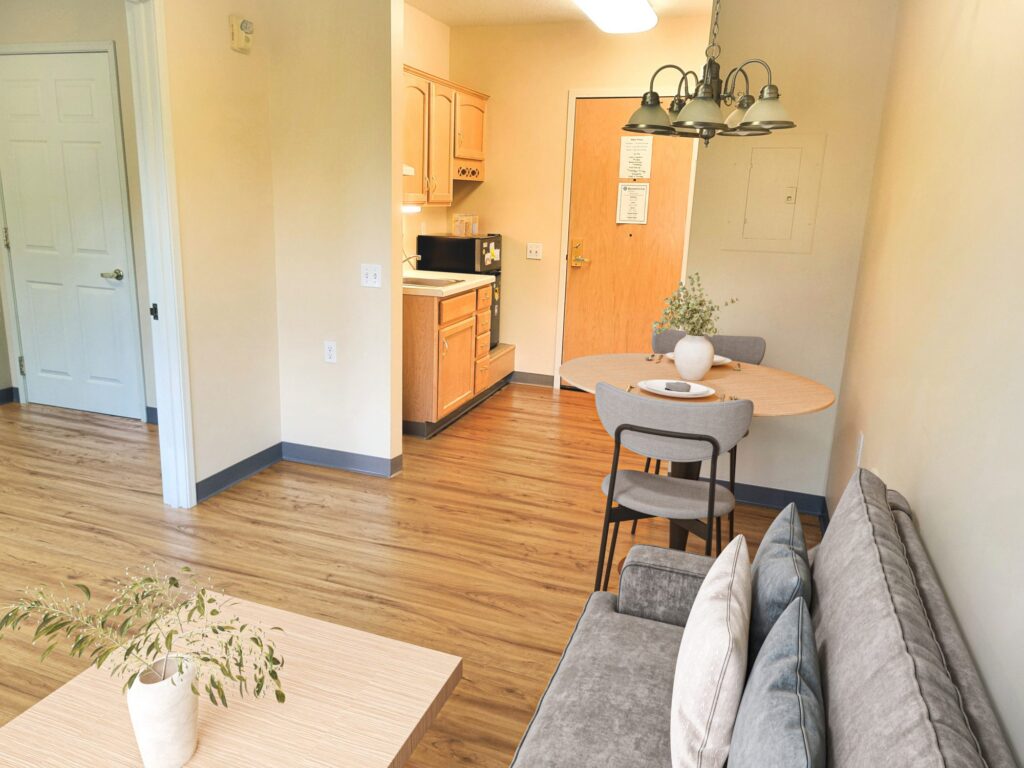
“The most important thing downtown needs is more people actually living here,” he suggested. “We’ve got a lot of older office space sitting half-empty, and turning some of that into housing would make a huge difference. Projects like the Cove apartments – where we’re taking commercial office space and converting it into apartments – and the Leijona turning the old St. Louis County jail into housing, are exactly the kind of moves that help. It’s not easy or cheap to do, but when people live downtown instead of just working here, the streets feel busier and safer at night, and the restaurants and shops have a reason to stay open. That’s the kind of work I’d really like to keep being part of.”
“The other thing is just making the street level feel alive,” Martinson said. “Good shops and restaurants on the ground floor, clean and well-lit sidewalks and better connections to the parks. None of that is flashy, but it’s the stuff that makes people want to spend time down here. Get those two things right, and the rest tends to follow.”
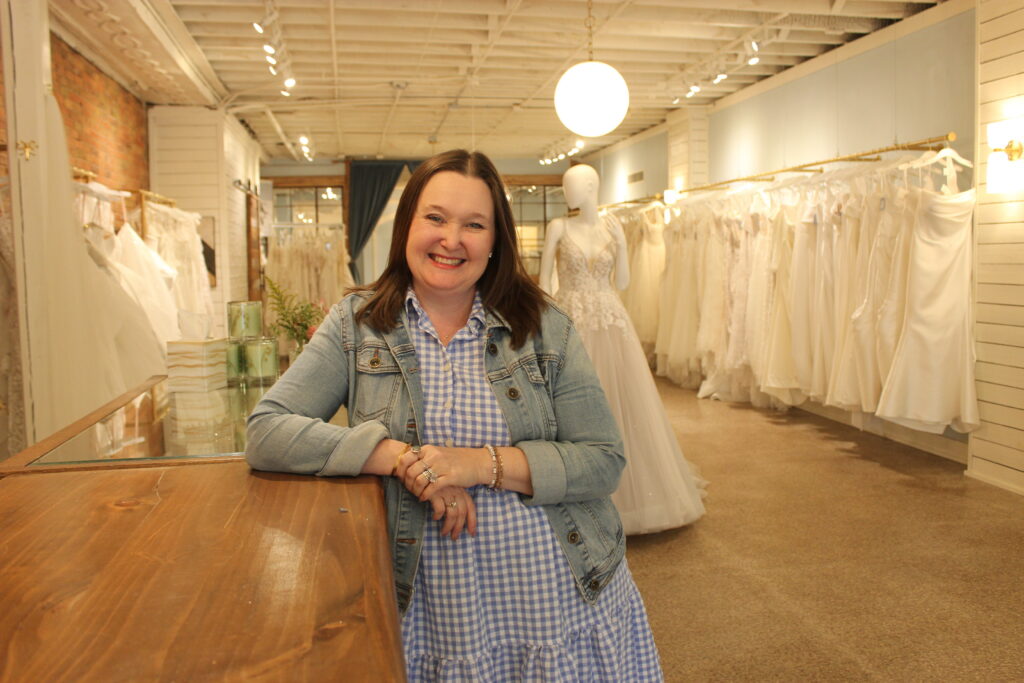
Mariah McKechnie of Northland Special Events
Mariah McKechnie of Northland Special Events invested in the Bagley building in 2022 to help her business and the ones that operate under the umbrella of that name grow. For her, her location is optimal for the work she and her 30-some employees do, but she’s had problems with her customers having to navigate unwanted interactions on the way into her shop.
“I would like them to not have to encounter drug deals happening on the street,” she said. “I would like them to not have to be stepping over the unhoused and being worried about them.”
It’s a tough issue to speak about without potentially pitting one group against another, but McKechnie asserts that she’s “seen things that I have not seen before” in recent years.
“I’ve been down here a long time,” she said. But she’s hopeful that the Pathway Forward plan helps to address the issue: “Coordinated care is going to do wonders. I see all of that really making a massive difference.”
McKechnie mentions that improvements to parking enforcement would be high on her list of goals for the downtown.
“I do think that there are some things about the way that we ticket and do parking management that are very frustrating,” she said. “It only takes one of those interactions with someone who’s not used to coming down here to say, ‘I’m not going to go, because it costs $30.’”
Investing in the Skywalk system is also up there on McKechnie’s list of to-dos. “There needs to be investment and an ongoing plan for how to create vibrancy at both levels if we’re going to have two levels of streets,” she said.
Tiffany Hughes, the CEO of A&L Properties, said she’s “super optimistic” about the prospects for a downtown renaissance. “I’m hopeful that it will and can come back. What exactly that looks like, I’m not sure. But we can make the turn and have a thriving downtown again.”
Hughes suggests, like others, that more housing will help to spur on a new era. She also thinks that more dining options would be a plus. For her, though, rather than seeing a wish list of things come to fruition, she’s just ready for a plan to be executed.
“We’re tired of imagining,” she said. “What are small things or even large things that we can start doing to implement and bring these things forward? It’s going to take time.”
“I’m super hopeful and optimistic,” Hughes said. “It’s coming. We’ve just got to be patient and do everything we can in the interim until we get to that better point where we all want to be.”
Tony Bennett is a Duluth-based freelance writer.