Fixing the Artery Through the Heart of the City
Sometimes, it’s about maintenance. For years since its establishment in 1986 – four decades ago – the Lakewalk along downtown Duluth’s shore has been repaired and tweaked and fixed bit by bit when funding and resources were available.
In the ‘80s, it first was constructed as a half-mile path. Today, it’s about eight miles long. The growth of the Lakewalk as well as its users – and the modes of transportation they employ – has been something that the people who took the first steps in building it never could have imagined. As a result, it became clear long ago that the Lakewalk demanded a lot of attention if it was going to remain a viable destination for locals and tourists.
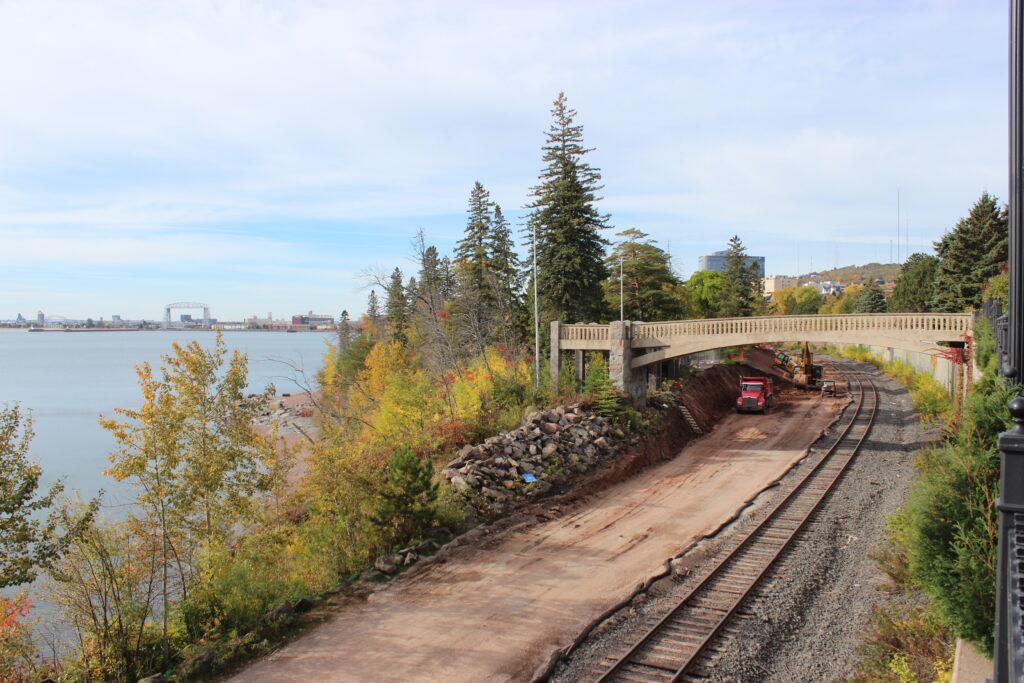
So now it’s about addressing everything all at once in a massive project that falls just short of being a complete and total overhaul. The Lakewalk and Coastal Improvements project has been a long time coming, but it got underway this summer and aims to check a number of to-dos off of the City of Duluth’s list.
According to the city, the project will include “shoreline restoration and enhancements, trail relocation and reconstruction, ADA accessibility improvements (including a bypass trail next to Leif Erikson Park), improved wayfinding and connections between downtown and the Lakewalk and implementation of pause area updates and interpretive elements.”
This laundry list of improvements and rebuilds is about halfway done, and the city aims to have it completed by December of 2027. The goal is to make the Lakewalk much more able to accommodate the throngs of people that have come to rely on the area for exercise and recreation – many more than people anticipated 40 years ago – and ensure that the trail and the land around it are ready to be used for another 40 years.
Of course, a project of this size requires a lot of hands on deck and a lot of minds engaged. Allison Brooks is Project Coordinator, Parks and Recreation with the City of Duluth, and she has been involved since she started working with the city about five years ago.
“I get to work with community engagement to identify and develop park and trail improvement projects all the way through to implementation,” she said. “The Lakewalk is a good example of that. I started in 2021 and wrote the grant application for the state and federal funding that we’ve received for the project, and then we worked through the whole design process and now we’re doing the implementation. It’s been a long time coming.”
Brooks said that weather events and natural processes had battered the trail over time and had to be addressed.
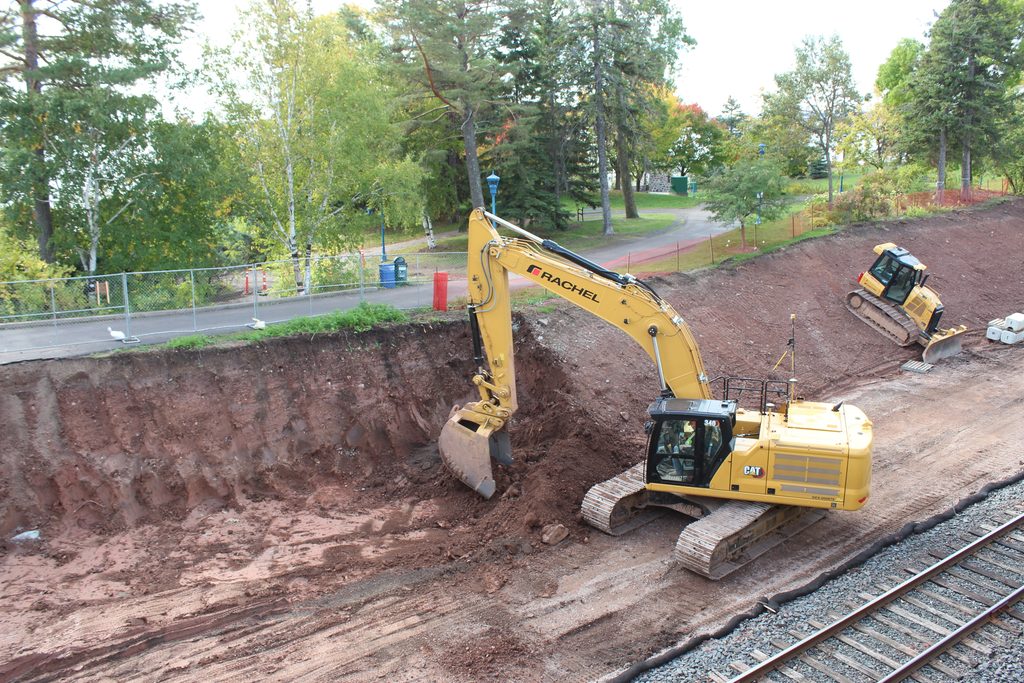
“The Lakewalk has had repeated storm damage from waves from Lake Superior that has caused us to redesign and do a lot of shoreline protection since probably the early 2010s, and we know that we have other sections that are vulnerable within this project area,” she explained. “There’s sections that have already been done and don’t need fixing, but the trail itself passes through it, and there are areas that haven’t been updated yet. This project is really aiming at preventing future wave action and flood damages so that we can protect the shoreline, the trail and all the downtown infrastructure.”
Key to the project going forward was funding – $8.2 million from the U.S. Department of Transportation and a little more than $2 million from the Minnesota Department of Transportation were crucial, and the City of Duluth contributed $2 million of its own resources.
“When I first started, we knew we had this issue,” Brooks said of her early days with the city. “And then the funding opportunity came about during the Biden administration. In reading that notice of funding opportunity, our team was like, oh, wow – that’s actually a perfect fit. The whole point of it is rebuilding American infrastructure. The [key] words were ‘sustainability’ and ‘equity.’ The focus was on these transportation routes that are currently susceptible to storm damage or otherwise that provide critical community links between places that people live and where they work and trying to make sure that they can continue to serve that purpose for the future, and the Lakewalk is definitely that. It is a critical transportation route for connecting people to downtown and the Canal Park Business District, and it’s also just a great tourism draw.”
For so long, issues along the Lakewalk were remedied as needed. It wasn’t always band-aid solutions, but it was close to that.
“Yeah, with our storm and flood damage, a lot of that funding is: you can rebuild what was there, but there’s usually limited opportunities to actually address the issue,” Brooks said. “We had these stretches of the Lakewalk that we know are too close to the shoreline, but we didn’t have the millions of dollars to relocate it inland and to redesign it so that it won’t get wave damage in a couple of years.”
“With this opportunity,” Brooks continued, “we could actually move the trail further away from the shoreline, do some of this re-vegetation and actually address the problem. Lake Superior is hard to predict, but we can have engineers look at the issue and give us the solution that will last for generations.”
Aside from being able to physically move the Lakewalk path away from the shoreline and tackling the problems of erosion and so on that were so worrisome, Brooks said there are a few other aspects to the multifaceted construction project that are particularly worth noting.
“There’s the infrastructure component of being able to address some problem areas that we have,” she noted, “whether it’s water that freezes in the winter and we know we’ve got a slick spot, or it’s a tight spot where the trail width is just currently not wide enough to accommodate users, or we have places like Leif Erickson Park where the trail runs through the park – it’s got those big hills in it, and people end up going too fast while we’re having events. And it’s also a great opportunity to update all of the amenities along the trail and really give it that fresh look.”
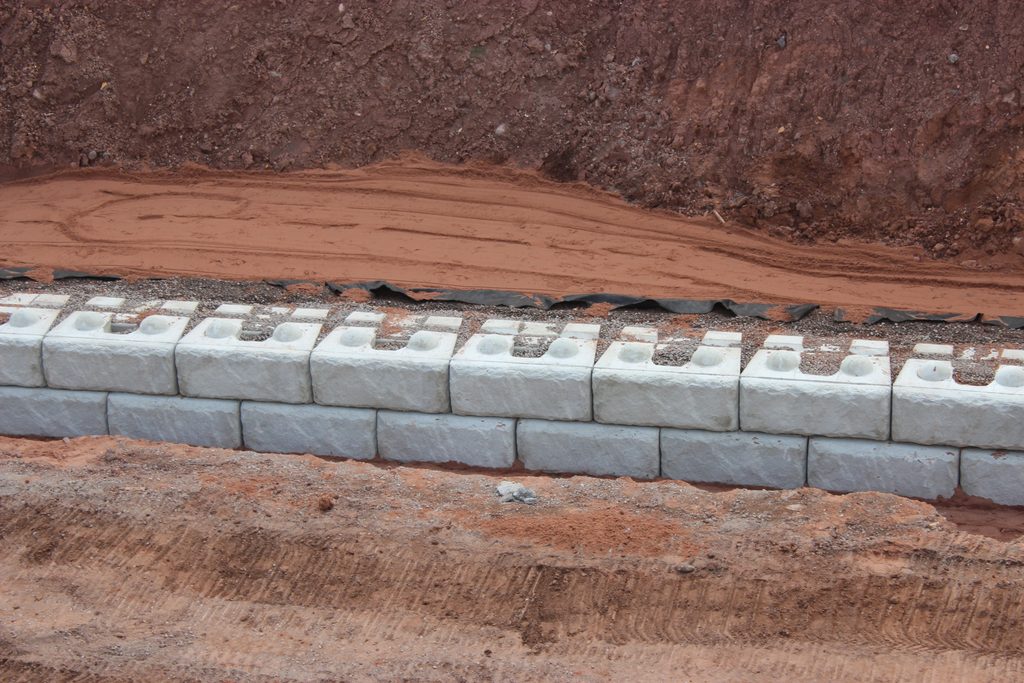
“The biggest benefit,” Brooks said, “is really making the trail more functional for people, improving wayfinding and addressing some of those pinch points in those key problem areas. It’s been a long time coming and it’s really a true reconstruction of the Lakewalk. Between the infrastructure improvement and the community benefit, the whole trail is going to be better because of the project, which is awesome.”
Brooks’ co-lead on the project is City of Duluth Landscape Architect Jim Shoberg. He’s got a lot of experience working on similar projects, and the requirements and goals of the Lakewalk mission also share a lot in common with his past work.
“It’s a job, in Duluth specifically, balancing natural resources and the needs of the natural environment with the needs of the urban environment and the built environment,” he said.
The project was already in the works when he took his current title on a few years back.
“We knew it was coming,” Shoberg said. “We knew it was needed, but the storm surges that we had [in 2017 and 2018] really gobbled up the Lakewalk. That expedited the aging of our coastal infrastructure. A lot of folks don’t know that a lot of the coast is engineered to keep the lake from continuing doing what it does naturally. Banks are sloughing. It’s naturally eroding. If we did nothing here, it would continue eating into critical city infrastructure.”
Shoberg said he worked closely with city parks and maintenance departments and had public meetings to have many conversations that led to the identification of the most problematic areas on the Lakewalk and to a clear goal.
“I wanted it to be something that would be less maintenance than previous Lakewalk iterations,” Shoberg said. “We talked extensively within our work group, here: let’s reduce risk. Let’s reduce the potential of huge failures of infrastructure where we’re going to have to come up with money which we may or may not have. Wherever we could possibly retreat from the lake, let’s do that.”
Shoberg explained that, in the past, rock was dumped without obvious design intent or structural considerations. Now, the work is exacting.
“These slopes of rock that we build – that you’ve seen put in front of the hotels or down along Fitger’s – each one of those rocks are placed with intent,” he said. “They are locked in like a puzzle. And they are engineered to withstand certain forces.”
Aside from the physical reinforcements going on, Shoberg also said the trail will be made easier to navigate visually.
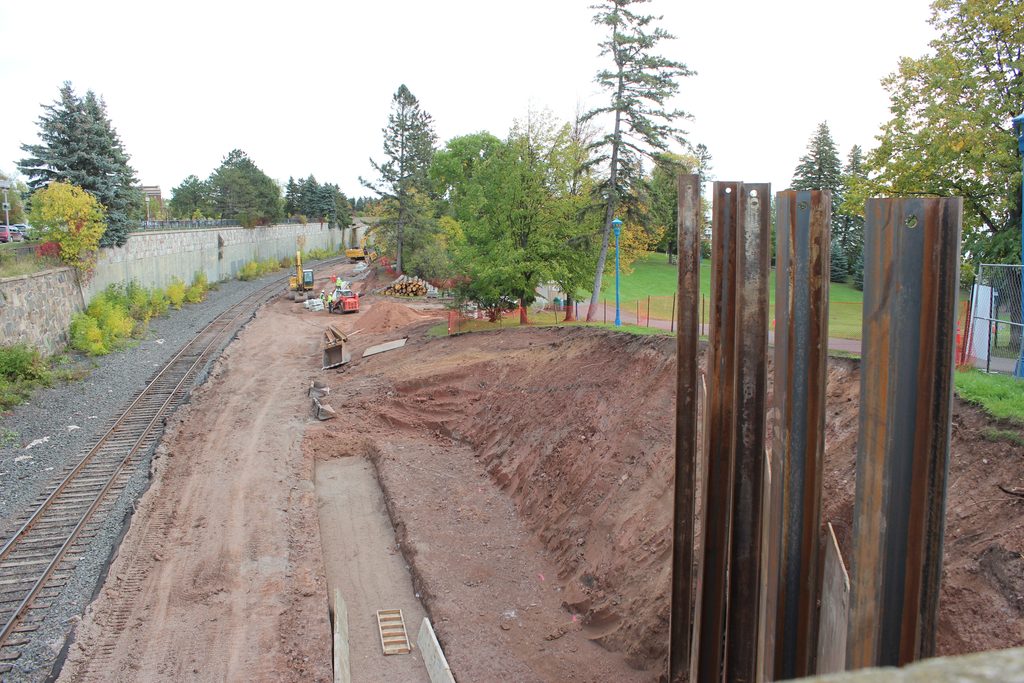
“You’re going to see a lot more signage, a lot more intuitive connections,” he noted.
A lot of these connections were part of the original vision in the ‘90s, and were resurrected and improved and give people more intuitive connections. This is a transportation corridor, but it’s also a recreation corridor. We’re making it universally accessible to more users without compromising its aesthetic character.”
“I think, going into this, the city and our partners realize this is a once-in-a-generation opportunity,” Shoberg said. “We’ve got state and federal grant dollars to revitalize one of the most important recreation assets in Duluth. And if we’re going to do it, let’s do it right.”
James Gittemeier is Senior Transportation Planner with the City of Duluth. He said that, as he thinks about the Lakewalk project, he doesn’t fixate on any of the mistakes that were made in the last four decades, but he rather appreciates the hard work that people did to get Duluth’s most central pathway to where it is today.
“Whenever we build something, particularly when it’s not there before, we’re not sure how the community is going to respond,” Gittemeier said. “We’re not sure if some things will work great and some things won’t. Understanding that is really important. It’s like anything – you do something, and then you have to adjust. You hope you get it to where the adjustments are minor. But in this case, the Lakewalk is really popular. And some rules about the Americans with Disabilities Act have changed. And now we have to kind of meet the new standards. Some things are just way more popular than maybe we anticipated. All the battery-powered devices – the scooter swarms – move much faster, now. And now we have a chance to fix that.”
Given that the people of 1986 and onward couldn’t have predicted all the future trends in exercise and the long-term impact of Lake Superior’s wind and waves, Gittemeier is circumspect and realistic about the next 40 years of the Lakewalk and how it will be used in the coming decades.
“We will have to rebuild it before 40 years from now,” he said. “The pavement will probably last 20 to 25 years. And seniors down the road might be using more assistive devices. That would be another reason to think of trying to create more space for the separation of bikes and scooters.”
“We’re always evaluating,” Gittemeier said. “Trying to figure out how we can improve things. It’s not just, oh, we’re done with this for 40 years and we’ll never look at it again.”
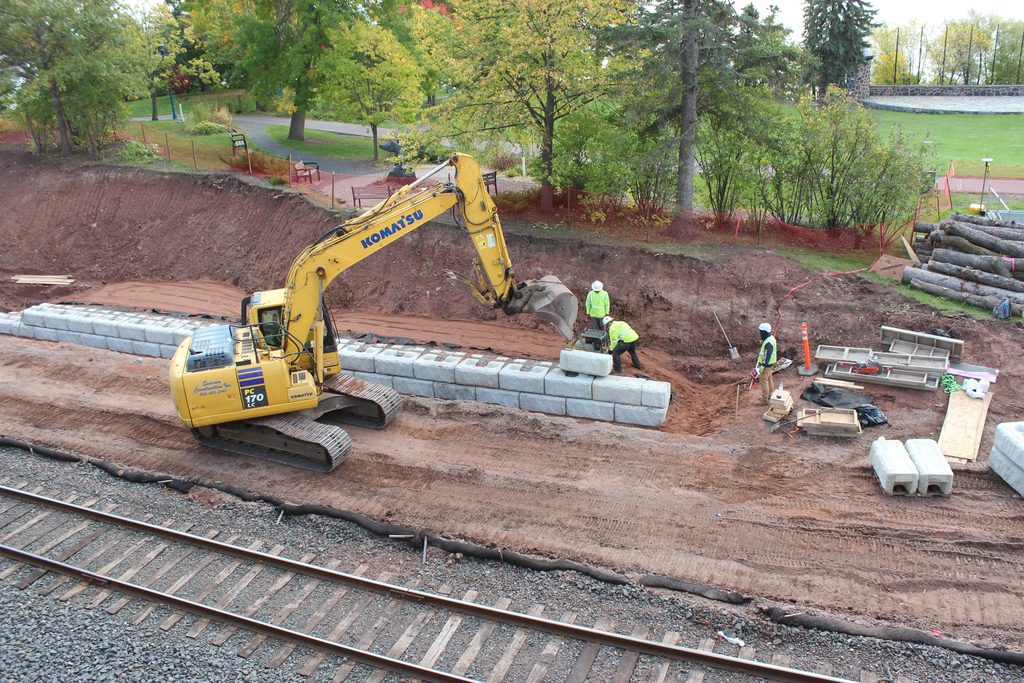
Megan Goplin is Civil Engineering Manager with LHB, the engineering firm in Duluth that has worked closely with the city in the past on a number of projects. They were brought on for the Lakewalk project for landscape architecture and design and to oversee construction. Goplin is a regular user of the Lakewalk and was excited to get involved.
“I usually try to bike in when I can, or I go for a lunch run on the Lakewalk,” she said. “I’ve been thinking about what poor condition it’s in for many years. I know the city was doing segments of the shoreline over the years. On this project, we partnered with AMI, who did the shoreline design. Our client at the city, they were focused on spending resources to improve accessibility. There were segments that needed to be repaved, but then there were other sections where we wanted to realign the trail. I was pleased with that.”
“It was fun to work with a diverse group,” Goplin said. “We have our landscape architects that worked on the project and civil engineers. We had people out in the field doing our own version of [Google] Street View for reference. And then the different people at the city – we had park maintenance, engineering and their facilities team. A really diverse group of professionals that were all really invested in improving this amenity for our city.”
Jim Topie is the president of the Friends of the Lakewalk volunteer group and helped establish it in 2009. That group’s mission is to consult with the city to help preserve, protect and improve the Lakewalk, and so he’s particularly invested in what’s going on.
“There’s a whole element of interpretive programs that’ll be coming out,” Topie said of how the Lakewalk will be more informative along its route. “There’ll be different stands and different plaques along the way, interpreting and explaining different things like Uncle Harry’s Mausoleum.”
Some of these things will be at least partially funded by fundraisers the Friends do in partnership with places like Mount Royal Fine Foods, he added.
Topie is thrilled to see the project underway and looks forward to working to keep the new Lakewalk clean and organized with the volunteer groups they often collaborate with.
“It’s all for a long-term goal, is really what it is,” he said. “I give the city of Duluth a lot of credit. The Lakewalk is a world-class experience on the shore of Lake Superior.”
Duluth Mayor Roger Reinert concurs.
“We have a responsibility to maintain and protect the public infrastructure that makes Duluth such a special place,” he said. “The Lakewalk Coastal Improvement Project addresses real safety and infrastructure challenges, while also ensuring this important community asset remains accessible and enjoyable to both residents and visitors for years to come. Tackling big resiliency projects like this is about both environmental and financial infrastructure sustainability.”
Come the spring of 2028, when all the construction has been finished and all of the many aspects of the project are in the rear-view mirror, the users will decide whether it was a success. But all signs are currently pointing toward the much-needed rejuvenation of a much-loved trail in the heart of Duluth.
Tony Bennett is a Duluth-based freelance writer.