Growing up in Floodwood, Chris Belden didn’t have much exposure to public transit. There are no city buses or light rail rides in “The Catfish Capital of the World” — population 500, give or take. Yet the Duluth Transit Authority general manager was exposed to something in the tiny town about 35 miles west of Duluth that would prove just as formative.
The power of a community that is easily accessible.
“I didn’t even know public transportation was a thing,” Belden says. “It’s such a small community. Everybody pitches in to help each other out, and that’s really where my interest in community connectedness started.”
Belden didn’t experience his first city bus until college at St. Cloud State, where he studied urban planning. It’s a field that would seem to lend itself to effective transportation management, where the emphasis is on maximizing ridership by designing routes that get as many people as possible where they need to go.
Sounds simple, right?
Think again.
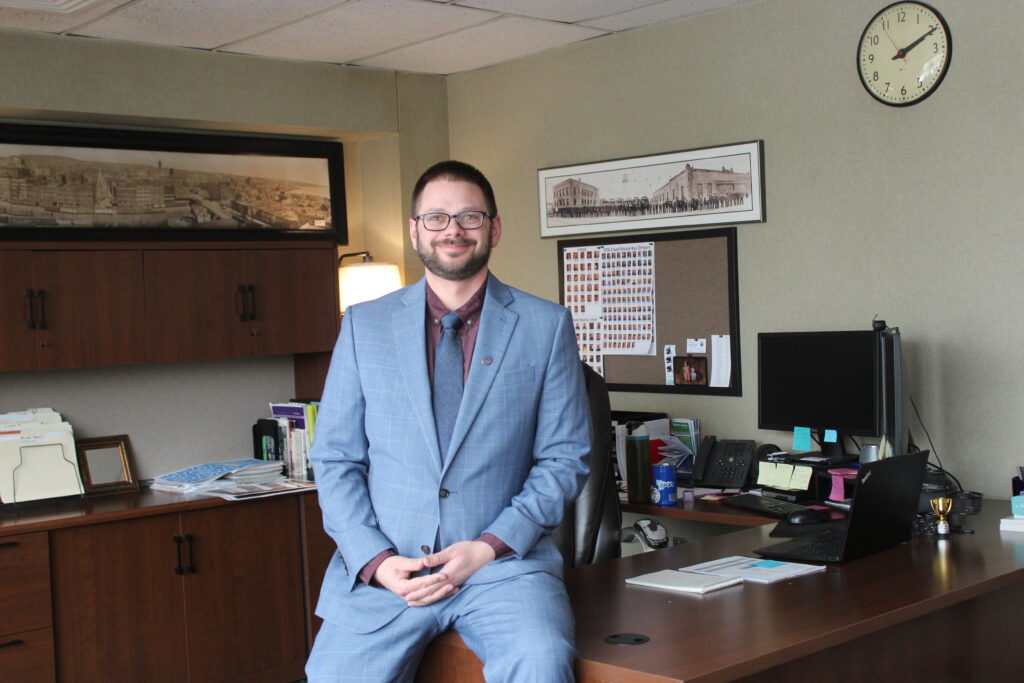
DTA General Manager Chris Belden.
The challenge is part of the draw for Belden, GM since July 2025 when he succeeded Rod Fournier. It’s like putting together a puzzle in which the pieces are constantly changing.
“It fuels my drive every day to make that service better,” he says. “We have thousands of people relying on us each day. I know there are more people out there who would use us if we were more convenient, and I want to continue trying to meet those needs.”
Belden and his team of about 130 drivers, who are responsible for piloting around 90 buses, are trending solidly in the right direction. For a city of Duluth’s modest size to have such a robust public bussing network is rather remarkable.
Among 320 smaller urban systems in the U.S., Belden says Duluth ranked 23rd in passenger trips per capita in 2024. That year, there were 2.34 million DTA passengers total, a number that climbed to 2.4 million in 2025.
The volume is starting to resemble pre-pandemic days.
“There were times before COVID that I couldn’t fit another soul on the bus,” says driver Angela Ellis, who is starting to see that again during some of her most popular trips.
On average, the DTA — the third-largest public transit system in the state — transports between 8,000 and 9,000 passengers each weekday. Belden hears often from people who are either visiting Duluth or just moved here, and they’re struck by the availability of city buses. It’s something he and the nearly 200 DTA employees revel in, operating a web of interconnected routes that rivals that of some major metropolitan areas in terms of sophistication.
“When they come here, they’re always surprised at how much service there is,” says Belden, who has been with the DTA for almost eight years, first as director of planning and grants before moving into the assistant GM role. “We’d always like to have more, of course, but in comparison to a lot of other places in the United States, we have a lot of service.”
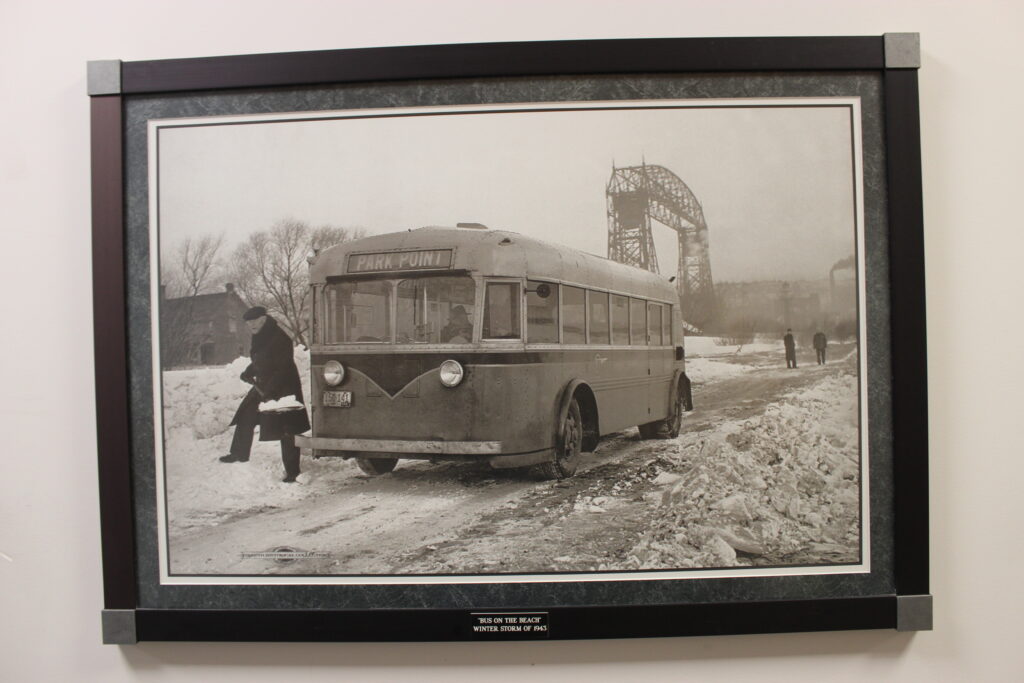
In the good old days of the DTA.
It’s counterintuitive, then, to hear Belden talk glowingly about the DTA’s decision three years ago to more than halve the available routes. An overhaul in the summer of 2023 resulted in the number of routes dropping from 33 to 15. The intentional redesign was all about practicality and making it easier to take a bus in Duluth.
By consolidating options, the DTA hoped to become more user friendly. More reliable, too. Aided by enhanced technology and a more functional mobile app, riders could be confident about the timing of their buses. Nobody wants to consistently fret about being late for work. The upgrades were intended to remove much of the guesswork. If a bus is late, Belden says, riders can track it on their trip-planner app.
When he and his colleagues would ask people why they didn’t ride the bus, they frequently were told that it was too confusing. Potential patrons simply didn’t know how to read the routes. Previously, there were multiple variations of existing routes. Route 10, for example, might have a 10E and 10H, differing based on time of day, weekday vs. weekend. It was a lot to keep track of.
“We tried to make it as easy as possible to ride the bus, because we know that’s a barrier,” Belden says. “That first time is always the most intimidating or anxiety-inducing. But once you get the hang of it, it is, in my opinion, the best mode of transportation.”
Around the same time, the DTA added its blue and green Go Lines, which emphasize efficiency via limited stops along popular routes, as well as high frequency (running every 15 minutes). The blue line goes from the Spirit Valley neighborhood to downtown and then to the University of Minnesota Duluth, while the green line travels from downtown to the Miller Hill Mall area. These are often straight shots, without the normal zigging and zagging through neighborhoods and down side streets.
“There’s an easy way to get people not to use public transit, and that’s to zig-zag all over and take a long time to get people where they’re headed,” Belden jokes.
Belden noted a neat feature that protects schedules. Buses that are running behind can use technology called Transit Signal Priority to communicate with approaching stop lights and request an extended green light or shortened red light.
Talk with Belden for any length of time and you’ll hear the word “efficient” a lot. That’s the business he’s in, the constant focus of his team, whether it’s looking at a heat map of Duluth with 200 dots providing real-time feedback or seeking even the slightest improvements that will make bus-riding easier and faster. Case in point: The DTA is evaluating switching to electronic payment only for the Go Line to make the service even faster.
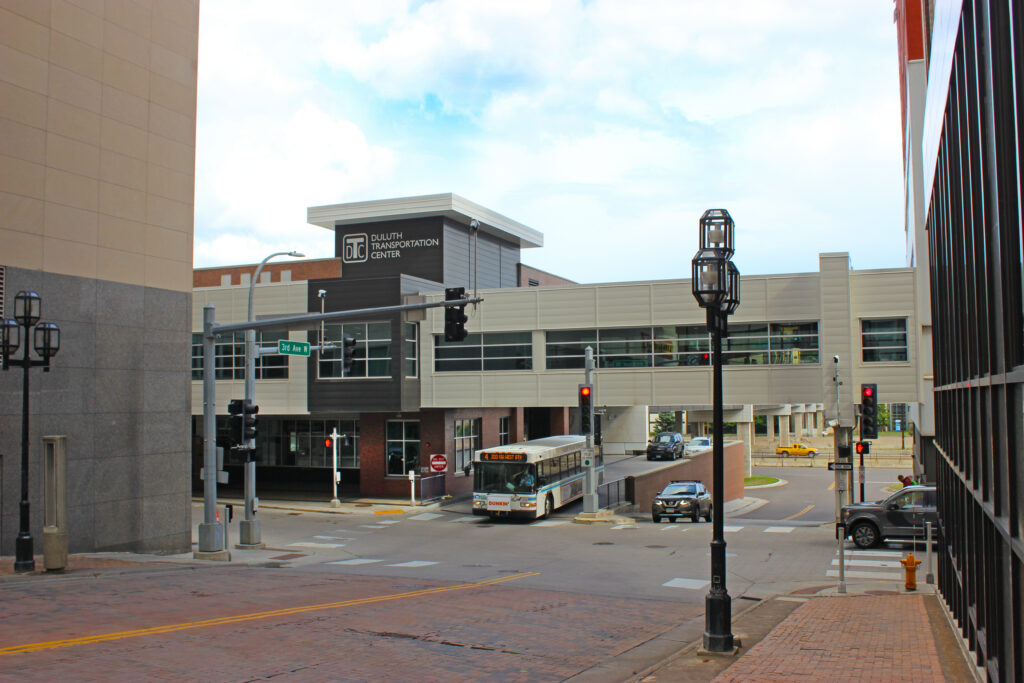
They want to make buses more appealing and — yes — more efficient. Belden says bus transit is trying to emulate the outcomes of light rail without the massive costs of putting rails in the ground.
Since the recent changes involving route consolidation, 37 percent of riders have experienced significant travel time improvements, Belden says. It shouldn’t come as a huge surprise, then, that the DTA has enjoyed a 46 percent increase in ridership since 2021.
“We would not have been able to do that if we weren’t nimble and responsive to the needs of our riders,” the GM says. “Just like anybody, they want to spend as little time commuting as possible.”
Regular Refining
Analyzing those needs and identifying opportunities has allowed the DTA to not just add service, but to add the right service. Empty buses don’t benefit anyone, so the key is to find the right mix of routes that appeal to the most riders. When that happens, Belden says, buses increasingly become a viable option for getting to work, medical appointments, school and all the places people go.
When Belden moved to Duluth in 2015, he says he didn’t drive his car for the next three years, relying almost exclusively on buses. He believes others in the Northland can do the same thing.
“We try to run as much service so that people can live like that,” Belden says. “We try to make it easy to live car-free, and we do everything we can to keep it affordable. We can be a great way to keep our community connected.
“We hear from people all the time who appreciate the DTA. It gives them independence, freedom, access.”
Drivers don’t take that responsibility lightly.
“There are so many people who don’t have any other options besides the bus,” Ellis says.
The DTA also operates in Proctor, Hermantown and Superior, the last of which is on the cusp of marked growth. Whereas some municipalities are scaling back their financial support for public transit, Superior is going the other direction — scaling up its support. This comes about three years after many routes in the city were cut due to low ridership. But a rebound in usage prompted the investment by local officials. Belden hopes to increase service in Superior by 56% in the next year. That includes a return to Billings Park and adding options in the South End neighborhood as well.
It’s all about resource allocation, putting buses and routes where they will reach the most people.
The DTA’s success, and even its survival, depends on it. That’s because much of its funding is performance based. About 80 percent of it comes from the State of Minnesota and the Federal Transit Administration, which rewards growth. More riders equals more funding, which is exciting.
However, the opposite is also true, meaning it’s imperative to maximize ridership and ensure adequate funding to continue serving the region. Failure to do so could slowly turn into a death spiral in which cutting service leads to less revenue and fewer riders, with fewer riders leading to cuts in service and less revenue – and so on.
Complicating that objective? It’s likely never been so tricky to compel bus-riding. Consider all the alternatives — Uber, Lyft, traditional taxis, regular bikes, fat-tire bikes, E-bikes, scooters, unicycles and on goes the list. Not to mention the COVID-19 pandemic, which turned hundreds if not thousands of in-person workers to remote workers no longer needing transportation to and from the office.
That’s a lot of competition, especially in a region where the population has remained stagnant. Belden says all the options are complementary to one another. They are part of a broader ecosystem that allows many folks in the Twin Ports to live without their own vehicle.
For the DTA, its differentiators are efficiency and affordability.
“We try to quantify the value of transit and prioritize getting the most people to the most places,” Belden says.
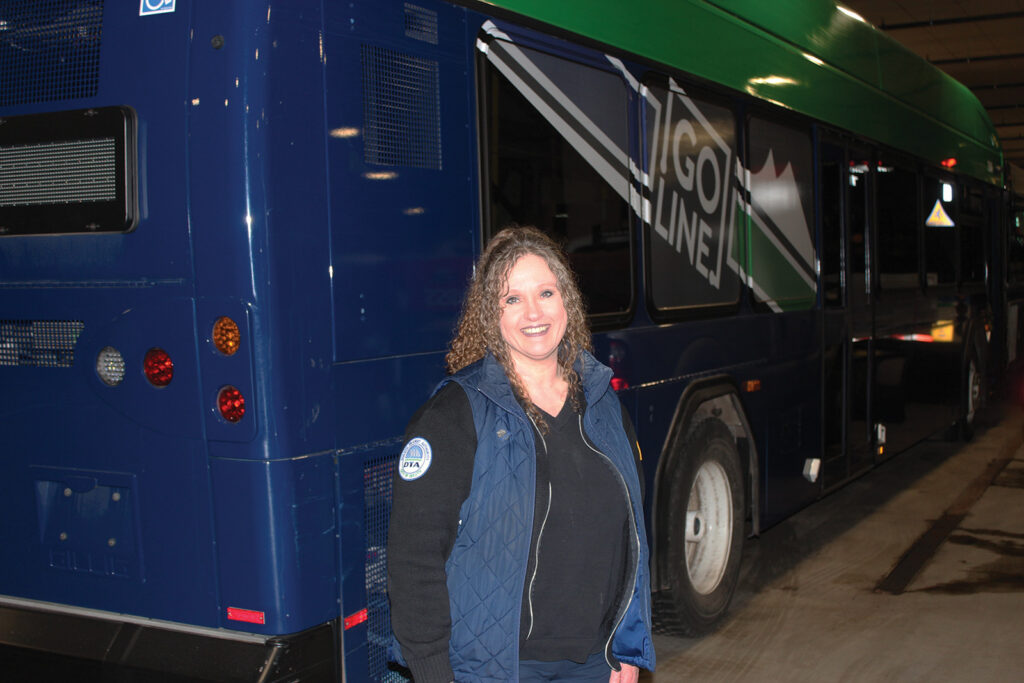
DTA Driver Angela Ellis.
Doing What They Love
For longtime drivers like Ellis and Brian Rapp, the joys of the job revolve around the faces they see so frequently.
“The people that I drive are just amazing,” says Ellis, who’s been behind the wheel of a DTA bus for 25 years. “They count on me and I love that.”
While Rapp’s main objective is to get his passengers from Point A to Point B without incident, a secondary goal is to see them smile. He always has a warm greeting.
“I may be the only friendly face they see that day,” says Rapp, who’s driven for the DTA for nine years. “It’s fun to see people smile when maybe they weren’t expecting to. For me, that’s really gratifying.”
Rapp isn’t shy about his affinity for the job. He’s always loved to drive, going back to the day he turned 16 and passed his driver’s test in a snowstorm. He’d never driven something like a city bus before starting with the DTA, but he quickly found his groove. Now, when Sunday nights arrive, he can’t wait to get back to work the next day.
“I don’t think, ‘I have to go to work tomorrow.’ I think, ‘I get to go to work tomorrow,’ ” Rapp explains.
Rapp remembers words of wisdom from Mark Horlocker, director of operations and training, who helped train him nine years ago. Horlocker described the front of the bus as a driver’s office window, offering a front-row seat to the many views of Duluth and the surrounding region.
“I love the city and I love driving, so it’s been a perfect fit,” Rapp says.
Ellis and Rapp have seen plenty of changes through the years. Chief among them is technology. Ellis remembers when transfers involved paper punches. She’d punch several transfer cards prior to every shift and hand them out as needed.
Other notable changes include the routes and the fares. Those tweaks have been constant. One thing that hasn’t changed? The feeling Ellis gets from so many people putting their trust in her.
“Even during bad weather, you’ll look back and people are reading a book or on their phones,” she says. “They know I got them. They trust me to do a good job, keep them safe and get them to their place on time.”
Louie St. George III is a freelance writer based in Duluth.