
By Louie St. George III
Having worked at Duluth’s paper mill since it opened way back in 1987, people like Gary Wargin and Joan Dagger have seen it all. They have experienced economic downturns and upswings, been through a handful of ownership changes, watched consumer demands ebb and flow and had colleagues come and go.
The biggest change started to take root in the mid- to late 1990s. The Duluth mill, then known as Consolidated Papers, was a leading producer of supercalendered paper (think extra glossy and smooth). That might seem like a good thing. But the newspaper inserts, catalogs, coupons and magazines that were printed on supercalendered paper were gradually being phased out. Consumerism and mass communication were moving online.
“We can read emails on our computer,” Wargin says. “We don’t need to get paper sent to us with the same information. People that wanted to consume content were suddenly able to do that via the internet.”
Today, about a year after industry titan Sofidel bought the mill from ST Paper, the focus is on tissue paper. Massive, 4,000-pound rolls of tissue are produced on site, then distributed elsewhere, eventually being turned into toilet paper, facial tissue, napkins and paper towels, among other items. Those products are much more “technology-proof” compared to supercalendered paper. Toilet paper, for example, is unlikely to be replaced by an app or computer – at least not anytime soon. Or so the hope goes.
“Toilet paper will always have a need,” Simone Giacomelli, integration manager for Sofidel, says with a smile. “There will always be a demand for that.”
In that regard, Sofidel has been a boon for the mill located in Duluth’s Irving neighborhood. Wargin, site operations manager, called it a dream come true. The possibilities are endless, the future more secure. That wasn’t always the case.
“It’s taken away that huge dark cloud of a shrinking market,” Wargin says, the relief and optimism in his voice unmistakable.
Added Dagger, production planner and transportation manager: “We feel comfortable this market will be there long-term because everyone needs these products.”
Nearly killed off by the COVID-19 pandemic, the mill stabilized under ST Paper, which sold to Sofidel in the first weeks of 2024. Sofidel was intrigued when it learned of the opportunity. The Duluth site had the necessary infrastructure as well as ample room to expand, a trained and trusted workforce and a willingness to collaborate from city and state officials.
“We realized the workforce that is here in Duluth is a very skilled workforce and very dedicated,” Giacomelli says. “The people are very prepared and very committed to the paper mill.”
Another perk? ST Paper had just upgraded to a new, top-of-the-line paper machine that produces tissue. All signs pointed to the Northland for the multinational papermaker.
Sofidel was so excited by the potential of its acquisition that it quickly announced plans to invest about $200 million via a huge expansion project. The project will allow those huge rolls of tissue to be transformed into finished products right here in Duluth. That integration will result in operational efficiencies and a need for more workers. Ultimately, the mill will employ about 240 people when all the upgrades are complete; it currently has about 80 employees.
“Every owner likes to say, ‘We’re a growing business and we have big plans’,” Wargin says. “Sofidel said it and some of us jaded folks thought, ‘Well, that would be nice to see.’ It’s kind of the same story we’ve heard over the years. Frankly, they came in and were engineering this expansion project before they even officially bought it. They’re making it happen right before our eyes. It’s exciting.”
Headquartered in Italy, Sofidel has a presence in 12 European countries as well as 10 states in the U.S., and has about 9,000 employees. It is the second-largest producer of tissue paper in Europe.
Underscoring Sofidel’s aggressiveness, the company in early November finalized a $1.06 billion purchase of Clearwater Paper, the largest deal in its nearly 60-year history. With the move, Sofidel acquired Clearwater Paper production sites in Shelby, North Carolina; Lewiston, Idaho; Elwood, Illinois; and Las Vegas, Nevada. It also took on about 1,700 new employees.
“This transaction makes Sofidel the fourth-largest tissue paper manufacturer in North America and strengthens its leadership in the private label sector, a market that is growing further,” Sofidel CEO Luigi Lazzareschi told the Recycling Today publication. “A step that brings the goal of having equivalent revenues on both sides of the Atlantic Ocean much closer. A crucial acquisition for the future of Sofidel as a whole.”
The industry-rattling acquisition was preceded by Sofidel’s announcement in September 2023 that it would invest $185 million in its Circleville, Ohio, plant.
Long, Winding Road Leads to Stability
Both Wargin and Dagger started at the mill before any paper was being made, during the ramp-up to production. It’s interesting to hear them talk about their four decades of employment there. An abundance of promise has bookended their careers. Early on, it stemmed from the chance to leverage Northeastern Minnesota’s vast wood supply. Today, the promise exists due to a shift in products and a market that is growing rather than contracting.
In between, though, there were some challenges for Wargin, Dagger and their coworkers. Overall, the mill has had seven different ownership groups. The nondescript brown building visible from Interstate 35 began as Lake Superior Paper Industries, which was a joint venture between Minnesota Power and Pentair. Consolidated Papers was next (a fitting name for an industry immersed in intense consolidation at the time), followed by Stora Enso, NewPage, Verso and then ST Paper. Longtime Duluthians have watched the building’s signage change with each new owner.
Verso idled the mill in the summer of 2020 as the pandemic choked the global economy. Thanks to waning demand for glossy paper, the mill’s outlook was already tenuous before COVID struck.
“I would say that was the final nail in the coffin,” Wargin says. “We were hanging on for dear life, and that made the decision (to idle) pretty easy when COVID hit. It was still devastating, though. There were about 230 employees at the time who had an uncertain future and had to figure out what to do next.”
Through the lean times, even before the pandemic, innovation and ingenuity kept the mill humming. Wargin said they were routinely experimenting with different creations. What could they produce, and would there be a market for it? They tried cardboard, brown shipping boxes, corrugated products, grocery bags, paper again. Each attempt was just successful enough to keep people on the payroll – not 360 people like during the mill’s early 1990s peak, but enough to stave off closure.
“A lot of innovation kept the doors open here,” Wargin says.
While ST Paper bought the mill from Verso in 2020, it took more than two years to transform the site so it could produce recycled tissue. Full operations didn’t resume until early 2023. When that happened, many employees who had left following Verso’s decision to pull the plug returned and learned how to make tissue.
Dagger, of Twig, was one of those people who left in 2020, though it wasn’t by choice. Still, when the chance arose a couple years later to come back, Dagger didn’t waver.
What enticed her to return?
“Pretty simple – this is home,” she says. “I started here right out of college and I’ve enjoyed working here throughout the years. When the opportunity came up, I was very excited to come back and work with some of the same people.”
It reminded Dagger of 1987 all over again. Moving to tissue required a leap of faith. It was the unknown, a fresh start.
“It was interesting to start from scratch again, with another startup,” says Dagger, who started at the mill as transportation coordinator. “We got to really create everything from ground zero again, and I really enjoyed that. It was a whole different market that we were working in.”
Wargin agreed about the unique opportunity to transform the mill and set it up for future success.
“It’s a very collaborative environment,” he says. “It’s a place where people come to work and make change. That makes it a place that people like to work at. They wouldn’t want to work anywhere else.”
One of the things that attracted ST Paper was the state-of-the-art recycled pulp mill on the Duluth site, built by Minnesota Power in 1993, which would be a perfect fit for its away-from-home tissue market (for example, the thinner, lower-grade paper towels or toilet tissue you use in a public restroom). ST Paper subsequently invested in its new Andritz machine to turn that recycled pulp into lightweight tissue.
Sofidel, on the other hand, sells higher-end, at-home products. Private-label customers include most of the top supermarket retailers in the country.
Wargin is proud of the mill’s resilience. Even when it wasn’t thriving, it found a way to stay afloat. That, he says, is a testament to the folks who have worked there as well as the mill’s culture. They’ve always been treated well, with good pay, autonomy to do their jobs without being micro-managed and a safe working environment.
“For outsiders driving past this mill, it’s kind of unknown what happens inside this brown box out here in West Duluth,” Wargin says. “But I can tell you, we’ve had maybe a thousand people come and go over the years, and these are the types of jobs that you raise a family with. You can own a home or buy a home and realize those American Dream-kind of goals. I’m living testament to that, having never been laid off in 37 years here.”
A Growing Facility for Growing Demand
The mill bordering Central Avenue is a hub of construction activity, with earth work in full swing to get the huge site prepped for expansion. In late November, Wargin says there were as many as 150 trucks passing through daily with loads of soil. The phased project will add close to 600,000 square feet of space as well as about 160 good-paying jobs while drastically boosting production capacity. When it’s all said and done, sometime around the middle of 2026, the site will feature a brand-new conversion facility and an automated warehouse that will stand 150 feet tall.
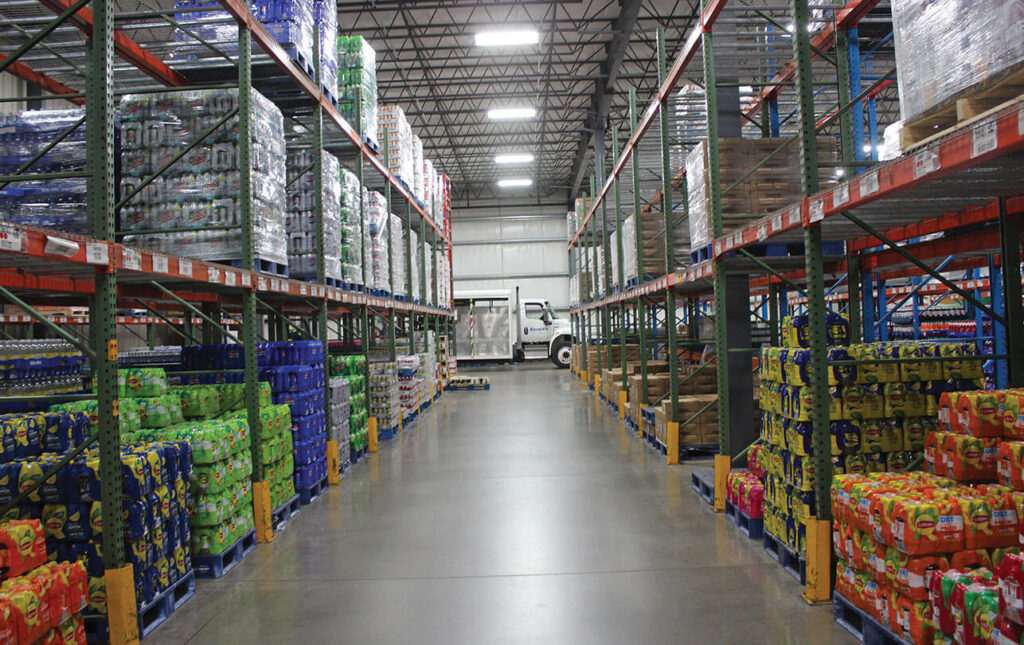
The conversion facility will enable the mill to turn the giant rolls into finished tissue products and distribute them right from Duluth, to customers across the region. Optimal capacity, Giacomelli says, would be approximately 11 converting lines.
Sofidel’s slice of the funding pie is projected to be in the neighborhood of $200 million. Other monetary sources include $5 million from the Minnesota Department of Employment and Economic Development (DEED) and $14 million in tax assistance from the City of Duluth.
“This will help offset some of the costs of infrastructure,” Giacomelli says of the funding. “It has been an ongoing collaboration with DEED and the city. These are strong relationships focused on long-term growth.”
Giacomelli says he and the rest of the Sofidel team were immediately comfortable in Duluth as city leaders have been open and accommodating. With so many solid manufacturing jobs, the city certainly has a vested interest in seeing the company succeed.
“We are so satisfied with the collaboration of local officials,” Giacomelli says. “As soon as we got here, local officials reached out to us. They said they wanted to meet with us and were happy to collaborate. Everyone is very welcoming and very willing to hep us in any challenges that we face.”
The converting facility should be done by the end of next year, with installation of the converting lines to follow. Sofidel can confidently make this kind of investment because, while the market for tissue paper is continuously and steadily growing, if modestly, the private-label market – in which Sofidel is a leader – is doing so more robustly.
That confidence was buoyed by the longtime successes of the Duluth mill, where the workforce is defined by its resourcefulness, competence and whatever-it-takes attitude.
“So far, it’s been a really positive experience,” Giacomelli says. “The environment here is very nice, very welcoming, and the people are very dedicated to the plant. In terms of productivity, we are very pleased. Every month, production is increasing.”
Dagger repeatedly used the word “exciting” as she discussed Sofidel’s potential. The future wasn’t always so bright for the Duluth mill, where mere survival was too often the goal.
“It’s just very encouraging to see our mill grow because for so long it had been stagnant,” Dagger says. “It does feel like there’s a weight lifted off us because we do see progress, right out our window.”
Sustainability That Makes Sense
While Sofidel pursues strategic growth and increases its reach as well as industry influence, it clings tight to a longstanding commitment to care for the environment. Ambitious green initiatives set for the year 2030 include:
• Reducing, by 50%, the use of conventional plastic in its production. From 2013 to 2023, Sofidel reduced its plastic packaging by 39%.
• Increasing its use of recycled water from 96% to 98%.
• Draw 84% of its energy from renewable sources.
Sofidel also is working to be carbon-neutral by 2050. That’s because, Giacomelli says, preserving precious resources is good for business, but it’s also the right thing to do.
“Sofidel has a very strong tenet toward sustainability,” he says.
Dagger says that spirit, which has long pervaded the Duluth mill, is necessary.
“It’s just longevity,” she says. “If we don’t take care of what we have here, we’re not going to have it in the long term. I think that’s important to all of us. And it’s been important to the folks here at the mill as well.”
While Sofidel tries to reduce its impact on the environment, the company’s impact on the Twin Ports is only growing. At the Duluth mill, a sometimes-cloudy past has given way to a bright future.
Louie St. George III is a freelance writer based in Duluth.