By Andy Greder
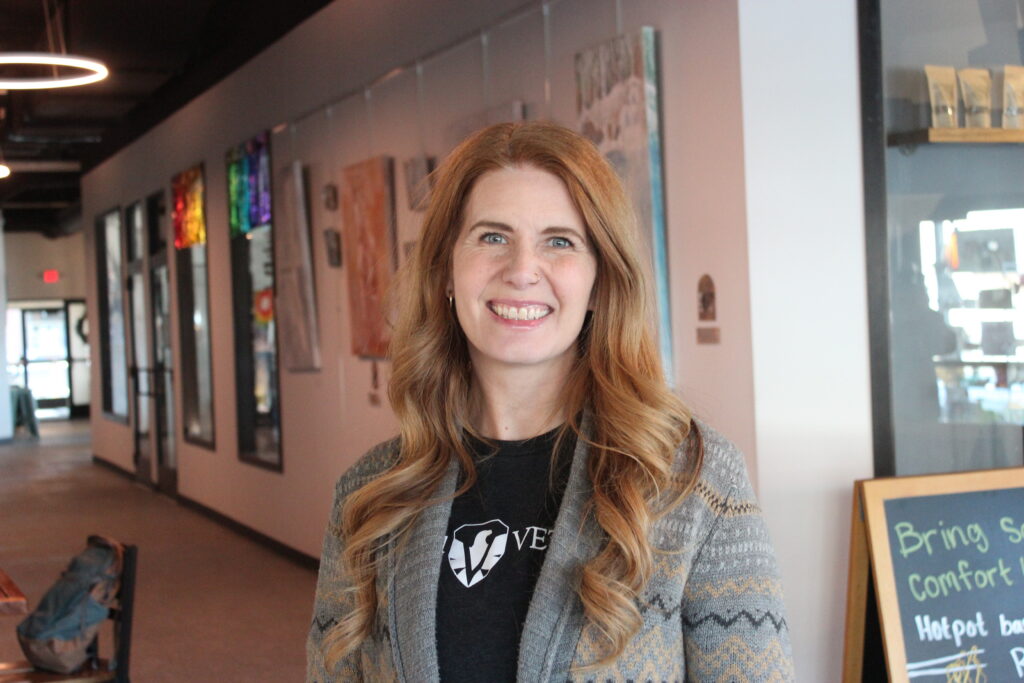
Deyona Kirk’s difficult early life experiences — and the help she received along the way — serve as a road map for her to assist others in need.
She calls the “amazing” women who lifted her up as a teenager in Duluth her “divine connections,” and those women are held up in the name of the nonprofit organization she founded and serves as executive director: Divine Konnections Inc.
DKI works to transform the lives of young mothers in the black, indigenous and people of color (BIPOC) community in Duluth through healing and recovery efforts, comprehensive support programs and temporary housing. The goal is for them to become self-sustaining and achieve home ownership.
Since starting Divine Konnections in 2020, Kirk’s goal has an alliterative ring to it: “help families go from homeless to homeowners and from harmed to healed.” DKI have served approximately 200 families and many more children in the last five years. Roughly 95 percent of the families who are in need of housing are able to receive it through their process.
Divine Konnections focuses on three phases. The first phase is to provide group residential housing and “wrap-around” services for at-risk BIPOC mothers and expecting moms ages 18 to 24; the second phase is housing stabilization services for slightly older moms; and the third phase is aftercare services, permanent housing and the goal of achieving homeownership.
This spring, Divine Connections is planning to start building the “Comfort and Joy” duplexes, units with rental and ownership components.
“We’re pretty excited about that,” Kirk said.
Trauma to Road Map
Kirk was forced to grow up quickly in the housing projects of Sherman, Texas, a city 65 miles north of Dallas. In her book Nothing Ever Wasted, Kirk recalled her early childhood “in the ghetto,” playing a variety of games in the park with siblings, cousins and friends. Her mother, Annie, was a “wonderful, hard-working woman,” Kirk wrote.
Kirk had the courage to recall and share physical and sexual abuse she had to endure from a family member and one of her mother’s boyfriends. She described them as “Boogeymen.”
“Something died on the inside of me,” Kirk wrote about how she felt at age 9. “The little youth that was left was gone.”
At age 12, Kirk became pregnant after having consensual sex with a teenage boy; she gave birth to a baby boy. By 14, they moved to Minnesota, where she ended up in foster care. At 16, she somehow got her own apartment, but was “evicted right away because, of course, I couldn’t afford it. That’s when I ended up homeless.”
Kirk moved into women’s transitional housing in Duluth and was able to gather herself and graduate from Duluth Central. She had a scholarship and living stipend to attend UMD, but she said the living stipend was cut and she had to leave school. She later graduated from The College of St. Scholastica.
Before earning a degree, Kirk went to work at the transitional housing program she had lived in, an early example of her giving back to those who lent a helping hand. In her 30s, she endured more hurdles, including battles with addiction and going through a divorce.
Kirk moved to North Carolina and then back home to Dallas, working with local housing authorities at both locations. She helped out homeless veterans, battered women and people putting their lives together after prison sentences.
After so many twists and turns, Kirk returned to the Northland.
“I kind of felt like I had the road map,” she said.
Services Provided
Kirk’s parents died in 2019 and 2020; that lined up with Kirk’s starting Divine Connections and its first and primary program in 2022: Annie’s House, which honors her mother.
“I used to always say I was gonna open a house and she would run it,” Kirk recalled. “The joke is now me and my daughter (Tatianna Kirk) run it.”
On Woodland Avenue, Annie’s House was set up for teen mothers to have refuge and restoration through “education and community care that fosters long-term success for young families … with safe, culturally responsible and nurturing environment where young parents can develop skills and confidence to break the cycle of poverty and build brighter futures for themselves and their children.”
When Kirk returned to Duluth, friend ChaQuana McIntyre with Family Rise Together showed her statistics of BIPOC mothers struggling to break the cycle of homelessness. Kirk then obtained a state license to work with mothers as young as 14.
For BIPOC mothers from ages 18 to 28, there is the Diver Morning Sky Hope and Healing Center. It provides permanent supportive housing, advocacy, mental health services, parenting/child care support, educational and vocational training, and financial literacy/budgeting, legal-aid referrals and more.
It’s named after Karen Diver, the educational leader for Native American Affairs for the University of Minnesota, the former executive director of the YWCA of Duluth and previous appointee of former President Obama as the Special Assistant to the President for Native American Affairs.
Divine Konnections’ web site includes a video with a collection of testimonials from women who have benefitted from the nonprofit’s encompassing efforts.
“I remember when Tatianna handed me the keys to the home that I stay right now,” said Sonnie, who was born in Liberia and settled in Minnesota. “If you ever went from not having anything at all to having something of your own, it was emotional. She gave me a few moments to myself and I just cried out, holding my son in my arms and telling him we were home.”
DKI also just opened Heather’s Happy Days DayCare, named after Kirk’s foster mother, who ran a day care for 20 years. “It’s much needed in the community, knowing that we’ve lost four or five day cares in the last year and a half,” Kirk said.
Adjusting Focus
As Kirk put together Divine Connections’ three phases, she had to pause coming out of the pandemic. “I realized I had to really stop and focus on healing and recovery,” she said.
Harkening to her own experiences, she knew the women coming were dealing with high levels of trauma. That seemed to grow during lockdowns.
“So that really pushed phase three back because I realized that we first have to teach families how to heal from all the compacted trauma,” Kirk said. “We had to come alongside them with that, we had to give them tools on how to just deal with everything they’re going through, how to maintain their recovery, how to deal with the mental health.”
CPS cases can arise with a report from a school, day care or community member questioning a child’s safety. Kirk said the bar for BIPOC women in those cases can be very low and usually are related to addiction or mental health.
“It’s really hard,” Kirk said. “It’s a tender place for us, because especially when it comes to black families, we’ve had lot of moms lose their kids permanently.”
Kirk is hopeful of reuniting a mother with her kids in the near future. “It’ll be the first black family that I work with here that did not lose custody of her child,” she said.
A big key is prevention of CPS cases. “We had a probation program last year, and 100 percent of those families, which is probably about 40 families in that program, not one of them got an open CPS case,” Kirk said. “That was a win.”
Kirk said another limiting component for DKI families is the state of the housing stock in Duluth. That is why she is advocating for new construction. “So they don’t have the old roofs and the old pipes with lead in the water,” Kirk said. “… Ideally, I would love to have (a city block) of just affordable housing for families. That’s how I see it in my head.”
‘Proud’
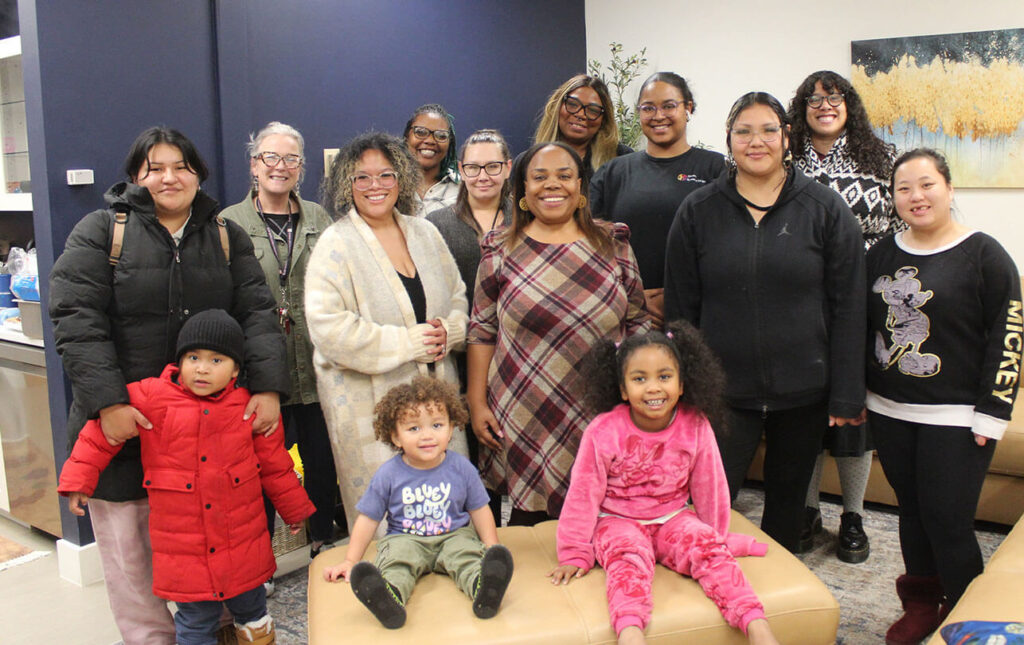
Kirk emphasizes she didn’t come up with this model, but wants it to be nimble and streamlined. She also wants to lift up women, especially BIPOC women, into leadership roles. DKI’s team page on its website is made up of 12 women.
“That’s also a huge part of our program is that I’m raising up other BIPOC leaders so they can start their own (things),” she said.
Tatianna Kirk — Deyona’s daughter — is DKI’s operations manager and activities coordinator, Deyona’s son, Lavelle works in maintenance for DKI.
Kirk said their grandmother Annie would be “super proud” of what all three of them have accomplished.
Andy Greder is a Twin Cities-based writer.