On May 12, 2026, Gov. Tim Walz signed the “Homeowners Association Bill of Rights” into law. This legislation, SF 1750, represents a significant revision to Chapter 515B, the Minnesota Common Interest Ownership Act (“MCIOA”). While many provisions took effect on May 13, most of the sweeping changes, which include broad consumer protections and limits on homeowner association (HOA) practices, will take effect Jan. 1, 2027.
Since this legislation will apply to the majority of HOAs across Minnesota, boards and owners in these communities need to learn the key provisions of this legislation, which incorporate conflict-of interest standards, prohibit excessive fines and fees, require association rules to be reasonable, require associations to adopt collection policies, and make it easier to terminate single-family home common interest communities, among many other new requirements.
Conflict of Interest Standards
Minnesota’s new HOA law explicitly imposes conflict-of-interest standards on HOA directors and officers by prohibiting financial interests in certain HOA vendors, banning gifts or compensation from contractors, and requiring board members to disclosure conflicts, disinterested directors to approve the arrangement and conflicted directors to abstain from voting. The law applies to both elected and appointed board members, and it is intended to improve transparency and prevent self-dealing in HOA governance.
Excessive Fines and Fees Prohibited
This new law limits excessive fines and fees by capping most HOA fines at $100 for a single violation unless homeowners approve a higher amount, except the association may impose a fine greater than $100 for a subsequent violation for the same conduct. The law also caps late fees at the greater of $20 or 5 percent of the amount owed, restricts attorney fees in collection actions and limits the use of foreclosure for unpaid fines or minor debts. In addition, HOAs must adopt and disclose a written schedule of all fines and fees, provide notice and an opportunity to be heard before imposing fines, and apply owner payments first to assessments rather than penalties or legal fees.
Association Rules Must Be Reasonable
The new reforms mandate that rules and regulations adopted by HOAs must be reasonable. In addition, associations must give homeowners no less than 21 days’ notice before the association votes to adopt, amend or revoke a rule or regulation to review and comment on the proposed change. The new law allows associations to adopt a temporary rule without notice in exigent circumstances, provided the board acts as soon as practicable to give the requisite notice to homeowners before adopting the rule permanently.
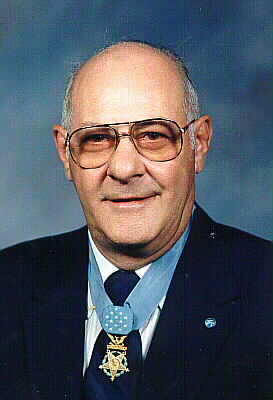
Jennifer Carey focuses on Real Estate and Estate Planning at Hanft Fride Law Firm
Associations Must Adopt Collection Policies
The legislation also places new limits and procedural requirements on collection and enforcement practices historically used by associations. Under this new law, associations must adopt a collection policy and provide a copy to all homeowners. The collection policy must require, at a minimum, three separate notifications to an owner before the account is referred to a law firm or collection agency for collections, including at least one notification sent by certified mail to the owner’s registered address.
In addition, a law firm engaged by the board to foreclose an association’s lien for assessments, must send a notice of provision of foreclosure prevention counseling to the owner by United States mail and certified mail.
Terminating Single-Family Home Communities
Under existing law, it could be very difficult to terminate a common interest community even when most owners agreed the HOA was unnecessary, the association had minimal assets and the governance costs exceeded the benefits.
To alleviate this problem, the new law provides that if a common interest community consists entirely of detached, single-family homes that do not include any common elements and the association has no maintenance obligations for any buildings containing dwellings, the percentage of votes required to terminate the common interest community is reduced from 80 percent of the votes in the association to 67 percent.
Preparing For 2027
The overall direction of Minnesota’s new HOA law appears to be that associations will be expected to function more like formal nonprofit governing bodies, with increased emphasis on documentation, procedural consistency, transparency and owner communication going forward.
Unfortunately, several provisions of the new law contain operational ambiguities or impose procedural requirements that may prove difficult for volunteer-run associations to administer consistently in practice. This means that HOAs will need to devote time, energy and resources in 2026 to review policies, procedures, contracts and recordkeeping systems before the new law takes effect.