Almost 30 years later, Dan Hartman still has vivid memories of his first visit to the DECC.
Then a seventh grader from Crosby, Hartman was in Duluth with his older brother, Joel, for a high-octane concert at Symphony Hall featuring hardcore, heavy-metal favorites Megadeth and Sevendust. Nick Menza, the late drummer for Megadeth, had a towering, multi-tiered drum kit — Hartman remembers it being four levels high — and put on a show that night in June 1998.
“To this day, it’s still one of the best concerts I’ve been to,” said Hartman, now the DECC’s executive director. “And that’s still the best drum solo I’ve ever seen in my life.”
For Laura Mullen, it was the Ice Capades, a Hootie and the Blowfish concert and especially the William A. Irvin Haunted Ship that comprised some of her earliest and fondest exposures to Duluth’s versatile and multi-purpose arena and convention center.
“I remember going to that every year, standing in line just waiting to be scared,” said Mullen, a former chair of the DECC’s board of directors.
A young Pat Mullen (no relation) rarely missed two of the DECC’s longtime entertainment staples — the circus and Arrowhead Home and Builders Show.
“When I was a kid, the circus was a really big deal,” said Pat Mullen, also a former board chair. “When they were bringing the circus to the DECC, that drew kids from all over, and my mom was a fanatic about getting us there for it.”
And then there’s Andy Goldfine, who was 13 when the DECC opened in 1966 and whose family helped supply much of the ingenuity, persistence and elbow grease needed to get the ambitious project across the finish line. Goldfine would tag along with his father, civic leader Manley “Monnie” Goldfine, on trips to the construction site to check on progress.
Somewhere, Andy said, there is a mid-’60s photo showing him inside the auditorium, in a space that had just been enclosed.
“But I remember the angled floor was still dredge sand,” he recalled.
After work, Monnie Goldfine would come home for dinner, and if Andy was done studying, father and son would head down to the half-built site.
“Inspecting the progress,” according to Andy.
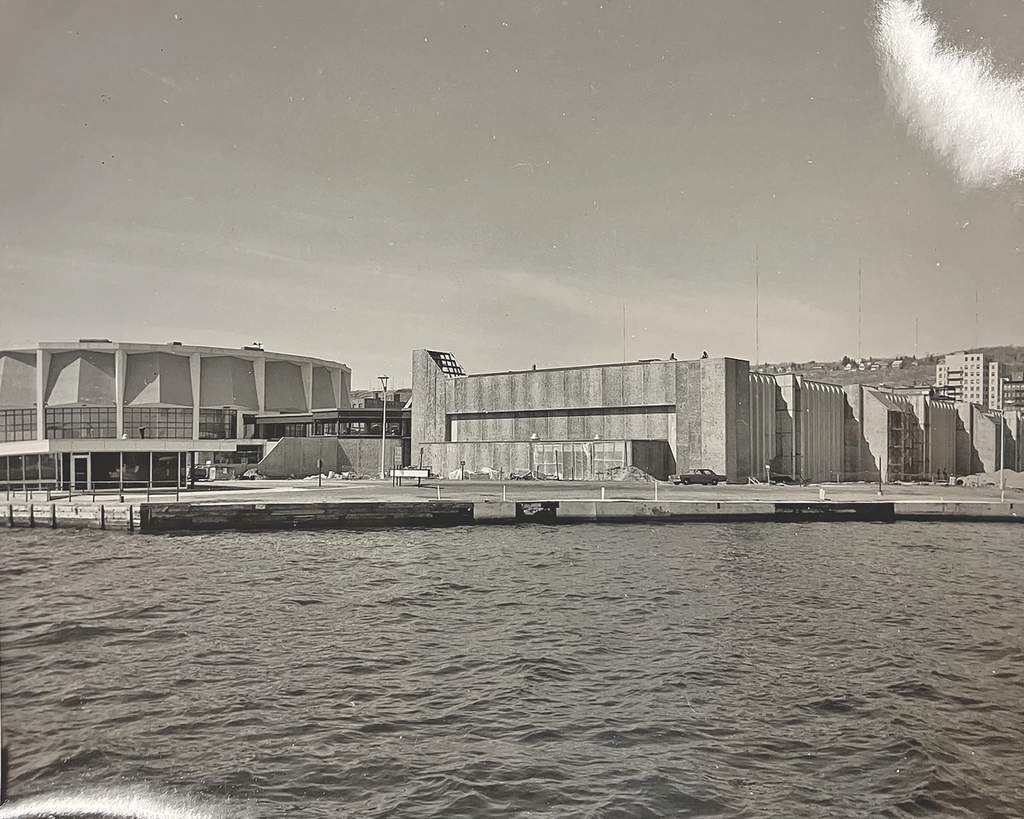
As it celebrates 60 years of service, the Duluth Entertainment Convention Center is still a place people inspect, debate, defend, celebrate and return to. It is a collection of 10 separate venues on one waterfront campus — Bayfront Festival Park, William A. Irvin floating museum, Harbor Side Convention Center, Marcus Duluth movie theatre, Symphony Hall, Pioneer Hall, Paulucci Hall, DECC Arena, AMSOIL Arena and the City Side Convention Center.
This practical landmark is a concert hall, hockey home, convention center, ballroom, community gathering space and economic engine. People come for hockey games, weddings, concerts, graduations and trade shows. More than 700,000 people came through its doors last year. The DECC hosts more than 500 events annually and has an estimated $72 million economic impact each year. But the numbers tell only part of the story.
“Strong communities need gathering places where people can meet and make connections, and the DECC is one of those places,” said Monica Haynes, director of the Bureau of Business and Economic Research at the University of Minnesota Duluth.
Haynes has studied the DECC’s economic impact, but she is quick to point out that not everything meaningful can be measured in dollars.
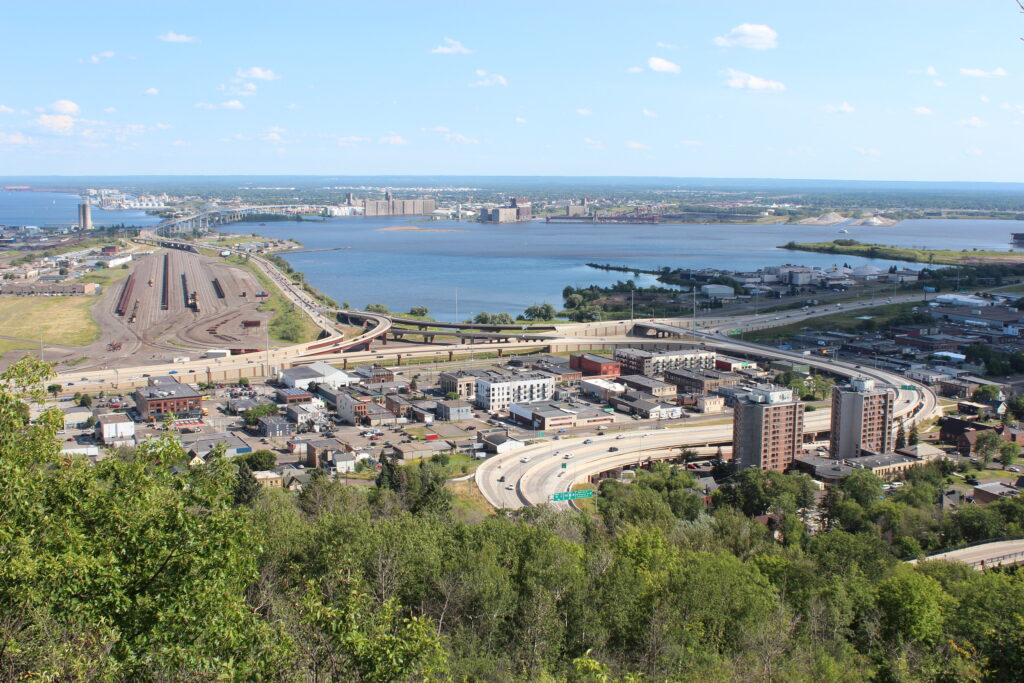
“There’s always a lot of focus on the economic impact, which is what I do, so I’m grateful for that,” she said. “But it’s almost more important to think about the placemaking. This is a public space that people in our community can come and access. They can gather and watch the ships, look out at the harbor. There’s a lot of value there that goes beyond economic.”
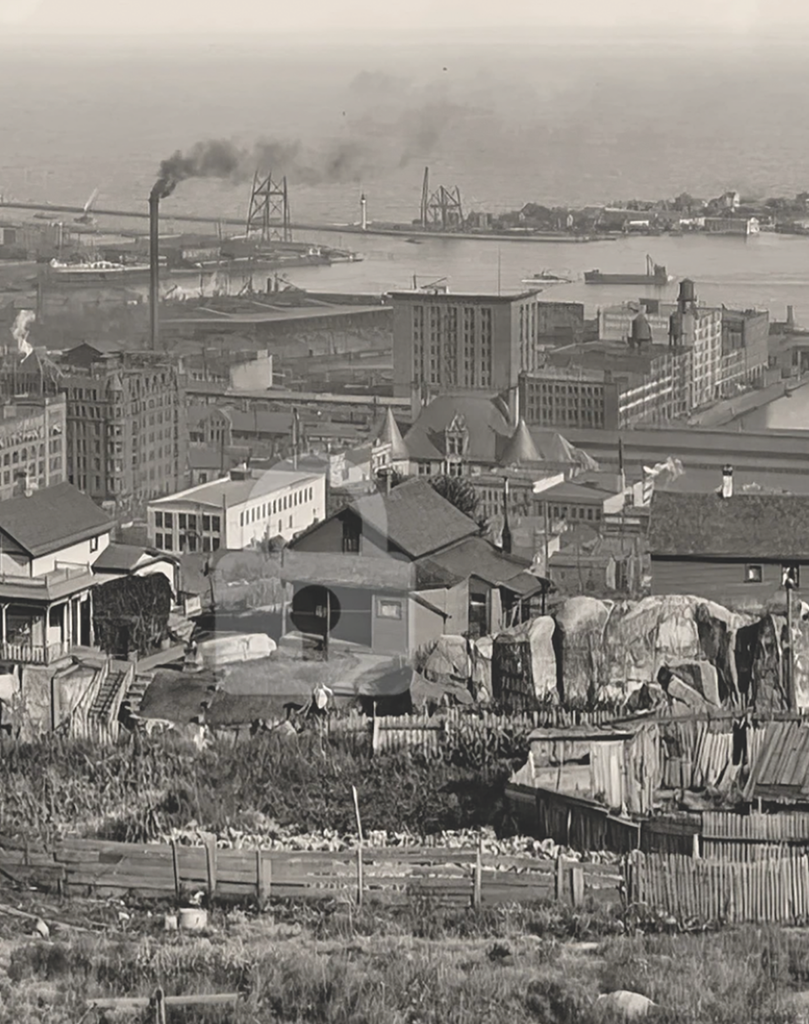
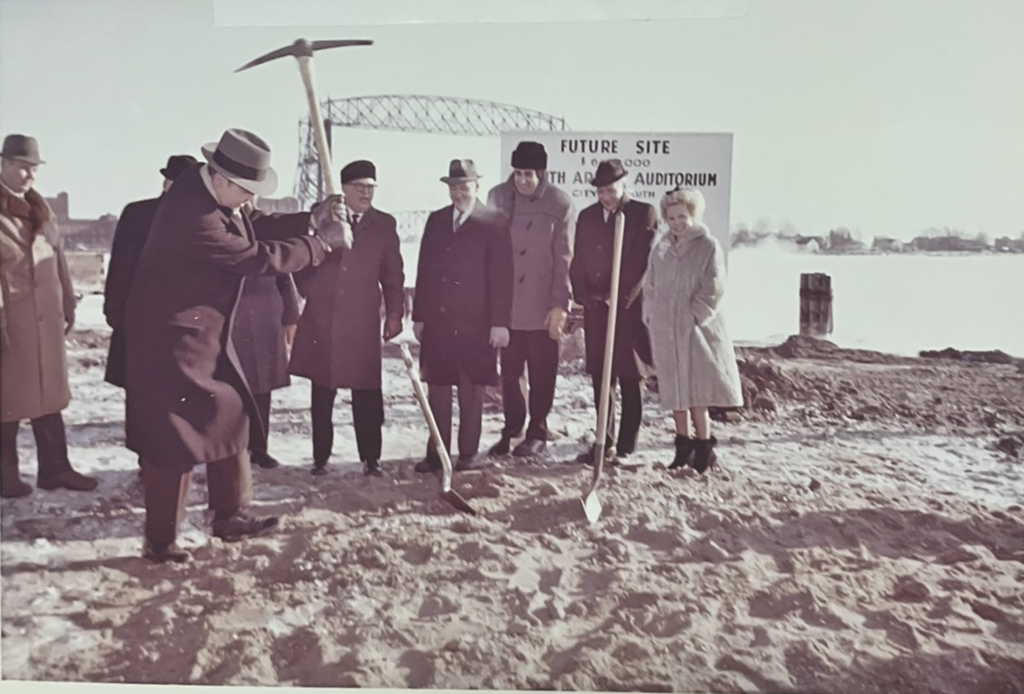
How the waterfront looked before the Arena-Auditorium.
Looking Back at the Beginning of a Duluth Institution
That idea — that the DECC’s value would extend beyond balance sheets — was present from the very beginning.
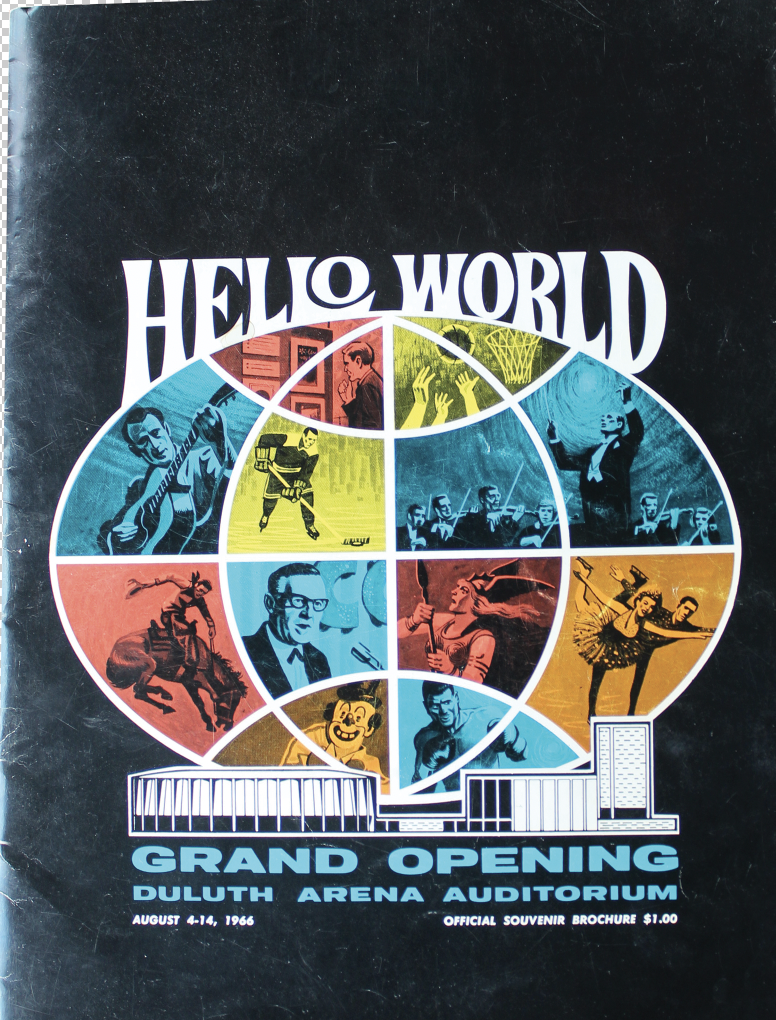
On the inside cover of the “Hello World” souvenir brochure produced for the Aug. 4-14, 1966, grand-opening celebration, the Duluth Citizens Arena-Auditorium Advisory Committee wrote: “Just as this space does not permit the lengthy discourse necessary to tell the full social and economic potential of the Arena-Auditorium, neither can any measuring stick even closely calculate the pleasure it will offer for many lifetimes to the people of this area and those generations which will come.”
It was a lofty promise. But it was born from difficult circumstances.
The first attempt, in the 1950s, failed badly. Labor unions and the Chamber of Commerce opposed it. Critics called it a boondoggle. Many objected to the proposed waterfront location, arguing it should be more centrally located.
“At the time, all that was down there was junk,” Pat Mullen said. “It was an eyesore.”
The waterfront was still heavily industrialized. The modern-day version of Canal Park didn’t exist. It was a junkyard. Tourism was not yet the driving force it would become in the 1990s.
Goldfine remembers Duluth in those years as a city trying to find its way.
“The city was in terrible shape when the project was proposed,” he said.
Years passed before frozen foods titan Jeno Paulucci revived the idea. Paulucci paid for a study to determine whether such a facility could work. The answer was a resounding yes. He then helped fund the public campaign, persuaded labor unions to support the project and convinced the Chamber to remain neutral. Community leaders, including the Goldfine family, built community support and muscled the project forward.
“They had a vision and really pushed it through,” Pat Mullen said. “Those guys really carried the ball back in the ’60s.”
Construction began in 1964. The original Duluth Arena-Auditorium cost $6.5 million to build. Money was tight. Goldfine points to some creative accounting on an application for federal matching funds — a line item described as something like “unpromised future pledged funds,” essentially the amount still needed to complete the project.
“They’d figure out how to raise the money later,” he said.
Corners were cut. Auditorium seats were placed unusually close together. The hockey rink was built slightly shorter and narrower than regulation size. When the state ran out of money, Paulucci contributed the remaining funds — about $200,000 — to finish the job.
Pile drivers pounded deep into the mud. Sand filled the site. Slowly, the building took shape.
To a child, Goldfine said, it looked like adults doing something extraordinary.
“Nothing like this had ever been done in Duluth in anyone’s lifetime,” he said.
When the building opened in August 1966, the city went big, marking the occasion with a grand-opening festival called “Hello World.” Opening week featured Vice President Hubert H. Humphrey delivering the keynote address on Friday, Aug. 5, followed by comedian Buddy Hackett. A formal dedication was held Sunday, Aug. 7, alongside a kennel club dog show, talent show and Blue Angels aerial exhibition. The Beach Boys played Saturday, Aug. 13. There were parades, rowing regattas, public tours, open houses, a teenage dance and a bubble gum-blowing contest throughout the week-plus.
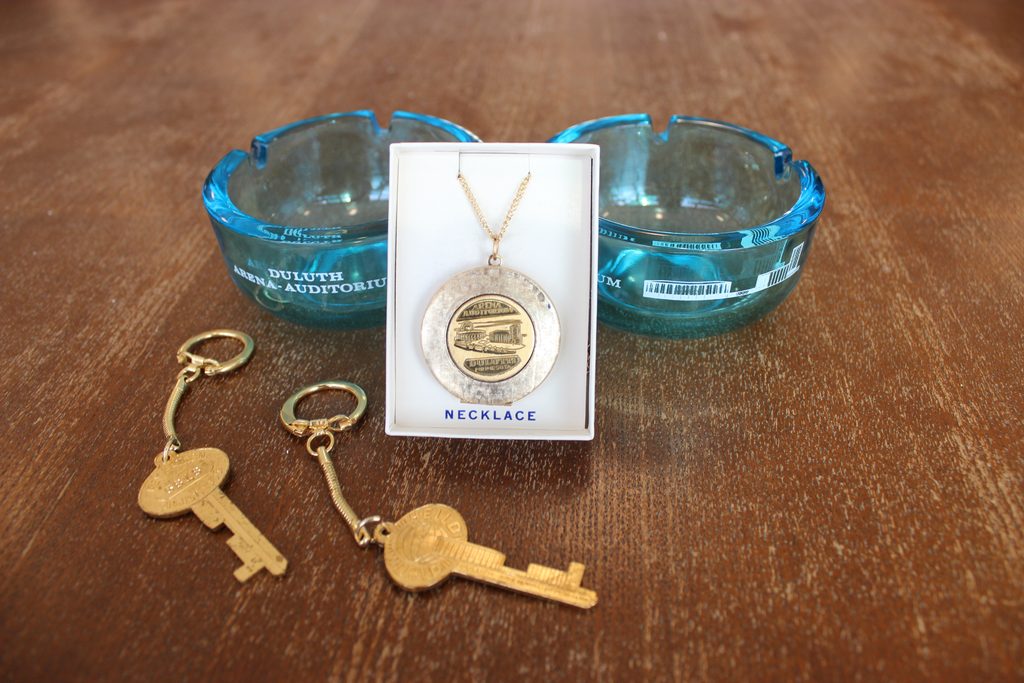
Opening Day artifacts.
Setting the stage for the future
Big entertainers and political figures have passed through the venue through the years, where performers thrilled wide-eyed audiences, including Bob Dylan, Elvis Presley, The Everly Brothers, Cher, KISS, Aerosmith, Johnny Cash, Waylon Jennings, James Brown, Brooks & Dunn, Neil Diamond, Alan Jackson, Barry Manilow, Tim McGraw and Faith Hill, B.B. King, Mötley Crüe, The Eagles, Kid Rock, Alabama, Rob Zombie and Alice Cooper, and many others across eras and genres.
Some played the DECC at the height of their fame, others before becoming household names or as careers circled back to beloved legacy status.
That is one of the realities, Hartman often explains. People wonder why Duluth doesn’t get every major touring act. The answer is complicated: venue size, availability, promoter preference and economics.
“We don’t get to choose the dates,” Hartman said. “The promoter comes to us, and I think that’s probably the biggest challenge.”
UMD hockey blocks a significant number of dates. Some touring acts simply need bigger venues. A band that can sell more than 10,000 tickets is going to look elsewhere.
“They aren’t nonprofits,” Hartman said of touring acts and promoters. “They’re going to go where they can make the most money.”
Still, concerts and UMD hockey remain the DECC’s most visible public-facing attractions. Hartman is a music fan at heart. But he is clear about what keeps the building running.
“We can talk about concerts; I love concerts,” he said. “But the big driver for us is conventions.”
Conventions, trade shows and conferences may not generate the same buzz as a rock show, but they fill hotel rooms, restaurants and meeting spaces. They also pay the bills.
“We have to make about a million dollars a month to break even,” Hartman said. “That’s how much the costs are in this building.”
The DECC’s revenue model is not always obvious to the public. Ticket revenue for a concert generally goes to the artist or promoter. UMD hockey ticket revenue supports the university. The DECC relies heavily on parking, concessions, facility rentals and event activity.
“When you buy a beer or a hot dog or purchase parking, that is how we pay our bills,” Hartman said.
Growing and Evolving
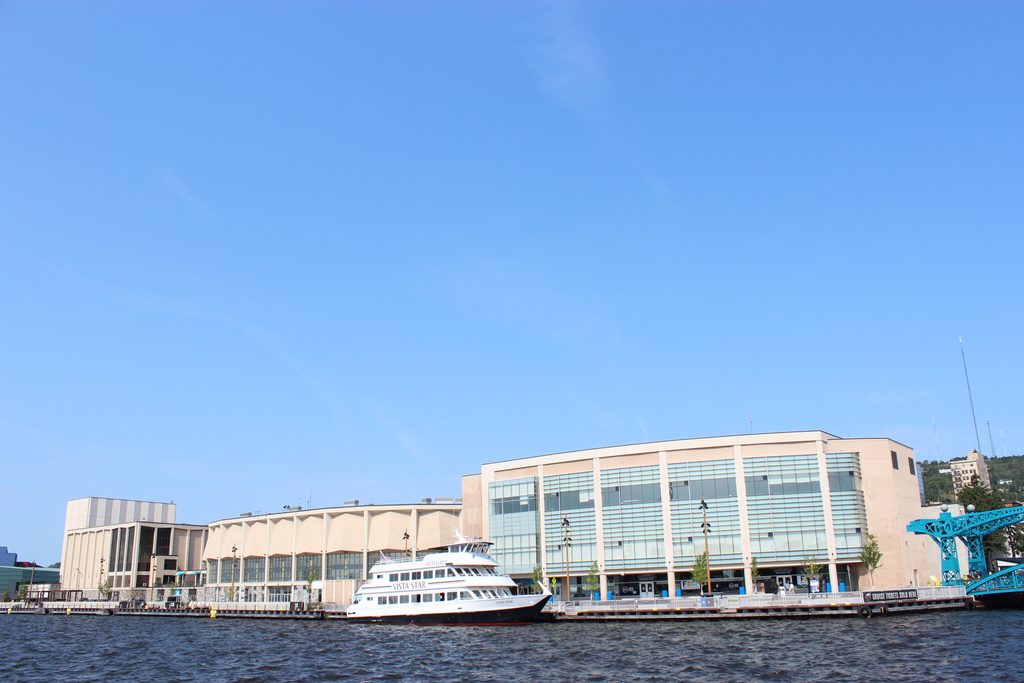
The facility has grown repeatedly to meet changing needs. Pioneer Hall was added in 1976. In the mid-1990s, a $30 million convention center expansion added the Lake Superior Ballroom, Harborside Ballroom and 25 meeting rooms. In 2008, a Minnesota bonding bill included $38 million for what became AMSOIL Arena, home to UMD hockey for the past 15 seasons.
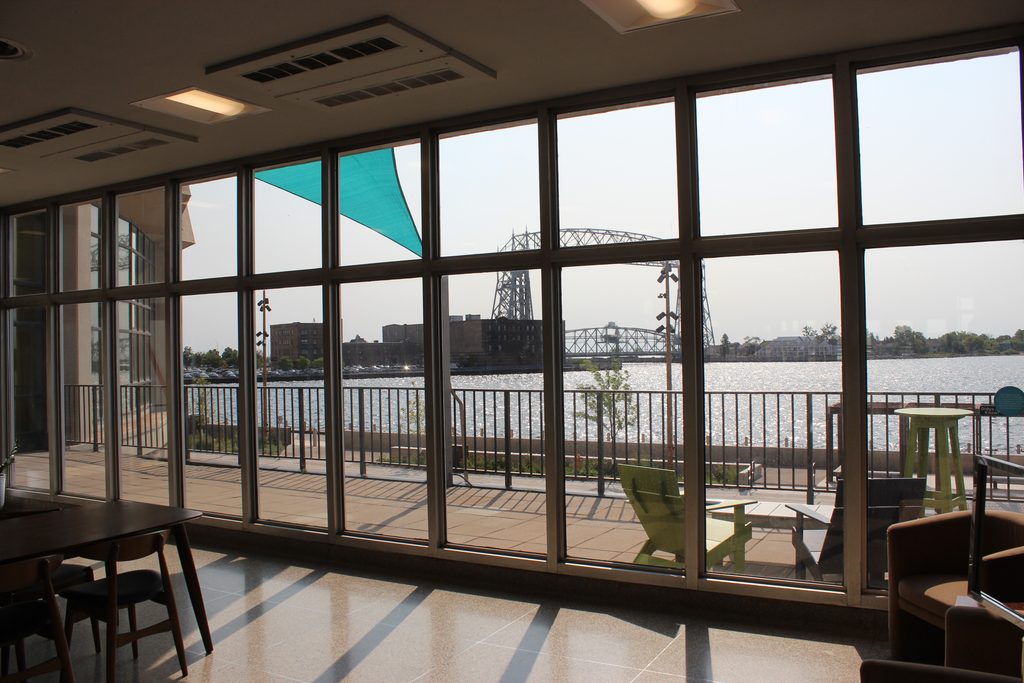
Today, Hartman thinks about the DECC less as a single entity than as a campus of distinct venues, each with its own personality. Symphony Hall, with 2,200 seats, is the largest performing arts center in northern Minnesota. The second-level gathering space outside Symphony Hall still carries a midcentury elegance, with floor-to-ceiling windows and a three-tier chandelier dating back to the beginning. The Harborside Convention Center offers sweeping harbor views. The Cityside spaces have their own utility and charm. AMSOIL Arena brings hockey energy for both UMD games and high school section playoffs. The Irvin adds history and seasonal thrills.
“What’s so great about this facility is that, in most communities, you don’t have 10 venues on one campus,” Hartman said. “One of my goals long-term is to uplift the different and unique identities of each of these venues.”
He also wants people to rediscover spaces they may have forgotten.
“I love giving people tours because it’s fun to see them have that moment of shock when they’re like, ‘I didn’t realize this was here’,” he said.
The DECC Board meets.
Laura Mullen sees the same opportunity.
“It’s such an amazing spot,” she said. “I think people almost take it for granted.”
Laura Mullen calls the DECC a “community asset” — one that belongs not just to Duluth, but to the broader region. Its audiences reflect that. For concerts, Hartman estimates roughly 20 percent of attendees come from Duluth, about 40 percent from rural northern Minnesota and about 15 percent from the Twin Cities, with the rest from elsewhere.
“The larger region is really a part of that conversation,” Hartman said.
That regional identity became a key takeaway from listening sessions held last year. The message Hartman heard was clear: The region uses the DECC, and the DECC needs to do more to engage the region.
“So you’re seeing me be a lot more aggressive on that front,” he said.
That matters because the DECC’s role has always extended beyond entertainment. In many ways, it helped make modern Duluth possible. Before Canal Park became a tourism hub, before the Lakewalk became an iconic attraction, before the waterfront became a destination, the DECC helped pull people toward the harbor.
“The DECC really was a catalyst,” Pat Mullen said.
Haynes agrees.
“Being right on the waterfront, it’s kind of the center of gravity for tourism activities in Canal Park,” she said. “It was probably kind of forward-thinking at the time because there wasn’t a lot down there.”
The DECC gives Duluth year-round relevance. Summer tourism may fill Canal Park, but the DECC was designed to help sustain the city in the slower months — with hockey, conferences, concerts, banquets and community events. It’s not easy to get people to Duluth in January, but the DECC succeeds in exactly that.
“In a lot of ways, we are a community center,” Hartman said.
Few events illustrate the campus’ flexibility like Grandma’s Marathon weekend, when multiple venues activate at once for the fitness expo, spaghetti dinner, VIP events and other activities. High school tournaments, youth hockey events and community traditions may not always be the biggest revenue generators, but they are part of the DECC’s legacy.
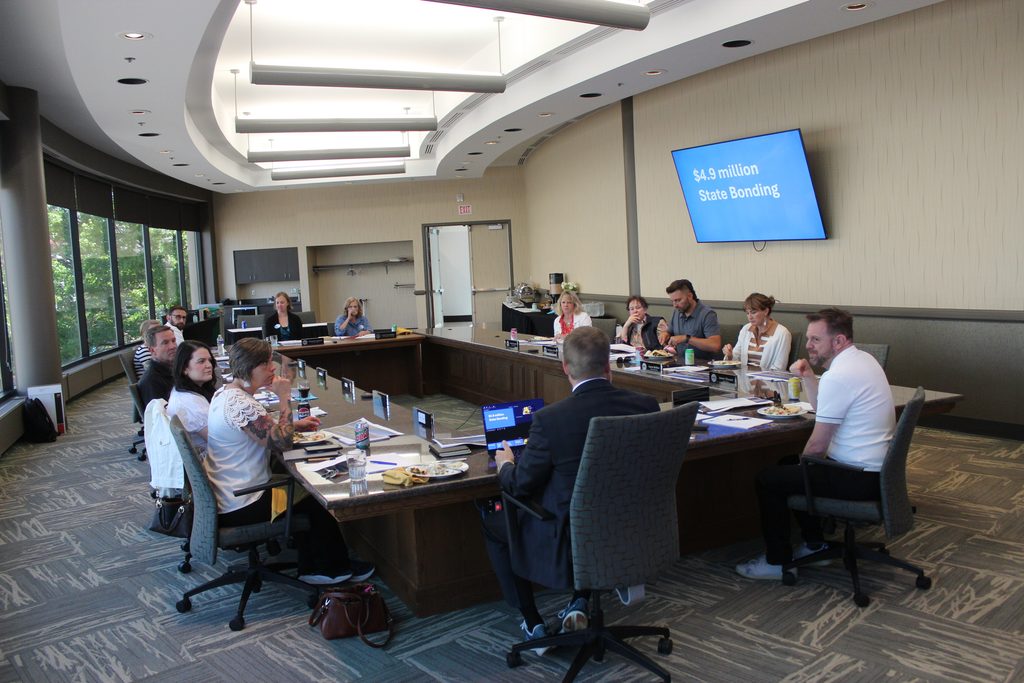
That balance is always on the minds of board members.
“A lot changes over the years,” Pat Mullen said. “So as things change, how do you make sure the DECC can continue to deliver?”
The answer involves constant reinvention. Culinary offerings change. Spaces are refreshed. New events are pursued. Brainstorming never stops. Neither does trying new things, whether it’s a taco festival or an outdoor summer concert series.
“Nobody’s sitting on their laurels,” Laura Mullen said. “A building like this has to reinvent itself.”
More Than a Building
Hartman has come a long way from the young teen attending a rock concert. He now spends his days thinking about ADA access, ceiling heights, ice systems, booking calendars, promoter relationships, convention sales, regional outreach and how to make people feel ownership of a public facility that’s entering its seventh decade.
“This is the region’s facility,” he said.
That sense of emotional ownership may be the DECC’s most enduring legacy. People remember the concert. The hockey game. The first time they walked through the haunted ship. Their first wedding reception. The graduation. The convention where they met a colleague who became a friend. The circus their mother insisted they attend.
Almost every Duluthian has a DECC story.
“The DECC means a lot of things to a lot of people,” Laura Mullen said.
Hartman agreed.
“You have so many people who have experienced some of their biggest life events right here on this campus,” Hartman said. “They’ve come through this facility because of all the different venues we have.”
Outside of funerals, he jokes, most DECC events are built around people having a good time.
“We’ve debated the tag line, ‘Have more fun here’,” Hartman said, “because people usually are.”
Sixty years after “Hello World,” the DECC is still doing what its founders hoped it would do: drawing people together, anchoring the waterfront, supporting the economy and creating memories across generations.
“Everybody’s in it together to make this thing successful going forward,” Pat Mullen said, “so that it’s around for a long, long time for everybody to enjoy.”
The measuring stick still cannot calculate all the pleasure it has offered. But Duluth keeps showing up, walking through the doors, finding its seats, looking out at the harbor and making new memories — one concert, convention, hockey game, haunted ship and home show at a time.
Louie St. George III is a Duluth-based freelance writer.