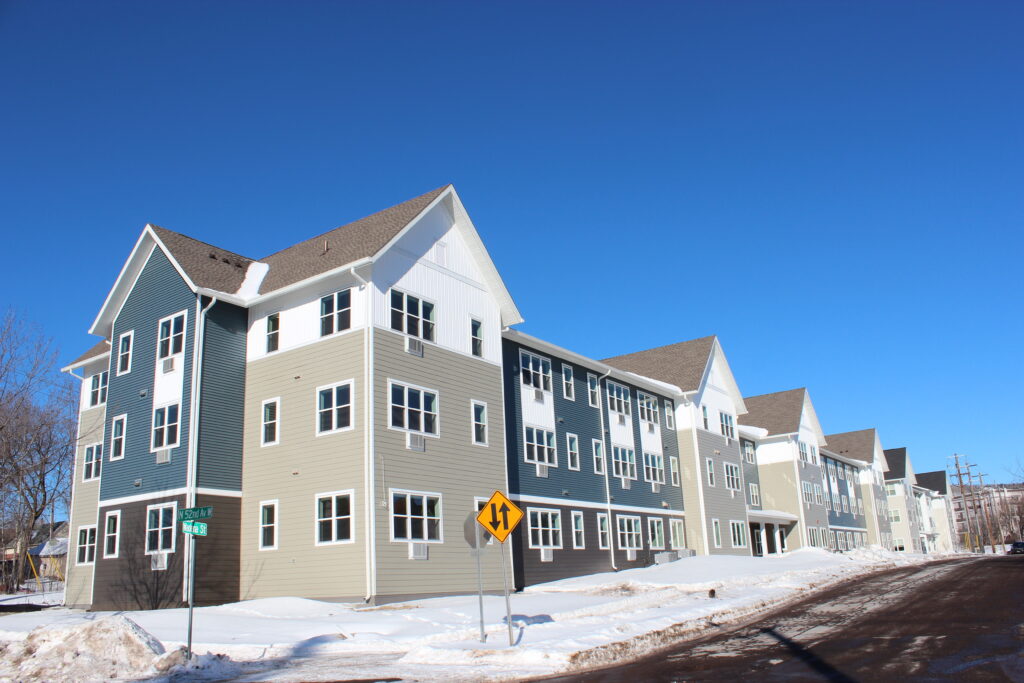
Wadena West and Welch Place Built to Address Critical Housing Need
The housing crisis rages on. The post-pandemic era has been marked by an imbalance in supply and demand with regard to affordable homes and apartments. Recently, it was reported in many places that real-estate investors with the means bought up around one-third of all the single-family homes for sale in the United States during the last year.
While this bodes well for the prospects of the rich getting richer, it means that the middle class continues to see prices for suitable houses and apartments rise while their wages have stagnated.
For several years now, new apartment buildings of all kinds have been regularly going up in Duluth, from expensive ones meant to attract the well-to-do who might want an apartment in the city to visit from time to time to those meant for locals without much in the way of financial means. In West Duluth, a new construction project is aimed at those who are completely unhoused, and it aims to take a big bite out of the housing crisis for many who need permanent homes.
Center City Housing Corp., the nonprofit that grew out of Chum in the 1970s and has brought nearly 30 buildings to life for those in lower-income brackets and those who are in need of various kinds of support, is the driving force behind the new apartment buildings, which have been named “Wadena West” and “Welch Place,” both names that longtime Spirit Valley residents will recognize, as “Wadena” is a street name and “Welch” invokes the Welch Center, which later became the Valley Youth Center for kids.
Through the years, CCHC has brought the community the Steve O’Neil apartments, the San Marco apartments, the Memorial Park apartments and many more. Wadena West and Welch Place are meant to replace the aged Memorial Park building, while also providing new spaces. It’s all meant to make people’s lives better, which is really the end goal of the CCHC and of all builders involved with the project.
Nancy Cashman is the Executive Director at CCHC, and she’s proud to unveil these two new buildings to the people of West Duluth.
“Wadena West was the first building that we were doing development work on,” she said, “and it really came out of the needs for so many single homeless folks in the Duluth area. We can’t build enough housing, and so just the need to keep creating housing that is super affordable and has comprehensive supportive services with it – it’s been a really successful model for high-barrier homeless single adults, so that’s what drove Welch was that, and we have closed our building called Memorial Park Apartments, and we were basically replacing those units so that we didn’t lose any affordable units.”
It’s an upgrade in the end, said Cashman. “At Memorial Park, there were minimal services. And there were no kitchens or bathrooms. It was a total single-room occupancy building. Now, everybody will have their own kitchen, their own bathroom – all that stuff, which is really nice for people.”
The two-phase construction that started with one building and ended up becoming two was a project that came about in response to specific needs, rather than just being a logical next step for the CCHC. But it was perfect for their purposes.
“We’re a low-income housing developer,” Cashman said, “so we do all the development work. I [typically] have five or six projects in the hopper, and we’re in five communities in Minnesota. It’s our work. It’s what we do.”
Wadena and Welch happened because it made sense. “There was a spot that was not on a hill that was available. It’s hard to find big lots in Duluth – the hill makes a big difference, and, out west, it’s a little bit flatter. It was large enough that we could do more than one project, which was really cost-effective and nice. It’s hard to find sites in cities that are the right size and the right place and meet the criteria that Minnesota Housing wants.”
“They were actually submitted to Minnesota Housing a year apart,” Cashman said of the two buildings. “What happened for us was the pressure to deal with the Memorial Park Apartments got bigger. We didn’t want to just eliminate those units, because we don’t have enough affordable housing. We had the land and we thought, well, let’s put the project in here. Why not?”
The structures were designed based on a kind of template that the CCHC employs for their builds. “We use the harm-reduction and housing-first model,” Cashman said. “The buildings themselves are for high-barrier, long-term homeless single adults living in the Duluth area. The 60-unit Wadena has some Section 8 vouchers and a housing support subsidy from the state of Minnesota. It’ll get a different mix of people. We’re not exactly cookie-cutter, because each community of tenants is a little bit different.”
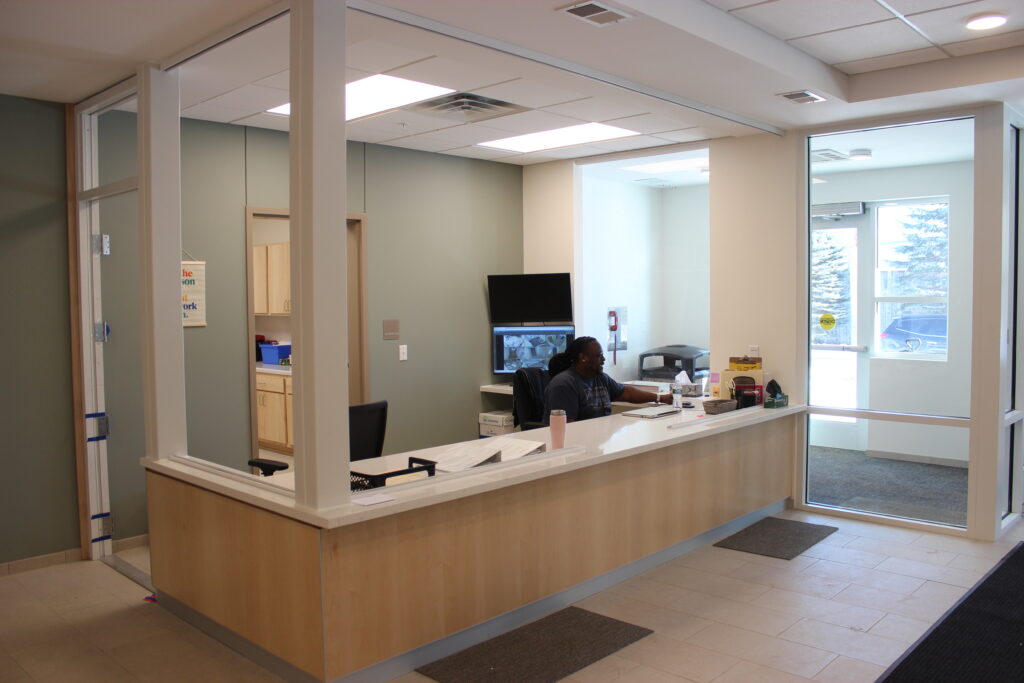
“We’ll have onsite support services,” Cashman said. “We have a case manager and a recovery specialist and a tenant advocate. We have a 24-hour front desk. And we provide transportation, food support, all kinds of case-management services assisting people to get income, reconnect with family, deal with bad police tickets and help them get along with their neighbors. We have a staff that’s trained to manage that and work really hard to help people make a transition from not being able to be housed to being housed. And we’ve been very, very successful with that.”
Jill Keppers is the Executive Director of the Housing and Redevelopment Authority of Duluth. She said the Wadena/Welch project is important for the community, and that the HRA was glad to play a role.
“The HRA initially became involved when it transferred some of the land for the project back to DEDA so the site could then be given to Center City Housing Corp. for the development of Wadena West and Welch Place,” Keppers explained. “Later, the HRA approved 30 project-based vouchers to provide rent subsidies for the Wadena West project. These vouchers will allow those tenants to pay 30% of their income towards rent while the voucher pays the remainder. This not only helps the tenant, but also helps the project with stable rental income. Duluth is very fortunate to have a developer such as Center City Housing Corp., which focuses on supportive housing for people experiencing homelessness. Having this specialized housing with 24-hour front desk staff for security and supportive services to assist tenants with housing stability is critical to addressing the low-income housing needs in Duluth.”
“When a person is struggling with housing stability, they need to make hard decisions every day,” Keppers said. “Do I pay for rent, food or medication? How do I prioritize all of these basic needs? When the HRA can assist with rent subsidy in low-income units – especially units targeted to lift people out of homelessness – it takes one of those variables off the table. As we stabilize housing in our community, it opens the door for services to be more successful. Now a person can access regular health care, have access to food and/or food assistance and children are more successful in school when those stressors are alleviated from the family. Housing stability changes lives.”
The Wadena/Welch project is one that will help the HRA achieve their own goals, and will help to establish a rising-tide-lifts-all-boats tone in the city for the unhoused, Keppers noted.
“As a community, we continue to look at our homeless response system,” she said. “The HRA is currently working with the Union Gospel Mission on the development of an Engagement Center that would be a one-stop-shop for those experiencing homelessness to find services, supplies, laundry, showers, meals, warming spaces and a place of dignity to rest during the day. An Engagement Center, coupled with increased supportive-housing units, will dramatically change the way Duluth supports its most vulnerable citizens.”
LHB did the design on the two apartment buildings. That firm’s Michelle Pribyl was the architect. She leads the housing studio in the firm’s Minneapolis office. For her, though she’s got nearly three decades of experience in her field, this particular job was notable.
“I appreciate working with mission-driven organizations like Center City,” she said. In fact, LHB specifically has partnered with CCHC in the past.
“When we start a new project with them,” Pribyl said, “it’s always a matter of really understanding from them what the particular resident needs or what program needs are for this particular site and project, and how does that compare to past projects? It’s not like a chain hotel or bank project, where it might literally be the same building, just placed on different sites.”
Pribyl said West Duluth has a “strong history” that helped her to do her job. “The idea was that the massing of the buildings – the style of the buildings – would fit with some of the older or historic context in the neighborhood. We have gable roofs that relate to the other homes in the neighborhood, single-hung windows and types of lap siding and board and batten siding that also fit more in that traditional language of the surrounding neighborhood – the language of having the front porch at the entrance. We really wanted to try to make it feel like these buildings fit into that neighborhood, even though they’re new buildings.”
As far as the interiors go, the studio and one-bedroom apartments are all for single adults, and Pribyl wanted them to be utilitarian but also welcoming and warm.
“We try to be very careful, even with the smaller units, to make them very livable spaces with plenty of light,” she said. “Everyone has their own kitchen, living, bathroom space and their own storage within the unit. There are also nice common area spaces within each of the buildings. And then they also have several offices for those support-service staff on site, and the community room, meeting spaces and laundry rooms that the residents all share.”
In her work, Pribyl even considers the psychology of the future tenants to a degree, so as to make sure that she designs homes that will make them feel safe.
“When folks are coming in who have been unhoused,” she said, “they’ve often been through some kind of trauma – whether that is while they were unhoused or prior to being unhoused – and which brought about their current situation. So we have, through a lot of research and our own experience, developed ways that we deal with trauma-informed design in buildings. We’re looking at creating calming environments for people. That might be things like making sure that we have daylight in all the occupied spaces. Really controlling sound. Using calming and welcoming colors and finishes – lots of natural wood.”
“It really is satisfying,” Pribyl said of her work. “A lot of people think of architects as people that work for those with a lot of money and have a lot of choices in their housing, and I really appreciate having clients that probably never thought about having an architect design a home for them. We very carefully think about making livable places for folks, and really hope that they create a home there and are able to stabilize their lives with the help of the staff there that are there to help them.”
Dave Carlson is Project Executive at Watson-Forsburg, the general contractor on the Wadena/Welch endeavor. The firm has partnered with CCHC before on the San Marco building and one in St. Cloud. He assisted with budgeting on Wadena West even before the designs were done. He said the biggest challenge was soil remediation.
“The soils were horrendous,” Carlson said. “Just junk from the 35W project. They just dumped it over there. We knew there were significant issues. We had to get the entire site to grade and let it sit for a year and settle before we could even begin construction.”
Once the site was stabilized, building started toward the end of 2024, with Welch getting up and running a few months after Wadena. Local contractors like Jamar, Northland, Rachel Contracting, Belknap Electric and more all joined the cause during the build.
As is the case with every person on Wadena/Welch, Carlson was happy to work on a job that was meant to make life better for people who needed a hand.
“That’s part of our core values,” he said. “We want to focus on the community. I would say 80% to 90% of our clients are nonprofit developers working for supportive housing and affordable housing in Minneapolis and northern Minnesota. Several years ago, the leadership of our company decided that that’s the direction we wanted to go. It’s not easy work, but we find it rewarding, and we also find our clients to be really impressive people to work for.”
Any building project is meant to be a positive thing. But Wadena West and Welch Place have been erected specifically with an eye toward improving the lives of people who need a hand, who deserve warmth and safety and security as much as anyone, and the people behind it are quite proud to have had a hand in bringing people new comfort.
Everybody needs a home, and in a time when that goal is harder and harder to reach, the principals in this particular project are very happy to make a home of one’s own much more achievable for some in Duluth.
Tony Bennett is a Duluth-based freelance writer.