When E. Maurice Labovitz opened his first dress shop on Superior Street in downtown Duluth, success wasn’t immediate. Nor was it expected to be. The year was 1931 and the
country was stumbling through the Great Depression. Discretionary income was all but an oxymoron. Indeed, it took Labovitz nearly a full year before he realized a monthly profit –
a whopping $4.12.
But the grit and perseverance Labovitz displayed, not to mention the boldness of his vision, became part of his store’s foundation. They no doubt helped him navigate the turbulence of the era’s crushing economics and, eventually, grow from a single location. Ninety-five years later, maurices — now more than simply a dress shop and having transitioned from a capital ‘M’ to a more feminine lower case ‘m’ in a playful marketing move once the company stopped selling men’s clothing in 2006 — has more than 830 stores in the United States and Canada. It is a billion-dollar behemoth with thousands of employees, including about 270 at its corporate headquarters in Duluth.
Few brands last a century.
“That’s pretty much unheard of for any company, but especially for retail,” says Sue Ross, chief administrative officer.
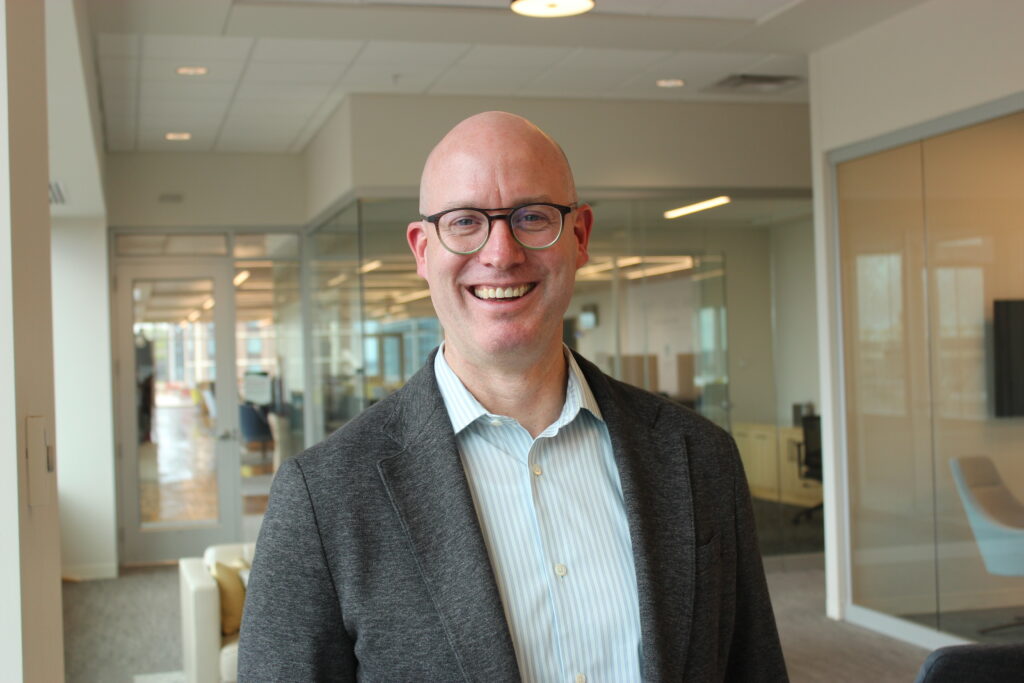
Bennett Morgan, maurice’s president
Bennett Morgan was hired as maurices president this past April. He arrived in Duluth with more than two decades of retail experience, including leadership roles at Amazon, Walmart and SpartanNash. Morgan had heard great things about this versatile and fashion-forward chain rooted on the North Shore of Lake Superior.
He hasn’t been disappointed.
“I think it’s a wonderful company,” Morgan says. “Any company that’s been around for 95 years, you don’t exist for that long unless you’re focused on two things: You have to take great care of your people, with a great culture, and you also need to be very customer focused. Those are the two things that really drew me to this company.”
By never straying too far from its roots and clinging to a people-first ethos, maurices is getting close to its centennial. It’s gone from simply surviving in its infancy to thriving.
Longtime CEO and chairman George Goldfarb refers to the company’s “secret sauce,” which appears to be made of equal parts talented associates and a focus on small- to mid-size markets.
“It’s been an exciting road and it’s always been fueled and energized by great people,” says Goldfarb, a native Duluthian who’s been with maurices since 1985. “We’re successful because of our talented people, their shared values and a commitment to building something that lasts.”
Maurices affectionately refers to its markets as “hometowns,” which sheds some light on one of the company’s more impressive accomplishments. There is no denying maurices’ bona fides as a massive retailer with an international footprint. Yet it has been able to retain its small-town vibe. It’s the hometown shop, the corner store, the neighborhood boutique that values each and every community it’s in. Despite all evidence to the contrary, maurices doesn’t feel like a corporation. It feels local. Quaint, even.

That’s by design. You won’t find a maurices in Manhattan, Chicago’s Magnificent Mile or Los Angeles. Instead, it prioritizes cities in the 90,000 to 150,000 range. Cedar Rapids, Iowa. Sioux Falls, South Dakota. Fort Collins, Colorado. Not small and not huge. Big enough to feature a solid customer base, but not so big that it’s easy to get lost in the mix and difficult to forge meaningful community connections.
“We’ve always been known as that hometown retailer,” says Morgan. “That hometown connection is something we pride ourselves on. That’s authenticity.”
It’s also a byproduct of the company’s composition. The decisions emanating from 425 West Superior Street, home of maurices’ block-long, 11-story headquarters since the beautiful building was completed in 2016, are made by people who frequent maurices themselves and live in modest towns. They don’t do their shopping on Fifth Avenue in New York City or Rodeo Drive in Beverly Hills.
“Our folks in those rooms, making those decisions, are people who live in those communities,” Morgan says. “They aren’t making these decisions from Manhattan. They’re often probably thinking of the people they know while they’re making those decisions.”
Added Ross: “We find those communities that have a kind of traditional feel because that’s where we’re most successful.”
Maurices also prioritizes inclusivity with its plus-size clothing.
Customers’ fickle finances underscores importance of value
Maurices strives to “deliver feel-good fashion at really great prices and a personalized shopping experience that offers the best ‘me time’ of her day,” according to its website. Clothing includes jeans, tops, dresses, sweaters, jumpsuits, jackets and much, much more.
Part of what sets maurices apart is its diversity and ability to offer something for women of all age ranges. Just as important, perhaps, is a dogged commitment to value. That’s especially important during uncertain and unsettling economic times. Inflation and reduced earning power are putting a dent in consumer confidence.
Still, the clothing industry is historically more resilient than most other retail sectors. People need clothes, of course, and they like to look good. Customers may simply exercise a little more restraint as they shop.
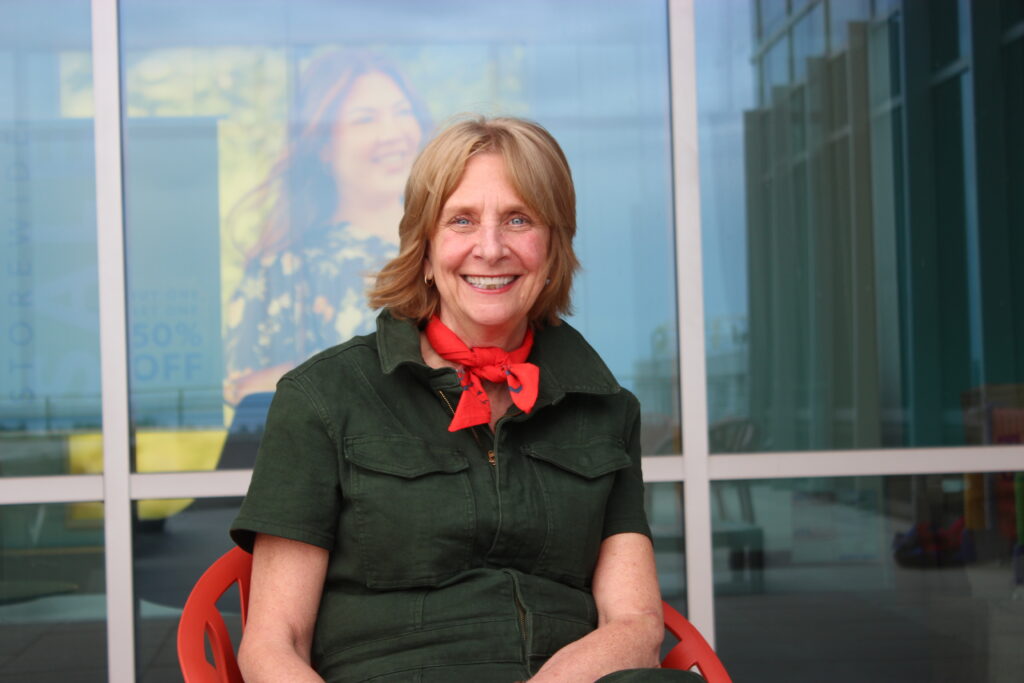
Sue Ross, chief administrative officer
“I think people are probably a lot more discerning about what they’re buying,” Ross says. “Maybe their bag used to have three to five items and now it has one to two. They’re looking for a good value, and maurices has always tried to be a value player. Not necessarily only from a price standpoint, but getting quality for the price you pay.
“We focus on value. What doesn’t she have in her closet? We focus on the price point that won’t break her, but it will give her a good classic look.”
Morgan agrees.
“You can lean on us when you’re searching for value, and we pride ourselves on that,” he says.
That’s one way maurices stands out in a cluttered field of competitors vying for a piece of the pie. And, rest assured, it’s a big pie. Women’s clothing is the largest segment of the apparel market and is expected to generate about $1 trillion in global revenue this year, according to Statista.
The United States outpaces other countries in apparel spending, which is good news for maurices. More good news? Women increasingly are trading luxury clothing for comfort threads — “athleisure.”
Affordable, no-frills clothing that looks and feels good, and doesn’t break the bank? Maurices can do that.
“It’s all about fashion, value, service and community,” Goldfarb says.
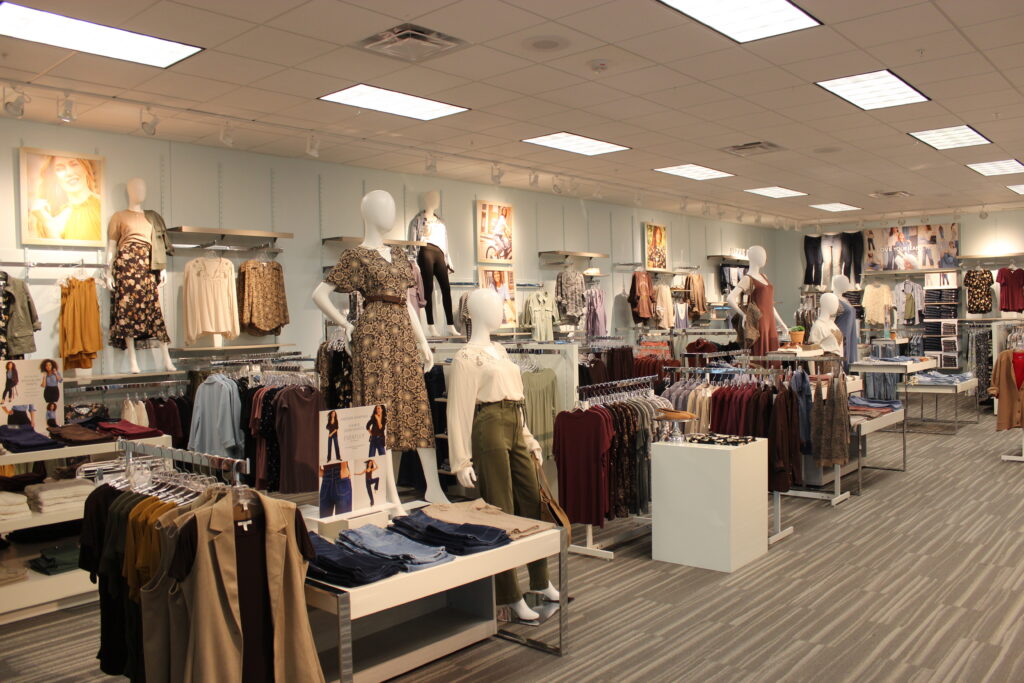
Eyeing the Next 95 years
Reaching 95 years has taken a lot of hard work and a little bit of luck. There always have been ebbs and flows in this industry. Challenges come and go, though Ross says recently they’ve become more pronounced.
The internet gave way to online shopping and, eventually, Amazon. COVID wrestled the world to a standstill and in-store traffic disappeared. The pandemic also negatively impacted people’s finances and produced supply-chain bottlenecks. More recently, gas prices have lightened wallets, and tariffs on overseas goods have resulted in higher prices.
Micro trends wrought by social media can mean that what’s in style today becomes a faux pas tomorrow. Ever-changing, indeed.
Collectively, these elements apply significant pressure on already razor-thin margins.
Maurices has consistently been able to work its way through the obstacles while continuing to grow. In fact, that growth is one of the main reasons for maurices’ enduring success. Scaling the company to more than 830 locations has allowed it to become more efficient, to do more with its resources.
Interestingly, Ross describes the strategy deployed by Joel Labovitz, the founder Maurice’s son, as growing “surgically.” Getting maurices back to a thousand-plus stores, as Goldfarb would like, will require similar prudence and patience. Market makeup is so important to maurices’ viability. It has to be judicious in evaluating and selecting new ones to enter.
The potential for more stores is vast.
“Importantly, there are still a lot of hometowns out there that we’re not in,” Goldfarb says.
Andrew Ross (no relation to Sue) is maurices’ vice president of real estate. Like many of his colleagues, he is what they call a “boomerang employee,” meaning Ross, hired in 2011, left in 2017 before returning to maurices. He echoed Goldfarb’s sentiment about expanding maurices’ presence. Ideally, that will result in about 10-15 new stores per year.
“We are a growth mindset retailer,” Andrew Ross says. “We still have market voids across the U.S. We’ve identified quite a few of them. We do have plans to grow steady and calculated over the next, say, five years.”
So what makes an attractive market, beyond being medium-sized?
First of all, does a city mimic some of the company’s most successful current locations? If so, it deserves immediate attention. Beyond that, though, the maurices team analyzes reams of data. What are the demographics? What’s the major employer? The unemployment rate? Median income? Is it a college town? Maybe there already are too many clothing retailers. Maybe there aren’t enough.
If it appears to be an attractive fit, Andrew Ross and his team will start to look for shopping centers that jibe with the parameters. While maurices is located in all different kinds of real estate venues, it primarily seeks strong power and strip centers with an anchor such as Target or another big-box store, as well as other complimentary soft goods and beauty retailers. Conditions ripe not only for built-in foot traffic, but the right kind of foot traffic.
“It’s the cross traffic that we share with those other retailers,” Andrew Ross says.
He says maurices relocates about 20 of its stores each year. Once he and his team have a venue for a new store, and a signed lease, the buildout by maurices’ in-house construction crew can take anywhere from 6-10 weeks. It’s a surprisingly fast turnaround born of ample experience.
Every opportunity is carefully analyzed before a decision is made. The goal is to maximize the potential of every location and put the company in the best position to succeed and grow.
“We are constantly looking, planning and strategizing, and always looking out for the future of the company,” Andrew Ross says.

maurice’s CEO George Goldfarb.
Goldfarb Eyes Retirement — Again
While Goldfarb has been at the helm of maurices’ golden age, he hasn’t aced every position he’s held. Notably, he has failed at being a retiree. Or, rather, maurices has had a difficult time letting him waltz off into the sunset.
He initially retired in April 2021. Goldfarb was asked back in September 2024 to reset the business. He hopes to retire (again) and move into the board chairman role by the end of this year.
Realistically, Goldfarb hasn’t minded the work or the challenge of course correcting his beloved maurices.
“It’s been really rewarding to see the results,” he says. “It’s been fun being back with the team. At the end of the day, you have to stay focused on your customer. When we’ve gone off the rails in the past, it’s because we’ve lost focus on the customer.”
Sue Ross says maurices needed to return to its humble roots and that Goldfarb’s discipline was necessary to spark the turnaround. Soon, she says, the business was again pointed in the right direction.
“I really credit George with reshaping the brand,” Sue Ross says.
The CEO is quick to deflect the credit. Getting through tough times requires the right people, he says.
“You navigate that with great people,” Goldfarb says.
And that — people — appears to be the most important ingredient in this secret sauce Goldfarb described, even more so than market selection. Sue Ross calls the maurices team her “family beyond my family.” They’re a close-knit and cohesive bunch.
“Everyone kind of rolls up their sleeves and gets the work done,” she says. “They’re committed to their communities. And these people are so passionate about the brand. The strength of this culture is uncanny. I’ve never had someone in my 36 years who didn’t love maurices.
“The people here are very special, and it’s hard to replicate that.”
Louie St. George is a Duluth-based freelance writer.